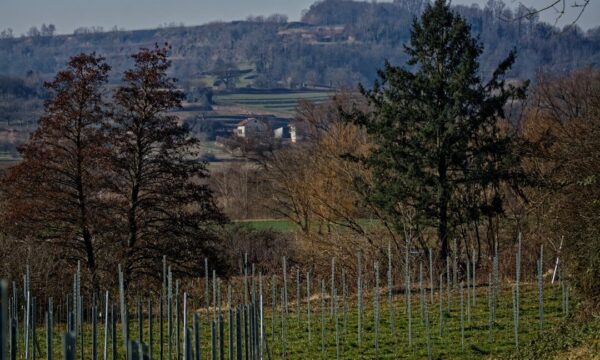
Pfalz Wine Region
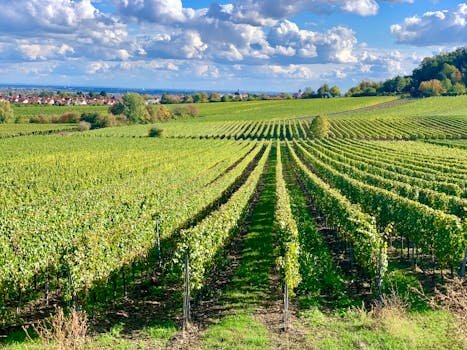
About Pfalz
Germany’s second-largest vineyard area sits in a warm pocket of southwest Germany, sheltered between the Haardt Mountains and the Rhine plain. Riesling ripens fully here, red grapes get sweet enough to matter, and an 85-kilometer road runs from one wine village to the next. That combination makes the Pfalz easier to enjoy than almost any other German region, whether you’re buying a bottle or planning a trip.
Pfalz Riesling tastes riper and fuller than Mosel Riesling, most of it is made Trocken, and the region also produces more red wine than any other part of Germany. That one sentence explains most of what you’ll find on a shelf or tasting menu here.
The region stretches roughly 85 kilometers from Bockenheim in the north to Schweigen on the French border. Around 23,000 hectares of vines grow here. About every third bottle of German wine bought inside Germany comes from this strip of land.
Vine growers plant 45 white and 22 red grape varieties across these hills. You’ll learn how to tell a Mittelhaardt Riesling from a southern one, read a label without guessing, and decide which villages deserve your driving time.
Key Takeaways
- Pfalz Riesling leans dry, ripe, and textured, with peach and citrus fruit and softer acidity than Mosel bottlings.
- The region splits into two districts: the classic Mittelhaardt in the north and the more varied Südliche Weinstraße in the south.
- The Deutsche Weinstraße links tasting rooms, festivals, and vineyard villages from Bockenheim down to Schweigen.
Where Is Pfalz and What Defines Its Wine Landscape?
The Pfalz is a German wine-growing region in the state of Rhineland-Palatinate. It runs north to south between the forested Haardt Mountains and the Rhine plain. Its name comes from the Latin palatium, meaning palace, which is why English texts sometimes call it the Palatinate.
Two things shape the wine here: the shelter of the Palatinate Forest and the sheer variety of soils, ranging from colored Buntsandstein to chalky loam, marl, loess, and clay.
From Bockenheim to Schweigen Between the Haardt and Rhine Plain
The vineyard belt begins at Bockenheim, just south of Worms, and ends at Schweigen right on the French border. Alsace begins on the other side, sharing a nearly identical climate.
Vineyards sit on the eastern slopes and foothills of the Haardt Mountains, the northern extension of the Vosges. To the east, the land flattens into the warm Rhine plain.
The strip is narrow. In many places, you can see forest on one side and open farmland on the other from the same row of vines.
Mittelhaardt–Deutsche Weinstraße and Südliche Weinstraße
The Pfalz has two official districts, and knowing which one a wine comes from tells you quite a bit.
| Mittelhaardt–Deutsche Weinstraße | Südliche Weinstraße | |
|---|---|---|
| Position | Northern half | Southern half, toward France |
| Key villages | Deidesheim, Forst, Wachenheim, Ruppertsberg, Kallstadt | Birkweiler, Rhodt, Schweigen |
| Reputation | Classic dry Riesling estates | Pinot family, value Riesling, newer names |
| Typical style | Concentrated, structured, age-worthy | Broad, fruit-forward, varied |
Both districts grow Riesling well. The Mittelhaardt holds most of the historic Einzellagen quoted in auction results, while the Südliche Weinstraße has become a source for Grauburgunder, Weißburgunder, and Spätburgunder.
Climate, Soils, and the Palatinate Forest Rain Shadow
The Palatinate Forest blocks weather coming from the west, leaving the vineyards in a rain shadow. As a result, the Pfalz ranks among Germany’s sunniest and driest growing areas.
That warmth pushes Riesling Oechsle readings up reliably each vintage, and red grapes ripen with equal confidence. Figs and almonds grow between the vines, which tells you all you need to know about the temperatures.
Soils shift constantly along the route. Loam dominates, mixed with loess, Muschelkalk, clay, or the red-brown Buntsandstein that gives many Mittelhaardt sites warmth and drainage.
Key Wine Towns and Villages: Bad Dürkheim, Neustadt, Landau, Deidesheim, and Forst
Bad Dürkheim, Neustadt an der Weinstraße, and Landau are the three main towns, spaced roughly evenly along the route from north to south.
The smaller villages carry the vineyard fame. Deidesheim is the best-known base for visitors, with restaurants, hotels, and several leading estates within a short walk. Forst next door has a cluster of steep, dark-soiled Einzellagen that produce some of the region’s most concentrated dry Riesling.
Wachenheim, Ruppertsberg, and Kallstadt complete the classic Mittelhaardt run. In the south, Birkweiler and Rhodt attract visitors with quieter tasting rooms and lower prices.
What Do Pfalz Wines Taste Like?
Pfalz wines taste ripe. Warmth and sunshine give the whites stone fruit and body, while the reds get enough color and tannin to stand on their own.
Most Riesling here is made Trocken, showing peach, apricot, and citrus instead of the green apple sharpness found in cooler German regions. The region grows 45 white and 22 red grape varieties, so the range on a tasting bench is wide.
Dry Riesling: Ripe Fruit, Structure, and Freshness
Riesling is the most planted grape in the Pfalz and its most successful one. A typical dry Pfalz Riesling shows yellow peach, apricot, lemon peel, and often a smoky or stony note pulled from sandstone and limestone soils.
Acidity is present but softer than in the Mosel, so the wine feels rounder in the mouth. Alcohol usually sits between 12 and 13.5 percent, higher than in a Mosel Kabinett.
Top dry bottlings from Mittelhaardt sites can hold for a decade or more. Younger estate wines drink well right away, which is one reason Pfalz Riesling works so well as an everyday white.
Grauburgunder, Weißburgunder, and Other White Varieties
The Pinot family thrives here. Grauburgunder (Pinot Gris) gives pear, melon, and a creamy texture. Weißburgunder (Pinot Blanc) is quieter, with apple, almond, and gentle acidity, and pairs easily with roast chicken or pasta.
Müller-Thurgau and Silvaner remain widely planted, producing simple, soft everyday whites. Kerner, Gewürztraminer, and Chardonnay each hold their own niche.
The Pfalz also leads Germany in Sauvignon Blanc, with around 40 percent of the country’s plantings, or about 816 hectares.
Pfalz Red Wine: Dornfelder, Spätburgunder, and Portugieser
The Pfalz is Germany’s largest red wine region. Dornfelder is the signature grape: deep purple and soft, with black cherry and plum fruit and low tannin. It even drinks well slightly chilled.
Spätburgunder (Pinot Noir) is gaining ground fast and produces the region’s most serious reds, with red cherry, earth, and fine tannins. Portugieser makes lighter, juicy wines meant for drinking young.
You’ll also find Merlot, Cabernet Sauvignon, and Syrah planted in the warmest sites. The German Red Wine Prize regularly features Pfalz entries.
Rosé, Sekt, and Schorle
Weißherbst is a rosé made from a single red grape, often Spätburgunder or Portugieser. It’s a regional staple at summer festivals.
Sekt, Germany’s sparkling wine, is made across the Pfalz in both traditional-method and tank-method styles. Riesling Sekt from a good estate offers sharp citrus and real length; our German Sekt buying guide covers how to tell the tiers apart.
Locally, people often serve wine as Schorle, mixed with sparkling water and poured into a dimpled half-liter glass called a Dubbeglas.
How to Read a Pfalz Wine Label
A Pfalz wine label gives you five useful pieces of information: producer, vintage, grape, place, and sweetness. Read them in that order, and the bottle stops feeling like a puzzle.
Place names run from broad to narrow, while sweetness words are separate from ripeness words. Confusing those two is the most common mistake buyers make with German wine.
Pfalz, Village, and Vineyard Names on German Wine Labels
The broadest label term is the region itself. Below that comes the village, followed by the individual Einzellage.
Village names usually appear with an “-er” ending attached to the vineyard: Forster Ungeheuer means the Ungeheuer vineyard in Forst. Deidesheimer Grainhübel works the same way, as do vineyard names from Ruppertsberg and Wachenheim.
A wine labeled only “Pfalz” can come from anywhere in the region. A wine with a village name is more specific, and a named Einzellage narrows it further. Our full walkthrough on how to read German wine labels covers the smaller print too.
Trocken and Feinherb: Understanding Sweetness in Context
Trocken means dry. Halbtrocken, sometimes labeled Feinherb, means off-dry, with a little more residual sugar left in the wine.
Most Pfalz Riesling is Trocken. Because Pfalz acidity is moderate, a Halbtrocken wine here tastes softer and fruitier than the same term suggests on a high-acid Mosel wine.
If neither word appears, the wine may still be dry, or it may carry noticeable sweetness. Alcohol level offers a useful clue: below 10 percent usually signals residual sugar. The Trocken vs. Halbtrocken guide explains how to check quickly at the shelf.
Prädikat Terms: Kabinett, Spätlese, and Auslese
Kabinett, Spätlese, and Auslese describe grape ripeness at harvest, measured by Oechsle. They do not form a sweetness ladder.
A Pfalz Spätlese Trocken is a dry wine made from riper grapes, so it tastes fuller and stronger than a Kabinett. A Spätlese without “Trocken” on the label will likely retain some sweetness.
Beerenauslese, Trockenbeerenauslese, and Eiswein sit at the top of the Prädikat scale and are always sweet. These wines remain rare in the Pfalz compared with the Mosel.
What VDP Classifications Do and Do Not Indicate
The VDP is a private association of German estates with its own vineyard classification: Gutswein, Ortswein, Erste Lage, and Grosse Lage. A dry wine from a Grosse Lage site carries the label Grosses Gewächs, or GG.
VDP membership shows that an estate meets the association’s standards. It doesn’t tell you whether the estate farms organically or biodynamically.
Sustainability certification, EU organic certification, and Demeter biodynamic certification are separate programs, each with its own rules. Check each estate’s current status directly. For deeper detail, see our German Riesling quality ratings guide.
How to Buy and Compare Pfalz Riesling
Buy Pfalz Riesling by keeping the producer steady and changing one variable at a time. Start with an estate wine, then try a village wine, and finally a single vineyard from the same house.
This method shows what the site adds without letting the producer’s style cloud the comparison. It also keeps those first purchases affordable.
Start With Estate and Village Wines Before Single-Vineyard Bottlings
An estate wine (Gutswein) is a producer’s entry bottling, blended from across its holdings. It shows the house style at a fair price.
A village wine (Ortswein) narrows the origin to one commune. A single-vineyard wine narrows it further to one named Einzellage.
Taste them in that order from the same estate and you’ll learn what “Forster” or “Deidesheimer” actually means in the glass. Germany Rieslings uses this progression across its regional coverage because it separates place from winemaking.
Mittelhaardt and Southern Pfalz: Useful Style Comparisons
Mittelhaardt Riesling tends toward concentration and grip, with darker stone fruit and a smoky edge from the deeper sandstone and basalt soils around Forst.
Südliche Weinstraße Riesling is broader and softer, with more open citrus and orchard fruit. Prices are usually lower for equivalent quality.
Buy one bottle from each district at a similar price and taste them side by side. That one exercise teaches the north-south split faster than any tasting note.
Pfalz vs. Mosel, Rheinhessen, Baden, and Alsace
| Pfalz | Mosel | Rheinhessen | Baden | Alsace | |
|---|---|---|---|---|---|
| Main soil | Buntsandstein, loam, limestone | Devonian slate | Limestone, red slate | Volcanic, loess | Granite, limestone, marl |
| Riesling body | Full | Light | Medium to full | Full | Full |
| Typical sweetness | Mostly dry | Wide range | Mostly dry | Mostly dry | Dry to off-dry |
| Alcohol | 12 to 13.5% | 7.5 to 12% | 12 to 13% | 12.5 to 13.5% | 12.5 to 14% |
| Red wine role | Largest in Germany | Small | Small | Major | Modest |
Alsace sits just across the border and shares the climate, although its wines don’t follow the German village-plus-vineyard naming system. For a closer look at the two German poles, read our Pfalz Riesling vs. Mosel flavor differences breakdown.
Benchmark Producers and Farming Claims to Verify
Useful reference estates in the Pfalz include Dr. Bürklin-Wolf, Von Winning, Reichsrat von Buhl, and Ökonomierat Rebholz.
Dr. Bürklin-Wolf farms biodynamically. Ökonomierat Rebholz holds both EU organic and biodynamic certifications.
Farming practices change, and estates update their certifications. Check the producer’s current listing before treating a certification as fact. A certificate describes farming, not flavor.
Visiting the German Wine Route
The Deutsche Weinstraße was Germany’s first signposted wine route. It opened in 1935 and still runs about 85 kilometers from Bockenheim to Schweigen. You can drive it in two hours or spend a week exploring it.
Bad Dürkheim hosts the world’s largest wine festival and has the world’s largest wine barrel. The Palatinate Historical Museum in Speyer keeps the world’s oldest bottled wine.
The Deutsche Weinstraße From Vineyard Villages to Tasting Rooms
The route uses a yellow grape-cluster sign and passes through dozens of wine villages. Neustadt an der Weinstraße sits near the midpoint and works well as a rail-accessible base, while Landau anchors the south.
Most estates offer tastings, though smaller family wineries expect you to book ahead. Larger houses in Deidesheim and Wachenheim keep regular tasting-room hours.
Cycling is a strong option. A flat path runs parallel to the road through the vineyards for much of the route.
Bad Dürkheim Wurstmarkt and Seasonal Wine Festivals
The Wurstmarkt in Bad Dürkheim takes place over two long weekends in September and draws hundreds of thousands of visitors. Despite the name, it’s a wine festival, with sausage as the standard accompaniment.
Wine is served in the Schoppenglas, a small half-liter measure, at dozens of stands run by local producers.
Nearly every village holds its own festival between May and October. The smaller ones give you more time to talk with the growers doing the pouring.
Almond Blossom, Zwiebelkuchen, and Local Food Pairings
Almond trees line parts of the route and bloom in March, drawing visitors before the vines have leafed out. The Mandelblütenfest in Gimmeldingen marks the start of the season.
Zwiebelkuchen, a savory onion tart, is the classic autumn dish. It goes with young wine (Neuer Wein) or a dry Weißburgunder.
Saumagen, a stuffed pork dish from Kallstadt, pairs with dry Riesling or a Spätburgunder. Dornfelder handles grilled sausage and roast pork.
Planning a Responsible Wine Tasting Visit
Public transport works well here. Regional trains connect Neustadt, Bad Dürkheim, and Landau, and buses reach most villages along the route.
Order a Schorle instead of a full glass if you’re tasting all afternoon. The Dubbeglas gives you a firm grip and stretches the wine with sparkling water.
Book tastings a week ahead in September and October, when harvest limits producer availability. Many estates close their tasting rooms entirely during picking.
Explore a guided Pfalz winery day
We may earn a commission if you book through links on this page.
Guided Pfalz winery day
Confirm that your selected route visits the Pfalz and agree pickup before booking. Forst, Deidesheim and particular estates are not guaranteed stops.
Departure: Pickup by arrangement
Listed duration: 6–7 hours
Listed language: English
Frequently Asked Questions
What is the Pfalz wine region known for?
Is Pfalz Riesling usually dry?
Which red wines should I try from Pfalz?
What is the difference between Mittelhaardt and Südliche Weinstraße?
Which Pfalz towns are best for winery visits?
How does Pfalz Riesling compare with Mosel Riesling?
For vintage analysis and peak maturity curves, explore our Pfalz Riesling Vintage Chart: Ratings & Drinking Windows.
Viticultural Heritage & Terroir
Premier Wineries in Pfalz
All Wineries →
Ökonomierat Rebholz
Ökonomierat Rebholz is a Siebeldingen VDP estate with Riesling, Pinot and Chardonnay. Explore its Pfalz…
Reichsrat von Buhl
Reichsrat von Buhl is a 60.4-hectare VDP estate in Deidesheim with 72% Riesling and holdings…
Weingut von Winning
Weingut von Winning is a 93.1-hectare VDP estate in Deidesheim, focused on dry Riesling and…
Geheimer Rat Dr. von Bassermann-Jordan
Estate Overview Founded in 1718 in Deidesheim, Weingut Geheimer Rat Dr. von Bassermann-Jordan is one…
Dr. Bürklin-Wolf
Dr. Bürklin-Wolf is an 84.7-hectare VDP estate in Wachenheim, led by Bettina Bürklin-von Guradze and…