Franken Wine Region
About Franken
Franken stands apart from the rest of German Riesling country, and that distinction rewards attention. Strung along the Main River in northern Bavaria, the region built its reputation on dry Silvaner, a sharply continental climate, and the flattened Bocksbeutel bottle — not Riesling. A Franken wine region guide has to start with that identity: Franken is Germany’s most continental wine region, where limestone and sandstone soils shape savory, structured whites that taste nothing like Mosel or Rheingau Riesling.
Riesling does grow here, producing mineral-driven wines worth seeking out. Still, treating Franken as a Riesling region misses the point of visiting or buying from it.
Understanding Franken’s three districts, its label terms, and its benchmark producers gives wine buyers a clear way to compare German regional styles. It also gives travelers a practical route through Würzburg and the surrounding wine villages.
Key Takeaways
- Franken is a dry, Silvaner-focused wine region shaped by a continental climate and limestone or sandstone soils along the Main River.
- Label terms like Kabinett, Spätlese, and Bocksbeutel signal ripeness and origin, not a fixed sweetness scale or automatic mark of quality.
- Würzburg makes a practical home base for tasting across Franken’s three districts, from the Würzburger Stein to Steigerwald villages like Iphofen.
Where Is Franken and What Defines Its Terroir?
Franken sits in northern Bavaria, following the Main River from Aschaffenburg in the west to Schweinfurt and beyond in the east. Most of the region lies in Lower Franconia, with smaller pockets reaching into Middle and Upper Franconia near the Steigerwald and Bamberg.
Its continental climate brings cold winters, warm summers, and three distinct soil-based districts. Together, they give Franken a wine identity built on structure and site specificity rather than fruit-forward sweetness.
The Main River, Lower Franconia, and a Continental Climate
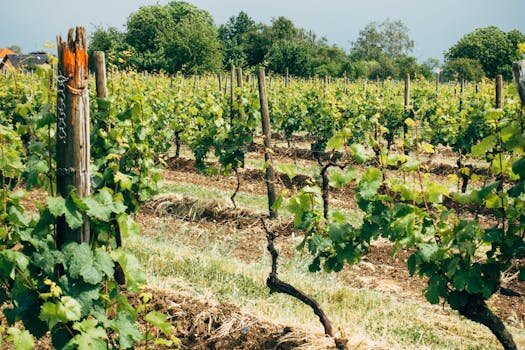
The Main River carves a broad, winding path through Lower Franconia, and its south-facing slopes hold nearly all of Franken’s roughly 6,128 hectares of vineyard. Winters run cold, with spring frosts a real threat, while summers turn warm and dry, carrying a near-Mediterranean intensity in the best sites.
Vines survive only in protected pockets along the river and the Steigerwald hills. Wind and frost can gut a vintage, so exposure isn’t a detail here — it’s the whole game.
Maindreieck: Muschelkalk and the Core of Franconian Wine
The Maindreieck, or “Main triangle,” forms the heart of Franken and surrounds Würzburg. Its steep slopes run on Muschelkalk, a shell-limestone soil that gives Silvaner and Müller-Thurgau their mineral edge.
The famous Würzburger Stein vineyard sits here, alongside wine towns like Randersacker, Sommerhausen, Sulzfeld am Main, and the Mainschleife loop around Escherndorf and Volkach. The Homburger Kallmuth, one of Franken’s steepest and most distinctive sites, also lies within this district.
Mainviereck and Steigerwald: Sandstone, Keuper, and Distinctive Site Styles
The Mainviereck, Franken’s westernmost district, holds red sandstone soils suited to red-wine grapes, plus some of the warmest sites in Bavaria. The Steigerwald district, centered on villages like Iphofen and Castell, runs on Keuper soils that yield wines with a firmer, more mineral backbone.
Each district’s soil composition shapes what lands in the glass, from the Muschelkalk-driven precision of Maindreieck Silvaner to the structured whites grown on Steigerwald’s Keuper slopes. Readers comparing Franken with other regions can find broader context in Germany Rieslings’s terroir coverage.
What Do Franken Wines Taste Like?
Franken wines are defined by dryness, structure, and a savory, mineral character rather than fruit-driven sweetness. Silvaner leads the region in both plantings and reputation, while Riesling, Müller-Thurgau, Bacchus, and a handful of red grapes round out a diverse but distinctly dry portfolio.
Silvaner: Franken’s Signature Dry White Wine
Franken Silvaner is the region’s calling card, grown on 1,560 hectares — about 25% of total vineyard area. On Muschelkalk in the Maindreieck or Keuper in the Steigerwald, it produces wines with firm acidity, a savory, almost herbal edge, and moderate alcohol.
Many wine writers consider Franken the one place where Silvaner regularly outperforms Riesling in the same cellar.
Riesling and Other White Grapes to Know
Riesling covers about 346 hectares, roughly 5.5% of Franken’s vineyard area — a secondary grape here, not the region’s focus. Where growers plant it, particularly on limestone and sandstone sites near the Main River, Franken Riesling shows a structured, mineral-driven style distinct from the fruitier expressions found in the Mosel or Rheingau.
Müller-Thurgau remains Franken’s most widely planted grape overall. Bacchus, Scheurebe, Rieslaner, and Kerner round out a varied dry-white lineup. Readers weighing Franken Riesling against other regions can compare styles across Germany’s Riesling regions for broader context.
Spätburgunder, Domina, and the Region’s Red-Wine Pockets
Red grapes cover about 17% of Franken’s vineyard area, concentrated mainly in the Mainviereck’s sandstone soils. Spätburgunder, Germany’s Pinot Noir, and Domina lead the red varieties, with Bürgstadt and Klingenberg am Main recognized as top sites.
These reds tend toward a lighter, earthier style than those from warmer German regions, reflecting Franken’s continental climate.
How to Read Franken Wine Labels and the Bocksbeutel
Franken wine labels combine the same Prädikat and dryness terms used across Germany with regional cues like the Bocksbeutel bottle and Franken’s own VDP classifications. To read a label correctly, separate what the bottle shape tells you from what the ripeness and origin terms actually mean.
What the Bocksbeutel Bottle Does and Does Not Tell You
The Bocksbeutel is a flattened, rounded bottle historically reserved for Franken’s better wines. EU regulation has protected the shape since 1989. More than 40% of wines from the region use it, and German wine law allows it only for Qualitätswein and Prädikatswein — never for basic table wine or Landwein.
The bottle shape signals origin and a minimum quality category. It says nothing about sweetness, grape variety, or which of Franken’s three districts produced the wine, so buyers still need to read the rest of the label.
Trocken, Kabinett, and Spätlese: Style and Ripeness Terms Explained
Most Franken wine carries the Trocken label, meaning dry. Many producers also use the informal term “Fränkisch Trocken” for wines with 5 grams of residual sugar or less — stricter than the general legal limit of 9 grams for Trocken.
Kabinett and Spätlese are Prädikat levels that show how ripe the grapes were at harvest, not a fixed sweetness ladder. A dry Spätlese from Franken can be fuller-bodied and more age-worthy than a Kabinett, even though both terms describe ripeness rather than sugar in the finished wine. Readers new to these distinctions can find a fuller breakdown in this guide to how to read German wine labels.
Using VDP, Ortswein, and Erste Lage as Origin Cues
VDP membership signals that a producer follows the association’s vineyard classification system, which ranks sites from Gutswein up through Ortswein (village wine) to Erste Lage and Grosses Gewächs.
In Franken, Ortswein points to a wine sourced from a recognized village, while Erste Lage marks a higher-tier, more specific vineyard site. Buyers can use this ladder as they do elsewhere in Germany: start with an estate or village wine from a producer they trust, then move to a site-specific Erste Lage bottling once they know that producer’s style.
VDP status is a classification marker, not proof of organic or biodynamic farming. Buyers should verify those practices separately.
Key Vineyards and Producers for Comparing Franken
Franken’s most useful comparison points are producers who work the same handful of historic sites. Their wines let buyers see how site and district shape a wine, instead of guessing from producer style alone.
Würzburg’s estates and the Steigerwald and Mainviereck villages each offer a different angle on the region.
Würzburger Stein and Würzburg’s Historic Estates
The Würzburger Stein, a steep hill just north of central Würzburg, produces some of Franken’s best-known Silvaner and Riesling under the historic “Steinwein” name. Three of Würzburg’s oldest estates — Juliusspital, Bürgerspital zum Heiligen Geist, and the Staatlicher Hofkeller — hold significant parcels there.
Those estates offer a practical way to compare the same vineyard across different cellars. Weingut am Stein, known for biodynamic viticulture, adds a contrasting farming approach within the same district. Readers planning a visit can find more detail in this Würzburg wine guide.
Iphofen and Escherndorf: Steigerwald and Maindreieck Benchmarks
Iphofen, home to Weingut Hans Wirsching and the Julius-Echter-Berg vineyard, represents the Steigerwald’s Keuper-driven style. Escherndorf, with its steep Escherndorfer Lump site, and nearby Randersackerer Pfülben in the Maindreieck show how Muschelkalk soils shape firmer, more mineral Silvaner and Riesling.
Comparing bottlings from these two villages against Würzburger Stein wines gives buyers a concrete sense of how district and soil translate into style.
Mainviereck Producers and Franconian Pinot Noir
Weingut Rudolf Fürst, based in the Mainviereck village of Bürgstadt, is a benchmark for Franconian Spätburgunder grown on red sandstone. Weingut Meintzinger offers another Mainviereck reference point for red-wine styles from the district.
Both illustrate why Franken’s western district — warmer and sandier than the Maindreieck or Steigerwald — serves as the region’s red-wine center.
Planning a Franconian Wine Trip
Würzburg makes the most practical base for a Franken wine trip, with easy access to all three districts and a walkable historic center. From there, wine villages, weinstuben, and a marked wine route give travelers a structured way to taste across the region without a rigid itinerary.
Würzburg as a Base for Tastings, Cellars, and Vineyard Views
Würzburg combines wine access with historic sightseeing. The Würzburg Residence, a UNESCO World Heritage Site, sits a short walk from the Alte Mainbrücke and the Marienberg Fortress, which overlooks the Main River and nearby vineyards.
The city’s annual Würzburger Weindorf festival brings regional producers together for open-air tasting each summer. Nuremberg Airport is the nearest major international gateway, roughly ninety minutes away by car or train.
Wine Villages, Weinstuben, and the Bocksbeutelstraße
The Bocksbeutelstraße links Franken’s wine villages, including Volkach and Sommerhausen, in a signposted driving route through vineyard country. Weinstuben — traditional wine taverns — offer tastings with local food both in the villages and in Würzburg itself; Weinhaus zum Stachel, Vinothek Wohlsein, and Alte Mainmühle are established options.
Travelers looking to stay overnight can choose vineyard hotels such as Hotel Rebstock or Romantik Hotel zur Schwane in Volkach. In winter, Würzburg’s Christmas market, along with the Käthe Wohlfahrt shop found in several Franconian towns, adds a seasonal layer to a visit.
Franconian Cuisine and Wine Pairings
Franconian cuisine leans hearty and savory, which suits the region’s dry wines well. Bratwurst and Schäufele (roasted pork shoulder) pair naturally with dry Silvaner’s acidity. Karpfen (carp), a regional specialty, and Blaue Zipfel, a vinegar-poached sausage dish, also work well with these dry, structured whites.
Pretzels and sauerkraut, sometimes finished with a touch of cinnamon, round out a food culture built around wines defined by cut and minerality rather than sweetness.
Frequently Asked Questions
What wine is Franken best known for?
Why are Franken wines sold in Bocksbeutel bottles?
Is Franken Riesling typically dry?
Where can I buy Franken wine outside Germany?
Which towns are best for a Franken wine trip?
Viticultural Heritage & Terroir
Premier Wineries in Franken
All Wineries →
Bürgerspital zum Heiligen Geist
Bürgerspital links its Würzburg wine estate to a charitable foundation. Compare Silvaner and Riesling from…
Rudolf Fürst
Rudolf Fürst is a Pinot-led Franken estate in Bürgstadt. Read about its red-sandstone sites, Hundsrück…

