Mosel Wine Region
About Mosel
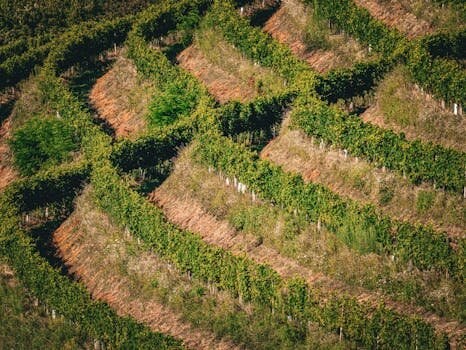
The Mosel is Germany’s best-known Riesling region, but it is not a single soil, sweetness level, or wine style. The official growing area follows the Mosel, Saar, and Ruwer rivers from the French and Luxembourg borders toward Koblenz. It combines sharply inclined vineyard sites, cool river valleys, varied exposures, and several distinct geologies. The result ranges from dry, tightly structured Riesling to gently sweet Kabinett, richer Spätlese, sparkling wine, and rare noble-sweet bottlings.
Current German Wine Institute figures list 8,287 hectares of vineyard for 2025, including 5,156 hectares of Riesling. That makes Riesling roughly 62% of the total area—not 91%. The higher figure refers to the share planted with all white grape varieties combined.
That distinction matters. The southern Mosel also carries important plantings of Elbling and Pinot varieties, and treating the whole region as pure Riesling territory misreads the vineyard map.
Mosel wine region at a glance
| Fact | What to know |
|---|---|
| Official area | Mosel, including the Saar and Ruwer tributary valleys |
| Vineyard area | 8,287 hectares in 2025 |
| Riesling plantings | 5,156 hectares, or roughly 62% of the region |
| White and red grapes | About 90% white and 10% red in 2025 |
| Legal districts | Burg Cochem, Bernkastel, Saar, Ruwer, Obermosel, and Moseltor |
| Individual vineyard sites | More than 500 registered Einzellagen |
| Defining landscape | River bends, steep slopes, terraces, dry-stone walls, and narrow side valleys |
| Main geologies | Devonian slate and greywacke in much of the lower and middle valleys; Muschelkalk and dolomite in the southern Mosel |
Where the Mosel region begins and ends
The legal Mosel region covers vineyards along three rivers, not only the photogenic bends around Bernkastel. The Mosel runs from the border area near Perl through Trier, Bernkastel-Kues, Traben-Trarbach, Zell, Cochem, and toward Koblenz. The Saar joins near Konz, while the smaller Ruwer meets the Mosel near Trier.
Moselwein’s regional association divides the growing area into six legal districts. For practical wine and travel planning, it’s easier to think of them as five broad landscapes:
Terrassenmosel and Burg Cochem
The lower river between Zell and Koblenz narrows into severe slopes where vines cling to small terraces held by dry-stone walls. Devonian slate and greywacke dominate.
Mechanization is nearly impossible, and vineyard work is unusually labor-intensive. Bremmer Calmont, between Bremm and Ediger-Eller, reaches a gradient of up to about 60% and is widely cited as Europe’s steepest vineyard slope.
Mittelmosel and Bernkastel
The Bernkastel district, commonly called the Middle Mosel or Mittelmosel, is the region’s largest and most internationally recognized section. Its river loops hold villages and vineyard names that appear repeatedly on export labels: Wehlen, Graach, Bernkastel, Brauneberg, Piesport, and Ürzig.
Weathered Devonian slate dominates many slopes, though exact exposure, elevation, water availability, and producer decisions matter as much as the broad soil label.
Saar
Winegrowing on the Saar extends between Serrig and Konz, often on slopes tucked into side valleys rather than directly beside the river. Dark Devonian slate is widespread, with pockets of volcanic diabase.
Saar Riesling is often associated with firm acidity and a restrained frame, but warmer sites and dry winemaking can produce more weight than the stereotype suggests.
Ruwer
The Ruwer is the smallest district, running through a narrow, wooded valley northeast of Trier. Riesling holds an especially high share of vineyard area here.
The wines are often described as fine-boned, herbal, or floral—yet vineyard, vintage, and producer remain more reliable buying signals than a fixed regional flavor formula.
Obermosel and Moseltor
The Upper Mosel and Moseltor form the southern wine Mosel near Luxembourg and France. The valley broadens and softens, while Muschelkalk and dolomite replace the slate that defines much of the region’s public image.
Elbling has a long local history here, and Pinot Blanc, Pinot Gris, Auxerrois, Chardonnay, and Pinot Noir are far more visible than elsewhere on the river. A useful Mosel guide should avoid treating every vineyard as a dark-slate Riesling site.
Why Mosel slopes matter
Steepness changes how a vineyard receives sunlight, sheds water, retains soil, and can be worked. A well-exposed slope can help late-ripening Riesling reach maturity in a cool valley.
It also creates real costs: many steep parcels demand hand labor, individual vine stakes, manual harvesting, terrace maintenance, and equipment built for inclines.
The most dramatic example is Bremmer Calmont. The German Wine Institute gives a maximum gradient of about 60%, not 65%. The site’s steep face and favorable exposure can increase solar interception, while slate walls and rocky surfaces shape its heat and water balance.
Steepness alone does not guarantee a great wine. Aspect, altitude, soil depth, vine material, yields, harvest decisions, weather, and cellar work all shape the bottle. A carefully farmed moderate slope can outperform a famous but poorly managed steep site. The slope is part of the explanation, not a quality score.
Mosel soils: more varied than “slate”
| Area | Common geology or soil | Practical vineyard effect |
|---|---|---|
| Lower Mosel / Terrassenmosel | Devonian slate, clay slate, and greywacke | Shallow, stony terraces with strong drainage and high erosion risk |
| Middle Mosel slopes | Weathered Devonian slate in several colors | Rocky, often thin soils that differ by depth, exposure, and water-holding capacity |
| Middle Mosel flats | Sandier and gravelly deposits | Deeper and easier to work than the steep slate slopes |
| Saar and Ruwer | Mostly Devonian slate, with local diabase or quartz-rich material | Highly site-specific drainage, warming, and rooting conditions |
| Upper Mosel / Moseltor | Muschelkalk and dolomite | Different water and nutrient behavior; supports Elbling and Pinot varieties as well as Riesling |
Does slate literally make Riesling taste like stone?
Wine writers often reach for “slate,” “wet stone,” “flint,” or “mineral” as sensory shorthand. Those words can be useful when describing an aroma, texture, or overall impression.
They should not be presented as proof that vineyard rock has dissolved into the grapes and created a directly transferable flavor.
A peer-reviewed review of minerality in wine found that the popular idea of literally tasting geological minerals from vineyard rocks is not scientifically plausible. Geology still matters through physical effects on drainage, water availability, rooting, temperature, erosion, and vine growth. The responsible conclusion is indirect influence, not a one-to-one “blue slate tastes like this” rule.
For a deeper site-focused explanation, see the guide to how Mosel terroir shapes Riesling. Use its vineyard examples as starting points rather than treating soil color as a guaranteed tasting note.
What Mosel Riesling tastes like
Mosel Riesling is usually recognized by bright acidity, clear fruit, and strong aromatic definition. Common young-wine references include lemon, lime, green or yellow apple, pear, white peach, flowers, and herbs.
Dry versions can feel lean and firm; wines with residual sugar may show riper fruit and a softer entry while staying fresh thanks to their acidity.
That broad description has important exceptions. A dry single-vineyard Riesling from a warm, low-yield site can be concentrated and substantial. A classic fruity Kabinett can be light in alcohol yet intense in aroma. Saar and Ruwer wines may feel especially taut in a cool year, while a ripe Middle Mosel Spätlese can be generous and peach-led. Bottle age adds honeyed, dried-citrus, herbal, and savory notes.
Five factors usually explain more than a generic “Mosel flavor” claim:
- Exact origin: region, village, vineyard, and parcel.
- Finished sweetness: dry, semi-dry, off-dry, fruity, or sweet.
- Producer style: harvest timing, fermentation, élevage, and blending choices.
- Vintage: the year’s ripeness, acidity, rainfall, disease pressure, and harvest conditions.
- Age and storage: young fruit and mature complexity can make the same wine look very different.
Mosel Riesling styles and label clues
Mosel Riesling can be dry or sweet. The grape and region do not determine the final sugar level. Read the explicit taste wording separately from the Prädikat category.
| Style | Label clue | What to expect | Good starting use |
|---|---|---|---|
| Dry | Trocken | Little residual sugar, firmer finish, often more body and alcohol than fruity Kabinett | Seafood, vegetables, roast poultry, or drinkers who dislike sweetness |
| Legally semi-dry | Halbtrocken | A small amount of sweetness balanced by acidity | Pork, richer fish, mildly spicy food |
| Producer-defined off-dry | Feinherb | Usually off-dry or gently sweet, but not tied to one legal sugar range | Spice, sweet-sour sauces, or drinkers seeking fruit without dessert-level sweetness |
| Kabinett | Kabinett, with or without Trocken | A Prädikat based on grape ripeness and production rules; it can finish dry or fruity | Light, precise wines and classic low-alcohol fruity styles |
| Spätlese or Auslese | Spätlese or Auslese, with sweetness wording checked separately | Riper grape material and generally greater concentration; not automatically sweet | Richer dry wines, fruity styles, or sweet wines depending on the label |
| Noble-sweet | Beerenauslese, Trockenbeerenauslese, or Eiswein | Rare, concentrated sweet wines made under demanding harvest conditions | Blue cheese, foie gras, fruit desserts, or small contemplative pours |
| Sparkling | Sekt or Winzersekt | Riesling-based sparkling wine ranging from dry to sweet | Aperitif, fried food, or celebratory service |
The official German categories Trocken and Halbtrocken have legal residual-sugar limits. Feinherb has no single fixed statutory definition. Kabinett, Spätlese, and Auslese are Prädikat categories tied to grape condition and minimum must weight (measured in Oechsle), not guaranteed finished sweetness.
Use the site’s direct guides to determine whether a Riesling is sweet or dry and to compare Kabinett with Spätlese without relying on alcohol myths or simplified sugar bands.
How to choose a Mosel bottle
- Start with the producer. Estate style, farming, harvest selection, and cellar work can outweigh a broad regional stereotype.
- Read the origin from broad to narrow. “Mosel” identifies the region; a village and Einzellage name provide far more specific context.
- Find the sweetness wording. Trocken is dry. Halbtrocken is legally semi-dry. Feinherb is producer-defined. Do not infer sweetness from Kabinett or Spätlese alone.
- Read Prädikat as a separate signal. It describes regulated grape and production conditions, not a simple dry-to-sweet ladder.
- Check vintage and provenance. Regional vintage summaries are useful, but an older bottle’s producer, closure, transport, and storage history can matter more than a score.
Germany’s revised origin hierarchy becomes mandatory with the 2026 vintage, while older vintages can remain under earlier labeling rules. The detailed German Riesling label guide explains producer, village, vineyard, sweetness, Prädikat, AP number, and VDP terminology in the correct order.
Wine towns and vineyard landmarks
Bernkastel-Kues and the Middle Mosel
Bernkastel-Kues is a practical base for the Middle Mosel, sitting near several famous vineyard villages. The surrounding area clarifies how labels combine a village with an individual Einzellage, as in Bernkasteler Doctor or Wehlener Sonnenuhr.
The town also suits travelers wanting restaurants, river access, and a dense concentration of tasting options without changing accommodation each night.
Piesport and Roman wine history
Piesport is associated with the Goldtröpfchen vineyard and a broad amphitheater-like bend in the river. It also holds one of the strongest physical links to the Mosel’s Roman wine history.
The large Roman wine press at Piesport was built in the fourth century AD, proof that organized wine production in the valley predates modern estate classifications by roughly seventeen centuries.
Wehlen, Ürzig, and famous site names
Wehlen’s Sonnenuhr, Ürzig’s Würzgarten, Graach’s Himmelreich and Domprobst, Brauneberg’s Juffer sites, and Bernkasteler Doctor are among the Einzellagen collectors encounter repeatedly.
These vineyards are not interchangeable. Exposure, slope shape, soil depth, and estate holdings differ, and several producers may bottle wine from the same named site. The comparison of Wehlener Sonnenuhr and Bernkasteler Doctor shows why producer and parcel still matter after you recognize the vineyard.
Calmont, Saar, and Ruwer
Calmont gives the clearest view of the lower Mosel’s terrace culture and physical difficulty. The Saar and Ruwer offer a different landscape entirely, with tributary valleys and a higher local concentration of Riesling.
Travelers interested in comparative tasting should include at least one Saar or Ruwer estate rather than treating the Middle Mosel as the entire region.
Food pairing by Mosel style
| Mosel style | Pairing starting points | Why it works |
|---|---|---|
| Trocken | Trout, shellfish, roast chicken, asparagus, vegetable dishes, tempura | Acidity and a dry finish suit salt, fat, and delicate flavors |
| Halbtrocken or Feinherb | Roast pork, glazed ham, dim sum, ginger, chili, or sweet-sour sauces | Some residual sugar can bridge spice and sweetness in the dish |
| Fruity Kabinett or Spätlese | Thai curry, Sichuan dishes, duck, spicy noodles, tacos al pastor | Often moderate alcohol and clear fruit make a useful contrast to heat |
| Sweet Auslese or noble-sweet wine | Blue cheese, foie gras, fruit tart, almond pastry | Concentration and sweetness can match salt, richness, or dessert |
| Mature Riesling | Roast poultry, mushrooms, game, dishes with warm spices | Bottle-aged savory and honeyed notes can handle deeper flavors |
Match the food to the wine’s actual sweetness and weight, not to Prädikat alone. The Mosel Riesling food-pairing guide provides a fuller decision tree for dry, off-dry, fruity, sweet, and mature bottles.
Planning a Mosel wine trip
Choose a base by the part of the region you want to understand
- Trier: best for Roman history and access to the southern Mosel, Saar, and Ruwer.
- Bernkastel-Kues: best for a first Middle Mosel stay near many recognizable vineyard villages.
- Cochem or Ediger-Eller: useful for the lower Mosel, terrace vineyards, and Calmont.
- A split stay: sensible when comparing the Saar or southern limestone areas with the Middle or lower Mosel.
Book tastings rather than assuming a walk-in bar
Many Mosel wineries are working agricultural estates, not continuously staffed visitor attractions. Contact the producer before traveling, ask which wines are available to taste, confirm language needs, and check whether a fee or purchase minimum applies.
During harvest, family-run estates may have little time for visitors even when their normal tasting room is open.
Use trains, bicycles, and designated drivers strategically
Rail service connects major points such as Trier, Cochem, Koblenz, and stations along parts of the valley, but famous vineyard villages are not all on one convenient rail line. Buses, bicycles, taxis, and pre-arranged drivers may be necessary.
Do not build a tasting day around driving between several estates unless one person is abstaining.
Treat steep-vineyard hikes as real hikes
The Calmont Klettersteig includes secured but demanding passages and takes about three hours on the main route. The official tourism page advises using it only in dry weather.
Wear appropriate footwear, carry water, and choose a river-level path instead if exposed heights, ladders, or loose ground are unsuitable.
Pick the season for your priorities
- Late spring and early summer: green vineyards, long daylight, and generally less harvest disruption.
- Late summer and early autumn: active wine events and a lively atmosphere, with more demand for rooms and appointments.
- Harvest: visually interesting but operationally intense; some producers reduce or stop tastings.
- Winter: quiet and atmospheric, but opening hours, transport frequency, and visitor services can be limited.
Event dates, transport timetables, winery hours, and tasting prices change. Verify them with the producer, transport operator, or official regional calendar before departure rather than relying on a static annual claim.
Bookable Mosel wine experiences
We may earn a commission if you book through links on this page.
Organic wine tasting and cellar tour at Weingut Arns
Visit an organic estate in Reil. Arrange transport to the meeting point; this does not depart from Zell or Trier.
Departure: Reil
Listed duration: 2 hours
Listed language: English, German
Covered-wagon wine tasting with picnic
Travel through vineyards around Lieser and Kues. The meeting point is in Lieser, not central Bernkastel-Kues; plan your transfer.
Departure: Lieser
Listed duration: 3 hours
Listed language: German, English
Full-day Mosel wine tour
A guided winery day with a listed meeting point in Traben-Trarbach. Confirm pickup, route and any transfer supplement; the Trier listing label is not a Trier departure guarantee.
Departure: Traben-Trarbach; confirm pickup
Listed duration: 6–10 hours
Listed language: English
Mosel compared with other German Riesling regions
Mosel is a strong starting point for drinkers who value acidity, aromatic clarity, and the option of lower-alcohol fruity styles. It is not automatically sweeter than every other region, and modern Mosel producers make serious dry wines.
The Rheingau often emphasizes structured dry Riesling and historic estate traditions, while the warmer Pfalz commonly produces broader, riper dry styles. Those are tendencies, not rules.
Compare the Pfalz and Mosel directly, or use the German Riesling regions guide to place the Mosel among all 13 official growing regions.
Vintage and aging: use the year as context, not a verdict
Mosel is sensitive to vintage because harvest conditions affect ripeness, acidity, botrytis, yields, and the balance between dry and fruity styles. A regional rating cannot tell you whether a particular Kabinett, dry single-vineyard wine, or noble-sweet bottle is ready to drink.
Producer performance, wine style, and storage history remain decisive.
Use the Mosel Riesling vintage chart as an orientation tool, then check the exact producer and bottling. High acidity, residual sugar, concentration, and sound storage can support long aging, but inexpensive dry wine intended for early drinking should not be treated like a top Auslese.
Frequently asked questions
Is Mosel Riesling always sweet?
No. Mosel Riesling can be dry, legally semi-dry, off-dry, fruity, sweet, noble-sweet, or sparkling. Look for Trocken, Halbtrocken, or other sweetness information instead of assuming the region or Prädikat determines the final sugar level.
What percentage of Mosel vineyards is Riesling?
Current official figures put Riesling at roughly 62% of Mosel vineyard area. About 90% of the region is planted with all white grape varieties combined, which is why a 90% or 91% figure should not be described as Riesling alone.
What is the difference between Mosel, Saar, and Ruwer wine?
Saar and Ruwer are tributary valleys within the official Mosel growing region. They differ in topography, exposure, elevation, and local geology, but producer, vineyard, vintage, and sweetness are more reliable buying signals than a rigid regional flavor stereotype.
Why can Mosel Riesling be low in alcohol?
Some classic fruity styles stop fermentation with natural grape sugar remaining, so less sugar is converted into alcohol. Dry Mosel Riesling is fermented further and can have noticeably higher alcohol. The label’s sweetness terms are more reliable than alcohol percentage alone.
When is the best time to visit the Mosel?
Late spring through early autumn offers the broadest combination of vineyard scenery, daylight, and visitor services. Harvest can be exciting but busy, and winery access may be limited. Confirm appointments, events, transport, and opening hours for your exact dates.
The Mosel rewards specificity. Choose the producer, identify the exact origin, read the sweetness language separately from Prädikat, and treat geology as one part of a larger vineyard system. That approach is more useful than assuming every slate slope produces the same “mineral” wine—or that every Mosel Riesling is sweet.
Viticultural Heritage & Terroir
Premier Wineries in Mosel
All Wineries →
Joh. Jos. Prüm
Joh. Jos. Prüm is a 22.5-hectare, Riesling-only VDP estate in Wehlen best understood through its…
Dr. Loosen
Dr. Loosen is a large, Riesling-focused VDP estate based at St. Johannishof in Bernkastel-Kues, with…
Willi Schaefer
Willi Schaefer is a small 4.8-hectare, Riesling-only VDP family estate in Graach whose core references…
Egon Müller
Egon Müller – Scharzhof is a Riesling-only VDP estate in Wiltingen, led by Egon Müller…
Markus Molitor
Markus Molitor is a large Mosel and Saar producer based at Haus Klosterberg in Zeltingen-Rachtig,…
Clemens Busch
Clemens Busch is a 20.3-hectare, Riesling-dominant VDP estate in Pünderich, centered on the Marienburg slope…