How Mosel Terroir Shapes Riesling: Slopes, Soils and Climate
Mosel terroir shapes Riesling through the interplay of slope, aspect, elevation, river-valley climate, water availability, soil composition, vine age, farming and harvest timing. Weathered slate dominates many famous vineyards, but the Mosel is not geologically uniform, and rock does not dissolve into a ready-made flavor profile. The same Einzellage can yield trocken, feinherb and sweet Prädikat wines with entirely different alcohol, texture and aromatics.
Terroir is most useful as a framework for comparing growing conditions—not as a promise that blue slate must taste like peach or red slate must taste like spice. Start with producer, site, vintage and finished style. Then use geology to understand why the vines may have experienced different heat, drainage and water conditions.
Mosel terroir at a glance
| Terroir factor | What it can change | What it cannot guarantee |
|---|---|---|
| Slope and aspect | Sunlight interception, drainage, erosion, airflow and labor demands. | A fixed ripeness level or quality outcome every vintage. |
| Elevation and valley position | Temperature, frost exposure, wind and ripening timeline. | One regional flavor shared by every parcel. |
| Soil and bedrock | Rooting environment, water movement, nutrient supply and surface heat behavior. | Literal slate, salt or stone flavor in the glass. |
| River and side valleys | Local humidity, fog, airflow and mesoclimate around bends and tributaries. | That every river-facing site outperforms the rest. |
| Farming and vine age | Canopy management, crop load, root access, grape health and harvest timing. | That old vines or hand work automatically yield superior wine. |
| Winemaking and sweetness | Fermentation path, residual sugar, alcohol, texture and maturation. | A transparent, untouched expression of geology. |
Why are Mosel vineyards so steep?
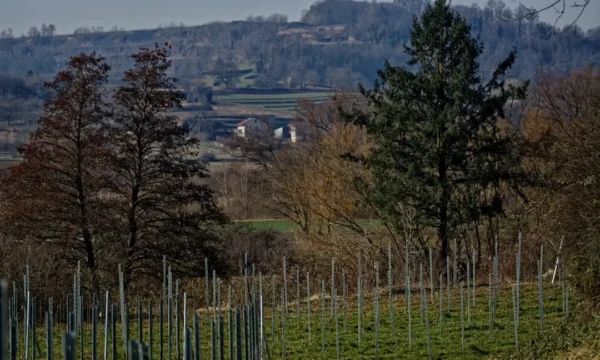
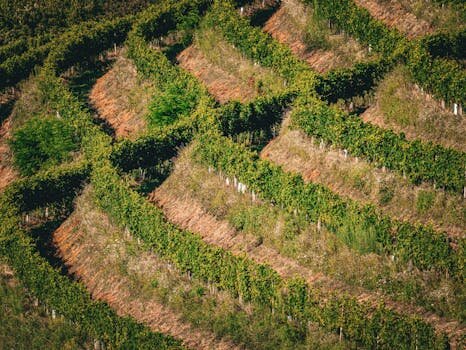
The German Wine Institute reports that roughly half of the Mosel’s vineyard area sits on steep or terraced land above a 30% gradient, with some parcels considerably steeper still. The official Mosel profile confirms the region holds more steep vineyard land than any other in Germany, much of it demanding extensive hand work.
In a northerly wine region, a well-exposed slope intercepts more sunlight than flat ground. Steep terrain also sheds water quickly, alters airflow and creates real erosion and access challenges.
These effects shift with direction. A south- or southwest-facing parcel receives different light than an east-facing side valley. A high, wind-exposed site behaves differently from a sheltered amphitheater.
Steepness is therefore both an ecological variable and a cost driver. Hand pruning, tying, canopy work and harvest can demand far more labor than mechanized flatland viticulture. Price may reflect that difficulty—but steepness alone is not a quality score.
The Mosel is more than the Middle Mosel
| Area | Broad growing context | Useful bottle clue |
|---|---|---|
| Lower Mosel / Terrassenmosel | Narrow river corridor, steep terraces and mixed slate or greywacke contexts; mechanization is difficult. | Look to producer and Einzellage. Terraced origin alone won’t tell you finished sweetness. |
| Middle Mosel | Internationally known Riesling villages and steep Devonian slate vineyards around Bernkastel, Wehlen, Graach, Ürzig and Piesport. | Vineyard names recur often; compare the same site across producers or styles. |
| Saar | A Mosel tributary with varied elevation, exposure and generally later-ripening contexts. | Don’t reduce the Saar to one “light” profile; check vintage, alcohol and producer. |
| Ruwer | A smaller tributary zone with distinctive valley and site conditions. | Producer identity matters more here, given the limited number of estates and bottlings. |
| Upper Mosel | Near Luxembourg, with more Muschelkalk and a stronger presence of Elbling and other varieties. | Don’t apply Middle Mosel slate assumptions to Upper Mosel bottles. |
These are orientation points, not appellation tasting notes. Local weather and parcel-level differences can be substantial even within one village.
What Mosel soils and rocks actually do
The official regional profile identifies clay-rich slate and greywacke in parts of the Lower Mosel, Devonian slate across many steep Middle Mosel sites, sandy and gravelly soils on flatter land, and Muschelkalk in the Upper Mosel. Soil depth, particle size, cracks in the bedrock and organic matter all affect how roots and water move through a parcel.
Dark rock fragments can warm in sunlight, but the magnitude depends on surface cover, moisture, wind, slope and time of day. Shallow, stony ground drains quickly and can limit vigor; deeper material holds more water.
In a dry year, access to water may prove decisive. In a wet year, drainage and grape health often matter more.
This is why “slate” should be treated as incomplete information. Two slate sites can differ in depth, weathering, orientation, elevation and water supply—and two parcels inside one named vineyard can perform quite differently.
Does slate create a mineral taste?
Tasters often reach for words such as slate, flint, wet stone, smoke, chalk or salt. These are sensory metaphors, not proof that vineyard minerals have moved intact into wine as flavor compounds. Acidity, sulfur compounds, fermentation aromas, restrained fruit expression, texture and expectation can all shape what a taster calls “mineral.”
A 2024 peer-reviewed study of German Riesling found that revealing a marketed soil type could alter expert sensory judgments. The authors cautioned against reducing terroir to deterministic soil flavors, recommending focus instead on measurable properties such as texture, porosity, rooting depth, water retention and heat behavior. See the OENO One study.
A better way to use soil information
- Before tasting: record only producer, vintage and sweetness level; hide the soil description.
- During tasting: score acidity, sweetness, alcohol, body, aroma, phenolic grip and finish separately.
- After tasting: reveal the site and geology, then ask whether the growing context helps explain—not dictate—your observations.
- Across bottles: repeat the exercise with one producer’s wines from two sites to reduce cellar-style variation.
How site, vintage and winemaking interact
Terroir does not operate independently of the year. A warm, dry season can intensify water stress in shallow parcels. A cooler, wetter season can delay ripening and raise disease pressure. Harvest date, crop level and grape selection then shape must composition and Oechsle readings.
Cellar choices widen the difference further. Stainless steel or old Stückfass, spontaneous or inoculated fermentation, lees contact and the decision to retain residual sugar all shape the finished wine. A dry GG and a fruit-sweet Kabinett from the same vineyard may share origin but express it through entirely different structures.
That is also why regional claims should stay modest. The right question isn’t “What does blue slate taste like?” It’s “How did this parcel, season and producer combine to create this bottle?”
A four-bottle Mosel terroir tasting
- Hold the producer constant. Buy two vineyards from one estate in the same vintage and sweetness category.
- Hold the site constant. Buy one vineyard from two producers to see how estate style changes the result.
- Hold the vintage constant. Compare trocken and residual-sugar wines from the same year.
- Add time. Compare a current release against a mature bottle with credible storage history.
Serve the wines at similar temperatures in the same glasses. Taste blind when possible. This won’t isolate terroir perfectly, but it’s far more informative than comparing unrelated bottles and attributing every difference to rock color.
How to read a Mosel label for origin
- Producer: often the single most predictive clue to farming, fermentation and house style.
- Village or Einzellage: narrows origin, though famous names may contain many parcels and producers.
- Vintage: supplies the growing-season context.
- Prädikat: Kabinett, Spätlese, Auslese and higher terms relate to grape ripeness and harvest conditions—not one fixed sweetness level.
- Taste term: Trocken is legally dry; Feinherb is not a fixed statutory band.
- Alcohol: useful stylistic context, though not a direct residual-sugar measurement.
- VDP markings: identify the association’s origin hierarchy and, for GG, a dry wine from a VDP.Grosse Lage site.
Use the German Riesling label guide for a complete decoding workflow.
Common Mosel terroir myths
| Claim | More accurate framing |
|---|---|
| “All Mosel vineyards are slate.” | Slate is important, but the official region also includes greywacke, sand, gravel and Muschelkalk contexts. |
| “Blue slate tastes like peach; red slate tastes like spice.” | No reliable, deterministic soil-color flavor map has been established. |
| “The river always reflects heat into the vines.” | Water can influence local light and climate, but the effect depends on geometry, weather, season and parcel. |
| “Steeper means better.” | Slope can improve exposure and drainage while raising labor and risk; quality still depends on the whole system. |
| “Minerality proves terroir.” | Minerality is a variable sensory term shaped by wine composition and tasting expectations. |
Primary sources
- German Wine Institute: Mosel region profile
- German Wine Institute: soil and vineyard sites
- German Wine Institute: Riesling
- OENO One: soil-type cues and German Riesling sensory perception
Frequently asked questions
Does Mosel slate directly flavor Riesling?
No direct rock-to-wine flavor pathway has been established. Slate can affect drainage, rooting and surface heat, while sensory results also depend on vintage, farming and winemaking.
Are all Mosel vineyards planted on slate?
No. Slate is prominent in many steep sites, but the official regional profile also lists greywacke, sandy and gravelly soils, and Muschelkalk in the Upper Mosel.
Why are steep Mosel slopes important?
Slope and aspect can improve sunlight interception and drainage in a northerly region. Steepness also increases erosion, safety challenges and manual labor.
What does Mosel minerality mean?
It is a tasting descriptor, not a measured transfer of rock flavor. Tasters may use it for combinations of acidity, citrus, smoke, wet-stone, reductive or low-fruit impressions.
How can I compare Mosel terroirs fairly?
Taste wines from the same producer and vintage but different sites, then reverse the comparison by tasting one site across producers. Keep sweetness and serving temperature similar.
Related reading
Germany Rieslings Editorial Team
German Wine Editorial ReferenceResearched, structured, and fact-checked against official Deutsches Weininstitut (DWI) documentation, German Federal Wine Law (Weingesetz), and VDP.Die Prädikatsweingüter standards.