Sustainable German Riesling in 2026: VDP Certification, Organic Farming & Lighter Bottles
Sustainability in German Riesling now means more than organic farming. In 2026, the key distinction is between sustainability certification — which can span environmental, social and economic criteria — and organic or biodynamic certification, which follows separate rules for vineyard and cellar work.
The VDP reports that its five-year, association-wide goal was met in 2025: every VDP estate completed a sustainability-certification process. That does not mean every VDP estate farms organically. Per the 2026 situation report, 82 estates farm 40.3% of VDP vineyard area organically (including land still in conversion), and roughly one in ten estates works biodynamically.
VDP sustainability and organic farming are not the same thing

| Term | What it covers | What it does not automatically mean |
|---|---|---|
| Sustainability certification | Environmental performance plus economic and social criteria, depending on the certifying body | That the vineyard is certified organic |
| EU organic / Bio | Regulated organic vineyard and cellar practices, verified by annual independent inspection | That the winery holds a broader social or economic sustainability certification |
| Biodynamic | Organic farming plus additional standards under bodies such as Demeter or Respekt Biodyn | That every wine from a sustainability-certified estate is biodynamic |
| VDP membership | VDP quality, origin and association rules; sustainability certification is now part of that framework | Automatic EU-organic certification |
What changed at the VDP by 2025?

Five years ago, the VDP set a goal: every member estate would complete sustainability certification. Its 2026 situation report confirms this was achieved in 2025. The current VDP grower directory lists 198 member estates.
The same report offers a useful reality check on organic farming. Only 82 VDP estates farm 40.3% of the association’s vineyard area organically — including sites still converting — and around one in ten works biodynamically. These numbers matter: “sustainable,” “organic” and “biodynamic” are not interchangeable labels, even within an association as exacting as the VDP.
Which sustainability seals can appear on German wine?
The German Wine Institute recognizes three German sustainability systems: Fair’n Green, FairChoice and EcoStep-Wine. Each takes a wider view than organic farming alone, weighing social and economic criteria alongside environmental performance.
Fair’n Green, for instance, structures its standard around sustainable business practice, society, environment and the value chain. Certified estates face annual review, with minimum requirements verified by an independent control body.
For organic wine, look for the EU organic leaf and its accompanying control-body code on the label. German estates may also belong to organic associations such as Ecovin, Bioland or Naturland. Biodynamic producers may carry the Demeter or Respekt Biodyn seal once certified to those standards.
What organic viticulture changes in the vineyard

Per the German Wine Institute, certified organic viticulture excludes synthetic pesticides, artificial fertilizers and herbicides. Organic growers instead rely on mechanical weed control, cover crops, organic nutrient sources and permitted plant-protection materials.
One nuance often lost in marketing copy: organic does not mean “no spraying.” The DWI notes that organic growers can require more frequent applications, since permitted contact treatments sit on the plant surface and must often be renewed after rain or weather exposure.
The goal isn’t a simplistic absence of intervention. It’s a regulated farming system built on different permitted inputs, with real emphasis on soil health, biodiversity and ecosystem management.
Why steep Riesling vineyards make sustainability harder

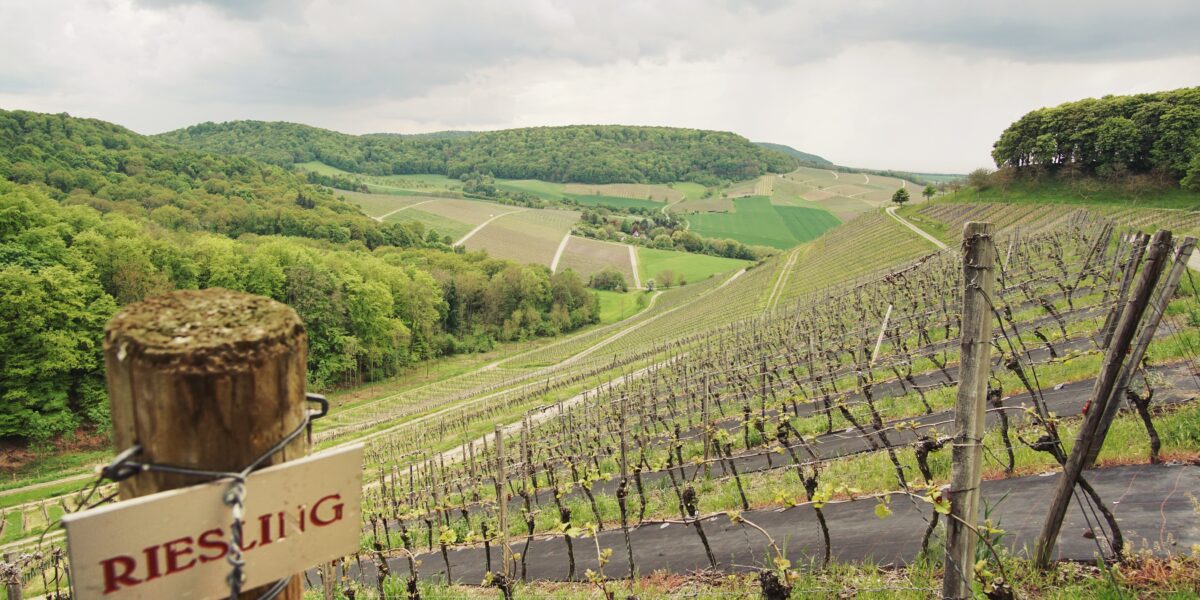
Steep sites across the Mosel, Mittelrhein and parts of the Rheingau complicate labor, erosion control and mechanization considerably. Work that’s routine on flat ground can demand far more manual effort on terraced Devonian slate slopes.
Ground cover between rows helps protect soil and biodiversity. Pheromone-based mating disruption is another established tool against grape berry moth — the DWI reports it’s used on more than half of German vineyard area, across both organic and conventional farming.
For buyers, the key point: a steep-slope bottle isn’t sustainable simply because the site looks traditional. Check the producer’s actual certification, farming statement and current technical sheet.
Why lighter wine bottles matter

Bottle sustainability is another area prone to unsupported claims. The German Wine Institute makes a simpler, defensible point: lighter, thin-walled bottles require fewer resources to manufacture and transport, so reducing glass weight can lower the footprint of distribution.
That supports a practical buying principle, without pretending there’s one universal “correct” bottle weight. Bottle design, recycled-glass content, transport distance, reuse systems and logistics all shape the real result.
The DWI also notes that green glass can carry an especially high share of recycled content — averaging a little over 60% in its cited figures, and higher still in some production runs.
Does organic German Riesling taste different?

Not in any way certification alone can guarantee. The German Wine Institute states plainly that organic wines cannot be distinguished by taste from conventionally grown wines of equivalent quality. Site, vintage, ripeness at harvest, fermentation choices and élevage still shape what’s in the glass — whether the wine is a bone-dry Trocken or a delicately sweet Kabinett.
That’s the more useful way to shop: treat certification as evidence of farming or management practice, not as a tasting note or a quality score.
How to verify a sustainability claim before buying

- Identify the claim. Is the producer saying organic, biodynamic, sustainably certified, regenerative, or simply “sustainable”? These are not interchangeable.
- Look for the seal. EU organic, Fair’n Green, FairChoice, EcoStep-Wine, Demeter and other marks each have a different scope.
- Check the current producer page. Farming status shifts as estates enter or complete conversion.
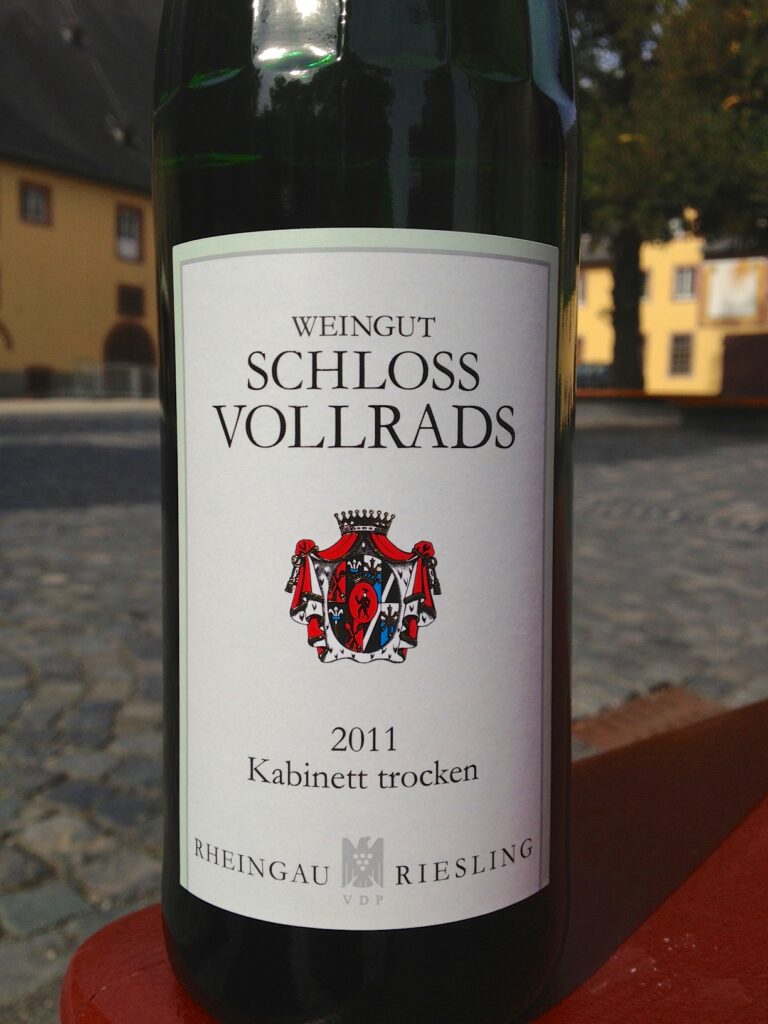
- Separate VDP membership from organic status. VDP membership now sits within an association-wide sustainability-certification agenda — but membership alone doesn’t mean organic.
- Read packaging as one part of the picture. Lighter glass can reduce material and transport burden, but bottle weight alone doesn’t measure a winery’s total sustainability.
What this means for German Riesling buyers in 2026
The real shift is better differentiation. A buyer can now ask three separate questions: How is the vineyard farmed? How is the winery run? How is the wine packaged and shipped? One logo rarely answers all three.
For VDP estates, sustainability certification is now association-wide, while organic and biodynamic farming remain a substantial — but smaller — subset. For non-VDP producers, the same principle holds: check the specific certification rather than leaning on prestige, bottle design or vague environmental language.
Related guides
- Best German Riesling Producers by Region
- German Riesling Winemaking & Viticulture Guide
- German Riesling Regions Explained
- How to Read a German Riesling Label
Primary sources
Germany Rieslings Editorial Team
German Wine Editorial ReferenceResearched, structured, and fact-checked against official Deutsches Weininstitut (DWI) documentation, German Federal Wine Law (Weingesetz), and VDP.Die Prädikatsweingüter standards.