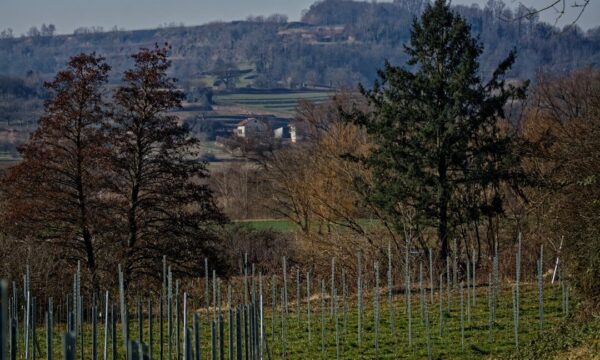
Nahe Wine Region
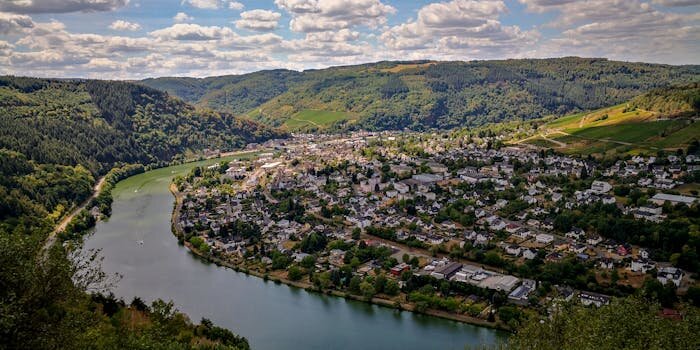
About Nahe
The Nahe is a geological anomaly—over 180 distinct soil formations compressed into a mere 4,200 hectares. Strung along the Nahe River and its tributaries, between the Hunsrück hills and the North Palatinate Uplands, this valley bridges two worlds: the structural richness of Germany’s southern regions and the crystalline slate acidity of the north. Volcanic porphyry, melaphyre, ancient Devonian slate, red sandstone, and quartzite all converge here, producing Rieslings defined by structural precision, mineral tension, and remarkable cellar longevity.
Geography, Topography, and the Soonwald Climate Shield
The Nahe stretches roughly 60 miles from its source near Nohfelden in the Saarland to its confluence with the Rhine at Bingen. The viticultural zone occupies the lower 40 miles, where the river cuts through dramatic valleys flanked by steep rock faces, forested ridges, and rolling hills.
Climatically, the Nahe sits in a favored transition zone. The high, densely forested Soonwald ridge—part of the greater Hunsrück range—rises to the north and northwest, acting as a thermal shield against cold Atlantic fronts and heavy storms. The result: moderate rainfall (roughly 500–650 mm annually), abundant sunshine, and cooling nocturnal air drainage from the surrounding heights.
This diurnal swing—warm, sheltered valley days followed by cool mountain-driven nights—is essential to cold-climate viticulture. It extends ripening well into October and November, letting Riesling build phenolic maturity and aromatic complexity while retaining its vital malic and tartaric acid backbone.
The 180-Soil Crossroads: Decoding Nahe Geology
No wine region in Europe holds as many distinct geological formations within such a narrow footprint. The Nahe sits at the chaotic collision zone between the Permian Saar-Nahe Basin and the ancient Devonian Rhenish Massif. Millions of years of volcanic eruption, tectonic upheaval, inland-sea sedimentation, and river erosion have exposed five primary soil groups—each leaving its signature on the wine.
1. Volcanic Porphyry (Rhyolite)
Born of explosive Permian volcanism, quartz-rich porphyry concentrates in the Upper Nahe around Bad Münster am Stein, Norheim, Traisen, and Schlossböckelheim. Stony and nutrient-poor, these soils force roots deep into bedrock fissures. Wines from sites like Felsenberg or Kupfergrube carry flinty reduction, savory herbal notes, firm grip, and a smoky, almost gunpowder-edged mineral finish.
2. Melaphyre (Basic Volcanic Rock)
A dark, fine-grained volcanic rock rich in iron, magnesium, and feldspar, melaphyre retains solar heat while balancing water access through dry summers. It yields Rieslings with dark, spicy stone fruit, dense mid-palate weight, and an earthy, crystalline mineral frame.
3. Devonian Blue and Carboniferous Slate
Found in the steep lateral valleys of the Upper Nahe (Bockenau) and the cooler northern reaches of the Lower Nahe (Münster-Sarmsheim), these ancient marine slates echo the terroir of the neighboring Mosel. Slate absorbs daytime heat and radiates it back to the vines at night. The result: high-toned floral aromatics, white peach, green apple, razor-sharp focus, and a saline, electric mineral drive.
4. Rotliegend (Permian Red Sandstone & Clay Siltstone)
Formed under arid conditions some 280 million years ago, the iron-rich, rust-red Rotliegend soils appear around Bad Kreuznach and select slopes near Monzingen. Warm and heat-retentive, they produce Rieslings with broader shoulders, exotic citrus and spice, red fruit nuance, and an expressive, textured palate.
5. Loess, Loam, and Quartzite Gravels
Across the flatter benches and rolling hills of the Middle and Lower Nahe, wind-blown loess, calcareous loam, and river gravels predominate. These nutrient-dense, water-retentive soils support generous, accessible fruit with softer perceived acidity—ideal terrain for estate Gutsweine, Weissburgunder, and Grauburgunder.
Regional Sub-Zones: Upper, Middle, and Lower Nahe
Viticulture along the Nahe divides into three distinct sectors running sequentially along the river’s course.
The Upper Nahe (Oberhausen, Niederhausen, Schlossböckelheim, Monzingen, Bockenau)
The Upper Nahe is cooler, dramatically steep, and volcanically dominated—the epicenter of the region’s finest dry Rieslings. The river cuts through narrow gorges beneath towering cliffs like the Rotenfels, the highest sheer rock face north of the Alps. Vineyards climb slopes of up to 70% gradient. Intense solar radiation on south-facing amphitheaters, met by chilly Hunsrück breezes, produces wines of extreme tension, precision, and longevity.
The Middle Nahe (Bad Kreuznach, Norheim, Traisen, Bad Münster am Stein)
As the valley broadens around the historic spa towns of Bad Münster and Bad Kreuznach, the climate warms. Sheer volcanic gorges give way to rolling slopes layered with Rotliegend, loam, and gravelly sand. Middle Nahe Rieslings balance mineral spine with riper, fleshier stone fruit—yellow peach, mirabelle plum, rich spice.
The Lower Nahe (Dorsheim, Münster-Sarmsheim, Langenlonsheim, Laubenheim)
Approaching the Rhine near Bingen, the Lower Nahe borders both the Rheingau and Rheinhessen. The valley opens into a gentler, warmer microclimate. Soils shift between gravelly riverbeds, loess terraces, and pockets of weathered Devonian slate. Wines here show generous weight, yellow orchard fruit, fine creaminess, and elegant acidity.
Nahe vs. Mosel, Rheingau, and Pfalz
The Nahe occupies a stylistic sweet spot in German viticulture—avoiding both the extreme lightness of the northern slate valleys and the opulent density of the southern plains. The table below sets it against its neighbors:
| Region | Dominant Soils | Primary Flavor Signature | Acidity Profile | Body & Texture |
|---|---|---|---|---|
| Nahe | Volcanic Porphyry, Melaphyre, Slate, Rotliegend | White peach, cassis, red apple, flint, smoky minerality | Crystalline, electric, balanced | Medium body; structural tension and depth |
| Mosel | Devonian Blue, Grey, and Red Slate | Green apple, lime, white flowers, wet slate, slate dust | High, piercing, delicate | Light to medium-light; ethereal and low alcohol |
| Rheingau | Quartzite, Loess, Clay, Chalky Marl | Ripe apricot, yellow peach, spice, fine herbs | Firm, structured, aristocratic | Medium to full; powerful, structured core |
| Pfalz | Buntsandstein (Red Sandstone), Limestone, Basalt, Loess | Tropical fruit, mango, apricot, citrus blossom, earthy spice | Ripe, integrated, softer | Full, rich, rounded, and generous |
VDP.Grosse Lagen: The Grand Crus of the Nahe
Under the classification system governed by the VDP (Verband Deutscher Prädikatsweingüter), the finest single vineyards carry the designation VDP.Grosse Lage. Dry wines from these sites are bottled as VDP.Grosses Gewächs (GG)—the pinnacle of dry German winemaking.
Niederhäuser Hermannshöhle
Widely regarded as the greatest single vineyard in the Nahe for over a century, Hermannshöhle is a steep, south-facing amphitheater rising directly above the river. Its bedrock is dark, carbon-rich Devonian slate interspersed with volcanic melaphyre and a narrow seam of limestone marl. Rieslings here combine mineral power, crystalline purity, blackcurrant leaf, grapefruit, and exotic spice, with flawless balance across both dry GG bottlings and noble Prädikat wines.
Bockenauer Felseneck
Set in a cool side valley of the Upper Nahe, Felseneck is a wind-swept slope of blue Devonian slate, volcanic basalt, and quartzite gravel. Driven to world renown by Weingut Schäfer-Fröhlich, it yields wild, spontaneously fermented Rieslings marked by intense reduction, savory herbal aromatics, electric acidity, and an uncompromising, stone-cold mineral drive.
Monzinger Halenberg and Frühlingsplätzchen
Monzingen boasts two world-class Grosse Lagen. Halenberg sits on blue slate and hard Taunus quartzite, yielding compact, laser-focused wines with herbal tea, grapefruit pith, and crushed-rock salinity. Nearby Frühlingsplätzchen, on weathered red slate and loam, delivers a more open, floral, peach-inflected charm in its youth.
Schlossböckelheimer Felsenberg and Kupfergrube
These two legendary volcanic sites define the raw power of the Upper Nahe. Felsenberg sits beneath massive porphyry towers, producing firm, smoky, tightly wound wines. Kupfergrube—a steep, terraced amphitheater historically planted on a copper mining basin—is built on melaphyre and volcanic debris, delivering dense, powerful, deeply savory Rieslings of profound aging potential.
Dorsheimer Burgberg and Goldloch
Near Burg Layen in the Lower Nahe, Burgberg (steep slate and loam) and Goldloch (bedrock covered in gravel and loess) reveal the warmer, richer end of the Nahe spectrum. Pioneered by Schlossgut Diel, these sites yield full-bodied, structured Rieslings with ripe apricot, pineapple, and subtle spice.
Grape Varieties: Beyond King Riesling
Riesling occupies roughly 27–29% of the Nahe’s vineyard area and commands the highest critical prestige. But the region’s diverse soils and variable topography also support a versatile range of classic varieties.
- Burgunder Varieties (Pinot Blanc, Pinot Gris, Pinot Noir): The Pinot family now covers over 18% of regional plantings. Weissburgunder and Grauburgunder thrive on the loess, loam, and limestone-bearing soils of the Middle and Lower Nahe, yielding dry, structured, gastronomy-friendly whites. Spätburgunder planted on volcanic and iron-rich soils produces aromatic, earthy reds with fine tannin and bright cherry fruit.
- Müller-Thurgau (Rivaner): Once planted widely for bulk production, quality-conscious estates now use old-vine parcels on cooler benches to craft fresh, floral, light-drinking summer wines.
- Dornfelder and Scheurebe: Dornfelder provides deeply colored red blends, while Scheurebe finds a compelling niche on volcanic and slate slopes, showing vibrant blackcurrant bud, grapefruit, and exotic floral aromatics.
Benchmark Nahe Producers
The Nahe’s elite reputation rests on an exceptional concentration of winemakers who prioritize site expression over cellar manipulation.
Weingut Dönnhoff (Oberhausen)
Helmut Dönnhoff, succeeded by his son Cornelius, elevated the Nahe onto the global stage during the 1990s and 2000s. Farming roughly 28 hectares across the region’s greatest sites—Hermannshöhle, Felsenberg, Brücke, Höllenpfad—Dönnhoff crafts wines of unmatched clarity, harmony, and elegance. From the estate’s entry-level Tonschiefer Trocken to legendary Auslesen and Grosses Gewächs bottlings, this is the gold standard of balanced, crystalline Nahe winemaking.
Weingut Schäfer-Fröhlich (Bockenau)
Under Tim Fröhlich, this 24-hectare estate in the cool Upper Nahe village of Bockenau has redefined modern dry German Riesling. Fröhlich relies exclusively on spontaneous indigenous-yeast fermentation, harvesting late from steep, low-yielding plots in Felseneck, Stromberg, Halenberg, and Frühlingsplätzchen. The wines are uncompromising—intense wild reduction, explosive salinity, searing energy, deep structural extract.
Weingut Emrich-Schönleber (Monzingen)
Frank Schönleber and his family have made Monzingen one of the most revered addresses in Germany. Focused intensely on Halenberg and Frühlingsplätzchen, Emrich-Schönleber produces Rieslings that bridge tension and charm with rare mastery. Dry GGs show laser-etched precision, herbal purity, and stony minerality, while the off-dry and sweet Prädikat bottlings achieve exceptional balance.
Schlossgut Diel (Burg Layen)
In the Lower Nahe, Schlossgut Diel—led by Caroline Diel—is famed for its mastery of both Riesling (from Dorsheimer Goldloch, Burgberg, and Pittermännchen) and Burgundian varieties. Diel’s wines emphasize texture, depth, and structural complexity, aging gracefully in traditional large-format Stückfass casks.
Gut Hermannsberg (Niederhausen)
Once the historic Royal Prussian State Domaine, founded in 1902, Gut Hermannsberg was revitalized in 2009. The estate farms 30 hectares of steep, exclusively classified Grosse Lage vineyards across the Upper Nahe, including the monopole Hermannsberg and the legendary Kupfergrube. Its focus rests almost entirely on dry, cellar-worthy Rieslings given extended lees contact before release.
Wine Styles, Sweetness Levels, and Cellaring
Though historically famous for balanced off-dry wines, modern Nahe production is anchored firmly in dry winemaking—top estates dedicate 70–85% of output to Trocken styles. The region remains equally capable of ethereal residual-sweet and noble-rot dessert wines whenever vintage conditions allow.
- Gutswein & Ortswein (Estate & Village): Drink within 1–5 years. Fresh, lively, mineral-driven—an immediate window into regional terroir.
- VDP.Grosses Gewächs (GG): Peak maturity between 5 and 18+ years. These need 3–5 years of bottle age to shed youthful reduction and reveal complex savory, flinty, orchard-fruit layers.
- Kabinett & Spätlese (Fruity/Off-Dry): Peak maturity between 7 and 25+ years. Vibrant natural acidity balances residual sugar, preserving fresh citrus, stone fruit, and herbal vitality across decades.
- Auslese, Beerenauslese (BA), and Trockenbeerenauslese (TBA): Capable of evolving for 30 to 50+ years in cold cellar conditions. Check the vintage archive for specific harvest profiles and botrytis reports.
Visiting the Nahe: Wine Tourism and Terroir Hiking
The Nahe’s compact geography makes it one of Germany’s most accessible regions for wine travel and viticultural education. The Weinwanderweg Rhein-Nahe runs nearly 60 miles through the heart of the vineyards, tracing the geological fault lines that connect the steep slate terraces of Niederhausen with the red sandstone cliffs of Bad Kreuznach. Most estate tasting rooms sit within a 20-minute drive of Bad Kreuznach or Bad Sobernheim, offering intimate cellar-door visits and guided tastings when arranged through regional wine tour itineraries.
Frequently Asked Questions
What makes Nahe Riesling taste different from Mosel Riesling?
What are the best vineyards in the Nahe region?
Is Nahe wine predominantly dry or sweet?
How long can you age a top Nahe Riesling?
For vintage evaluations and optimal maturity guidelines, see our Nahe Riesling Vintage Chart: Ratings & Drinking Windows.
Viticultural Heritage & Terroir
Premier Wineries in Nahe
All Wineries →
Schäfer-Fröhlich
Schäfer-Fröhlich works six Nahe vineyard sites from Bockenau to Monzingen. Read about its dry Riesling,…
Emrich-Schönleber
Emrich-Schönleber centers its Monzingen Riesling range on Halenberg, Frühlingsplätzchen and Auf der Ley, with both…
Dönnhoff
Dönnhoff works across varied Nahe Riesling sites, from Hermannshöhle and Felsenberg to the small Brücke…