Emrich-Schönleber
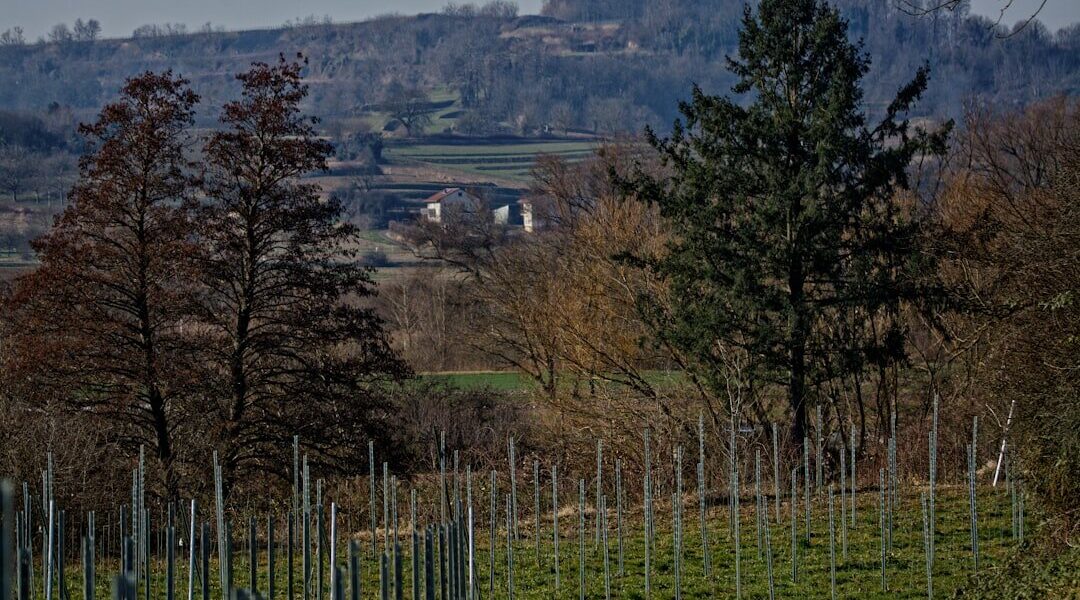
Estate Overview & Philosophy
Emrich-Schönleber farms 21.9 hectares in Monzingen, on the Nahe‘s northern edge. Frank Schönleber presides over an estate defined by three names: Halenberg, Frühlingsplätzchen and Auf der Ley.
The current VDP profile reports 85% Riesling, with smaller shares of Pinot Gris and Pinot Blanc. Dry wines anchor the range, alongside a continuing commitment to fruit-sweet Spätlese.
Emrich-Schönleber at a glance
| Base | Monzingen, Nahe |
|---|---|
| Owner and cellarmaster | Frank Schönleber |
| VDP area | 21.9 ha |
| Grape mix | 85% Riesling, 7% Pinot Gris, 5% Pinot Blanc |
| Geology summary | Slate, quartzite and gravel |
| VDP membership | Since 1994 |
Why this estate matters
Halenberg is the estate’s core. Frank Schönleber holds more than 60% of this steep site, having helped reclaim parcels left to scrub after decades of neglect.
Auf der Ley stands apart: a separate, very limited Grosse Lage bottling. Frühlingsplätzchen offers a second Monzingen reference point, distinct in exposition and character.
The VDP currently lists Fair Choice sustainability certification for the estate and names the dry “Mineral” Riesling as its entry point. These are the verifiable facts — not vague claims about “terroir-driven” style.
Vineyards and origin
Monzinger Niederberg holds Erste Lage status. Halenberg, Frühlingsplätzchen and Auf der Ley are classified Grosse Lage. Check the exact VDP tier printed on the bottle rather than assuming these names are interchangeable.
A vineyard name marks an origin — not a guaranteed aroma or score. Devonian slate, aspect and elevation shape the vine’s environment, but vintage, harvest timing, fermentation, élevage and bottle age all shape the wine in the glass.
Compare sites within the same vintage and style before crediting any difference to soil alone.
Wine range and farming
Riesling dominates the cellar, though Pinot varieties and Sekt round out the range. Dry GG bottlings carry real weight here, yet the estate has kept fruit-sweet Spätlese alive as Nahe tradition — rather than retreating into an all-Trocken portfolio.
The source confirms Fair Choice certification and an estate-wide sustainability commitment. It does not support inventing precise yields, sulfur levels or fermentation temperatures.
How to buy and compare
Start with the dry “Mineral” as a house introduction. From there, compare Halenberg and Frühlingsplätzchen at matching origin tier and vintage. Treat Auf der Ley as a small-production curiosity, not an automatic upgrade over every other bottle in the range.
- Start with style. Match Trocken/GG, Feinherb or a specific Prädikat before comparing two origins.
- Read the whole label. Producer, vintage, village or Einzellage, sweetness cue and AP number identify a wine more reliably than any shelf tag.
- Use current technical data. Alcohol, residual sugar, vessel (Stückfass or steel) and release date shift by bottling and vintage.
- For mature wine, verify provenance. Storage, fill level, closure and seller reputation outweigh a generic regional aging chart.
Classification and label context
The VDP hierarchy climbs from Gutswein through Ortswein and Erste Lage to Grosse Lage. Grosse Lage classifies the site; Grosses Gewächs, or GG, denotes the dry wine drawn from it. Fruit-sweet wines from Grosse Lage vineyards instead carry Prädikat terms — Kabinett, Spätlese, Auslese. See our Grosse Lage vs GG guide.
Visiting and current details
The VDP lists a vinotheque, tastings and cellar tours at Soonwaldstraße 10a in Monzingen. Confirm current hours, reservation policy and availability directly with the estate before traveling.
Sources
Profile checked against the linked primary sources in August 2026. Estate details can change.
Frequently asked questions
What is Emrich-Schönleber known for?
Monzingen Riesling, especially Halenberg, Frühlingsplätzchen and the limited Auf der Ley.
Is Emrich-Schönleber a VDP member?
Yes. The current VDP grower directory lists Emrich-Schönleber. The VDP is a private growers’ association; its classification is not identical to German wine law.
Which vineyards are associated with Emrich-Schönleber?
The VDP lists Halenberg, Frühlingsplätzchen and Auf der Ley as Grosse Lage, plus Monzinger Niederberg as Erste Lage.
Can you visit Emrich-Schönleber?
Policies, opening hours and tasting formats change. Check the linked official website immediately before travel and reserve where requested.
Benchmark Estate Bottlings
Wines from Emrich-Schönleber in our catalog
We have not yet catalogued a verified bottle from this estate.