Rheinhessen Wine Region

About Rheinhessen
Introduction & The Modern Quality Renaissance
Ask most wine drinkers born before 1990 what Rheinhessen means, and the answer arrives instantly: Liebfraumilch. That cheap, semi-sweet blend flooded supermarket shelves across the English-speaking world for decades.
The reputation was earned honestly. Rheinhessen remains Germany’s largest wine region by planted area. For most of the twentieth century, its flat vineyards between Mainz, Worms, and Alzey churned out high-yield, low-ambition wine by the tanker load.
What happened next is one of the great turnaround stories in wine. A cluster of young growers, many taking over family estates in villages like Westhofen, Dalsheim, and Nierstein, rejected the bulk model entirely. They replanted the best slopes, slashed yields, farmed organically or biodynamically, and began bottling dry Riesling from single vineyards with the seriousness Burgundy reserves for its Grand Crus.
This cohort became known informally as the “Message in a Bottle” generation, named for an early cooperative marketing effort that united growers now considered untouchable in fine German wine: Klaus Peter Keller, Philipp Wittmann, Kai Schätzel, and others. They shared equipment, ideas, and a stubborn conviction that Rheinhessen’s limestone and red slate soils could produce Riesling as precise and age-worthy as anything from the Mosel or Rheingau. They were right.
Today, Rheinhessen’s top Grosses Gewächs Rieslings command prices and scores that would have been unthinkable thirty years ago. Weingut Keller’s Riesling from the G-Max site now ranks among the most expensive white wines produced anywhere on earth. The region has effectively split into two identities: an ocean of correct, everyday wine on the plains, and a small, fiercely ambitious hill country producing some of the finest dry white wine in Europe.
Geography, Climate & Terroir Diversity
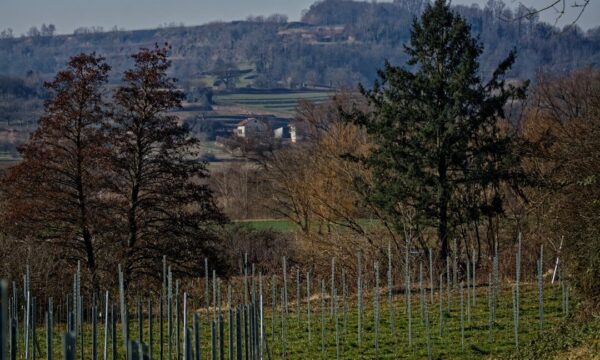
Rheinhessen sits in a broad basin west of the Rhine, bounded by the river to the east and the low hills of the Palatinate forest to the southwest. That forest, together with the Taunus range to the north, casts the region into a genuine rain shadow.
Mainz and its surrounding vineyards receive some of Germany’s lowest annual rainfall, paired with among the highest sunshine hours in the country. It is a warm, dry, forgiving climate by German standards, precisely why fully ripe, dry Riesling styles thrive here in a way they historically could not further north.
Soil diversity is what separates the serious sites from the ordinary. Three zones matter most to any student of the region:
- Wonnegau: The rolling country around Westhofen and Dalsheim sits on heavy limestone and marl, often mixed with clay. These soils retain water, buffer heat stress, and give Riesling a firm, mineral backbone with real structural tension.
- Roter Hang (Red Slope): The escarpment running through Nierstein and Nackenheim along the Rhine is colored by iron-rich Devonian slate and sandstone, a geological rarity in Germany. Wines from this slope carry a distinctive smoky, almost bloody minerality alongside surprising richness.
- Bingen: Where Rheinhessen meets the Nahe, quartzite and slate soils produce steelier, more taut Rieslings, closer in character to their Nahe neighbors than to the warmer Wonnegau.
Slope orientation compounds all of this. The steepest sites face directly south or southeast toward the Rhine, capturing reflected warmth off the water in addition to direct sun, a combination that allows full phenolic ripeness even in cooler vintages.
Iconic Vineyard Sites (Einzellagen)
Germany’s vineyard classification has, in recent decades, converged around a small number of Einzellagen recognized as capable of Grosses Gewächs, the dry Grand Cru-equivalent designation. In Rheinhessen, a handful of names now appear on the world’s finest wine lists.
Westhofen Kirchspiel
Limestone-heavy and relatively cool within Westhofen’s warm bowl, Kirchspiel produces Riesling of remarkable finesse, floral on the nose with a saline, chalky finish.
Westhofen Morstein
Arguably Rheinhessen’s most celebrated site, Morstein’s deep limestone and clay soils, farmed most famously by Weingut Keller and Wittmann, yield Rieslings of extraordinary depth, capable of aging for two decades or more.
Dalsheim Hubacker
A steep, exposed limestone slope synonymous with Klaus Peter Keller’s precision winemaking. Hubacker Rieslings show a taut, almost austere youth that unwinds into something profound with a decade in bottle.
Nierstein Pettenthal
Part of the Roter Hang, Pettenthal’s red slate delivers Riesling with real power, smoky minerality, and a texture that borders on savory.
Nackenheim Rothenberg
Perhaps the most dramatic expression of red slate in the region, Rothenberg wines, particularly from Gunderloch, combine intensity with a spicy, almost peppery undertone.
Nierstein Hipping
A gentler, more approachable Roter Hang site, Hipping tends toward riper stone fruit character while retaining the site’s characteristic mineral spine.
Signature Wine Styles & Grape Varieties
Dry Riesling, labeled Grosses Gewächs at the top tier and Trocken more broadly, is unquestionably Rheinhessen’s calling card today. These wines are fermented fully dry, often with extended lees contact, built for the table and the cellar rather than immediate consumption.
Traditional Prädikat styles have not disappeared. Kabinett, Spätlese, and occasionally Auslese Rieslings, with measured residual sugar balanced against bracing acidity, remain part of the region’s identity, particularly among producers who work in both idioms. Feinherb bottlings, off-dry with a lighter touch than full Prädikat sweetness, also find favor among some estates.
Silvaner deserves special mention. Rheinhessen has historically been Germany’s Silvaner heartland, and a serious minority of growers, including Wittmann, produce dry Silvaner GGs of genuine complexity, earthy, textural wines offering an intriguing alternative to Riesling for adventurous drinkers.
Spätburgunder plantings have also expanded meaningfully over the past fifteen years, particularly on limestone sites in the Wonnegau, as growers chase the cooler-climate elegance that a warming climate now permits even in Rheinhessen’s traditionally warm vineyards.
Benchmark Producers & Winemakers
No discussion of Rheinhessen is complete without the following estates, whose collective work over the past twenty-five years redefined what German dry white wine could be.
- Weingut Keller (Klaus Peter Keller): The region’s most celebrated name, Keller’s G-Max and Abtserde bottlings sit at the absolute summit of German wine, alongside superb work in Morstein and Hubacker.
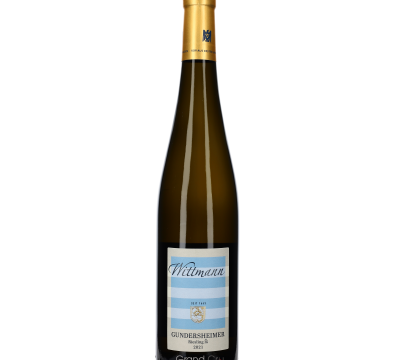
- Weingut Wittmann: A pioneer of biodynamic viticulture in Rheinhessen, producing benchmark Morstein and Kirchspiel Rieslings alongside outstanding Silvaner.
- Kühling-Gillot: Based on the Roter Hang, now working closely with Battenfeld-Spanier under shared ownership, producing precise Pettenthal and Nierstein wines.
- Schätzel: Kai Schätzel’s revival of his family estate in Nierstein has produced some of the most talked-about Roter Hang Rieslings of the past decade.
- Battenfeld-Spanier: Focused on the Wonnegau’s limestone sites, with a meticulous, terroir-first approach to both Riesling and Spätburgunder.
- Gunderloch: The definitive producer of Nackenheim Rothenberg, balancing power and finesse across a range of price points.
Wine Travel, Tasting Routes & Culinary Pairings
Rheinhessen rewards a slower kind of wine travel than the postcard drama of the Mosel’s terraced cliffs. The historic city of Mainz, with its cathedral and Gutenberg heritage, makes an obvious base. Worms offers Germany’s oldest Jewish cemetery and the historic Liebfrauenkirche, the actual namesake vineyard of Liebfraumilch.
Oppenheim deserves particular attention for its network of medieval underground cellars, carved beneath the town and connecting many of its historic buildings, a genuinely atmospheric setting for a tasting. The Roter Hang hiking trail, running between Nierstein and Nackenheim along the Rhine escarpment, offers direct views over the vineyards discussed above, with several producers pouring cellar-door tastings along the route.
On the plate, Rheinhessen Riesling’s combination of ripe fruit and cutting acidity makes it a natural partner for the Rhine’s traditional river fish, particularly pike-perch and eel, as well as the region’s beloved Spundekäs, a spiced cream cheese spread served with pretzels.
The GG-level wines, with their weight and structure, stand up comfortably to richer preparations, including pork belly, veal, and firm cheeses, while also proving surprisingly capable with seafood and Asian cuisine thanks to their acid-driven backbone.
Cellaring & Vintage Aging Potential
The great misconception about dry German Riesling is that it should be consumed young. In Rheinhessen’s top sites, the opposite holds true.
Grosses Gewächs bottlings from Morstein, Hubacker, Pettenthal, and Rothenberg typically close down into a reticent, almost stony phase two to four years after release, before re-emerging with far greater complexity between years eight and fifteen. The best examples, particularly from strong vintages, comfortably age twenty years or more, developing honeyed, petrol-tinged, savory notes while retaining the acid spine that defines the region.
Vintage variation still matters enormously. Warmer years produce riper, more immediately generous wines, achieving higher Oechsle at harvest, while cooler vintages yield the taut, high-acid examples that reward the most patient cellaring. Buyers serious about the region would do well to track vintage reports closely and, where possible, taste across a horizontal of sites in a single year to appreciate just how distinctly limestone, red slate, and quartzite express themselves in the glass.
For detailed vintage reports and drinking recommendations, consult our Rheinhessen Riesling Vintage Chart: Ratings & Drinking Windows.
Viticultural Heritage & Terroir
That began to change decisively in the late 1990s and early 2000s, when a small group of young, often family-trained winemakers, including Klaus Peter Keller, Philipp Wittmann, and their contemporaries, turned their attention to the region's overlooked hillside sites around Westhofen, Dalsheim, and the Rhine-facing Roter Hang. Inspired partly by Burgundian ideas of terroir and partly by frustration with Rheinhessen's bulk-wine reputation, they drastically reduced yields, adopted organic and biodynamic farming, and began bottling dry, site-specific Riesling under the Grosses Gewächs classification. Their loose collaborative identity, later associated with the "Message in a Bottle" campaign, helped reposition Rheinhessen internationally within little more than a decade, culminating in today's reality: a region capable of producing both Germany's cheapest and some of its most sought-after, critically acclaimed white wines.
Premier Wineries in Rheinhessen
All Wineries →
Kühling-Gillot
Kühling-Gillot links Roter Hang Riesling with Pinot from limestone sites in Rheinhessen. Compare its vineyards,…
Keller
Keller is known for dry Riesling from Rheinhessen limestone sites. Start with von der Fels,…
Weingut Wittmann
Weingut Wittmann focuses on dry Riesling from Westhofen limestone sites including Morstein and Kirchspiel. Read…