
Riesling: 19.5%
Rheinhessen
Rheinhessen has both broad wine variety and acclaimed Riesling sites. Explore Nierstein red slopes, Westhofen limestone vineyards and regional Silvaner.
Germany represents the global benchmark for cool-climate viticulture and terroir-driven Riesling. Explore detailed climatic profiles, soil geologies, signature flavor profiles, and benchmark estates across all 13 official German wine growing regions.
German wine law designates exactly 13 official wine regions (*Anbaugebiete für Qualitätswein*). While all 13 cultivate Riesling, the grape reaches its absolute qualitative zenith in the steep slate river valleys of the Mosel, Rheingau, Nahe, and Mittelrhein, as well as the sun-drenched limestone and sandstone terroirs of Rheinhessen and Pfalz.
Germany's 13 wine regions are shaped by ancient geological fault lines and river systems. Understanding their three distinct macro-climatic clusters unlocks the secret to selecting your ideal bottle.
Mosel, Nahe, Mittelrhein, Ahr
Characterized by breathtaking 60-70% slope gradients and 400-million-year-old Devonian slate soils that heat during the day and radiate warmth into the vines at night.
Rheingau, Rheinhessen, Pfalz, Baden, Württemberg
Benefiting from the protective Haardt and Odenwald mountains and warm Rhine Graben air currents. Mediterranean microclimates support almonds, figs, and powerful dry GGs.
Franken, Saale-Unstrut, Sachsen, Hessische Bergstraße
Distinct continental weather with warm summers and cold winters. Famous for Triassic Muschelkalk (shell limestone), historic Bocksbeutel bottles, and granite terraces.
Authoritative viticultural data, vineyard hectares, primary soil compositions, and signature flavor profiles.
| Region (Anbaugebiet) | Vineyard Area | Riesling Share | Primary Terroir & Soil | Signature Taste Profile | Benchmark Producers |
|---|---|---|---|---|---|
| Rheinhessen | 27,400 ha | 19.5% | Loess, Limestone, Rotliegend (Red Slate) | Full-bodied, ripe peach, mineral, citrus | Klaus Peter Keller, Wittmann, Kühling-Gillot, Wagner-Stempel |
| Pfalz | 23,700 ha | 25.8% | Buntsandstein (Red Sandstone), Limestone, Basalt | Rich, powerful, apricot, exotic fruit, structured dry GGs | Dr. Bürklin-Wolf, Von Winning, Christmann, Reichsrat von Buhl |
| Baden | 15,600 ha | 7.2% (Klingelberger) | Volcanic Basalt (Kaiserstuhl), Loess, Muschelkalk | Sun-drenched, golden, round, spicy, volcanic flint | Dr. Heger, Bernhard Huber, Franz Keller, Salwey |
| Württemberg | 11,200 ha | 18.4% | Gipskeuper, Shell Limestone, Marl | Crisp, refreshing, green apple, herbal, racy | Aldinger, Schnaitmann, Dautel, Graf Neipperg |
| Mosel (inc. Saar & Ruwer) | 8,500 ha | 62.5% | Devonian Blue, Grey & Red Slate | Laser-like acidity, low ABV (7.5-10%), slate minerality, floral citrus | Egon Müller, Joh. Jos. Prüm, Dr. Loosen, Markus Molitor, Zilliken |
| Franken | 6,100 ha | 5.8% | Triassic Muschelkalk (Shell Limestone), Bunter Sandstone | Bone-dry (Fränkisch Trocken), saline, chalky, taut minerality | Rudolf Fürst, Horst Sauer, Juliusspital, Bürgerspital |
| Nahe | 4,200 ha | 29.2% | 180+ soil types (Quartzite, Porphyry, Slate, Rotliegend) | Perfect harmony: Mosel aromatic elegance meets Pfalz body | Dönnhoff, Schäfer-Fröhlich, Emrich-Schönleber, Schlossgut Diel |
| Rheingau | 3,200 ha | 76.8% | Taunus Quartzite, Slate, Loess, Clay | Aristocratic structure, citrus, ripe yellow apple, noble botrytis | Robert Weil, Schloss Johannisberg, Georg Breuer, Peter Jakob Kühn |
| Saale-Unstrut | 850 ha | 9.1% | Muschelkalk (Shell Limestone), Sandstone | Cool-climate precision, lean, crisp green apple, floral | Weingut Pawis, Lützkendorf, Böhme & Töchter |
| Ahr | 560 ha | 8.3% | Greywacke, Devonian Slate, Volcanic Loam | Vibrant acidity, rocky slate minerality, rare & collectible | Meyer-Näkel, Jean Stodden, J.J. Adeneuer |
| Sachsen (Saxony) | 520 ha | 14.2% | Granite, Syenite, Weathered Loess | Steep terraced precision, flinty, herbal, dry | Schloss Proschwitz, Klaus Zimmerling, Weingut Schuh |
| Mittelrhein | 460 ha | 65.2% | Pure Clay Slate & Greywacke | Smoky minerality, intense acidity, zesty citrus, wild herbs | Matthias Müller, Ratzenberger, Toni Jost |
| Hessische Bergstraße | 460 ha | 48.1% | Loess, Granite, Quartz Sandstone | Aromatic, ripe peach, floral blossom, balanced freshness | Kloster Eberbach, Hessische Staatsweingüter, Simon-Bürkle |
Browse our deep-dive regional monographs, classified Grand Cru (VDP Grosse Lage) vineyards, and top estate profiles:
Rheinhessen has both broad wine variety and acclaimed Riesling sites. Explore Nierstein red slopes, Westhofen limestone vineyards and regional Silvaner.
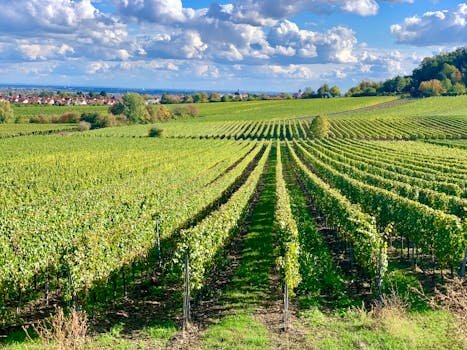
Pfalz is a major home for dry Riesling and the Deutsche Weinstraße. Compare Mittelhaardt and Südliche Weinstraße wines, villages and labels.
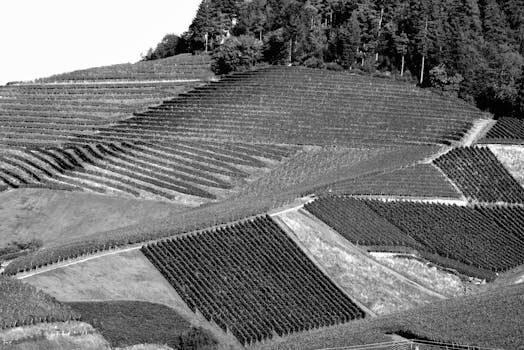
Baden spans nine wine districts, from Ortenau Riesling to Kaiserstuhl Pinot. Learn where Klingelberger fits and how to plan a focused wine…

Württemberg is known for Trollinger and Lemberger reds, while Riesling leads its white grapes. Explore Neckar vineyards, labels and local wine culture.
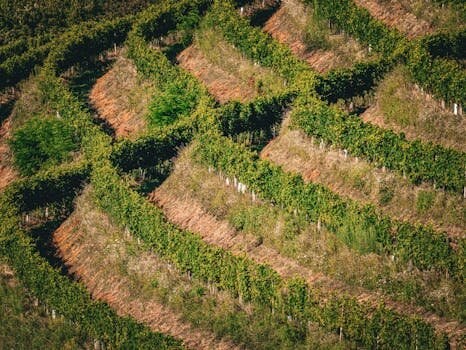
The Mosel region spans the Mosel, Saar and Ruwer valleys. Compare Riesling styles, vineyard origins and sweetness terms before choosing a bottle…
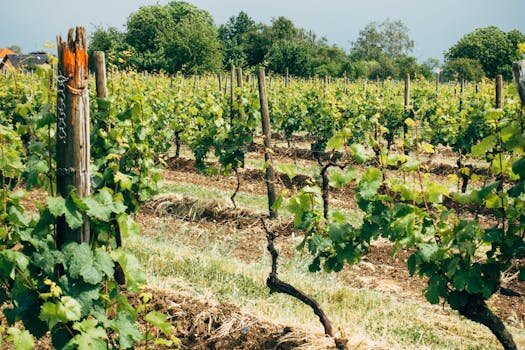
Franken wine starts with dry Silvaner and the Bocksbeutel bottle. Use Würzburg, Iphofen and the Main River wine towns to explore its…
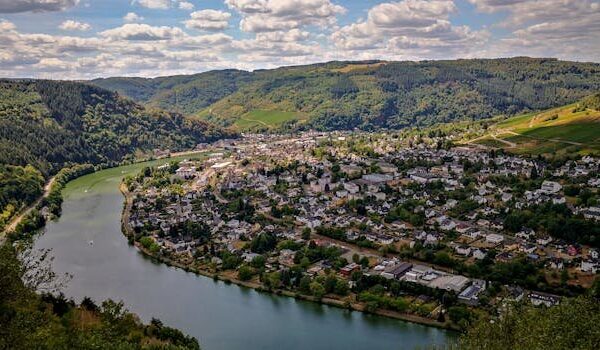
Nahe Riesling changes with its varied volcanic, sandstone and slate sites. Compare Niederhausen, Monzingen and other villages before choosing a bottle.
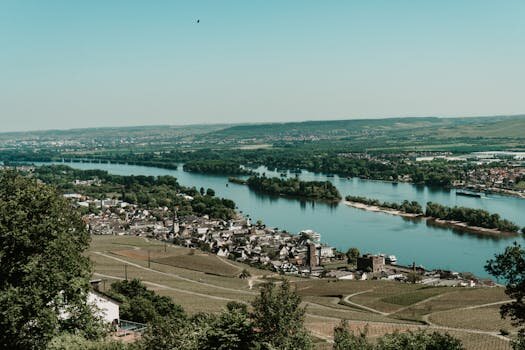
Rheingau Riesling ranges from dry vineyard wines to historic late-harvest styles. Compare Rhine-side towns, estates and Assmannshausen Spätburgunder.
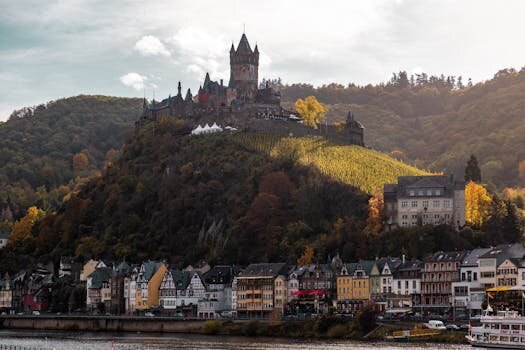
Saale-Unstrut vineyards climb the Saale and Unstrut river valleys. Discover Müller-Thurgau, Pinot Blanc and Riesling around Freyburg and Naumburg.

The Ahr is best known for Spätburgunder, with Riesling playing a smaller role. Read its vineyard labels and explore the valley wine…
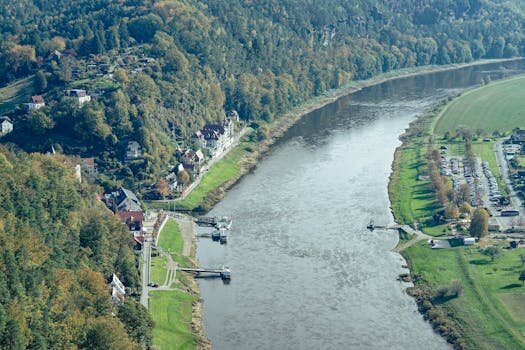
Sachsen grows Riesling and rare Goldriesling along the Elbe near Dresden and Meißen. Explore its terraced vineyards, wine route and local producers.
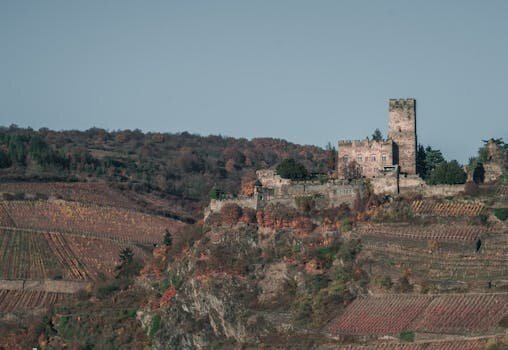
Mittelrhein Riesling grows on steep Rhine Gorge slopes. Compare Bacharach, Bopparder Hamm and Oberwesel, then learn what their labels reveal about origin.

Hessische Bergstraße is a small Riesling-led region near the Odenwald. Explore vineyards and tasting towns around Bensheim, Heppenheim and Groß-Umstadt.
Because German Riesling reflects terroir with surgical transparency, matching your taste preference to the correct region ensures you find your perfect bottle every time:
Choose: Mosel, Saar, or Ruwer.
Blue slate slopes yield 8.0%–10.5% ABV Kabinetts with electric acidity balanced by delicate natural residual sugar.
Choose: Pfalz (Mittelhaardt) or Rheinhessen (Wonnegau).
Warm climates and limestone/sandstone soils produce muscular, dry Grosses Gewächs (GG) with 13% ABV and deep texture.
Choose: Rheingau or Nahe.
South-facing river terraces produce structured, regal dry wines and botrytized dessert wines capable of aging 40+ years.
Compiled from official Deutsches Weininstitut (DWI) viticultural census data, German Federal Statistical Office (Destatis), and VDP classification records. Last updated August 2026.