Sachsen Wine Region
About Sachsen
Germany’s easternmost vineyards sit far outside the country’s better-known wine map, strung along a narrow stretch of the Elbe River valley near Dresden. Sachsen produces less than one percent of Germany’s wine, yet its granite and gneiss soils, cool continental climate, and centuries-old winemaking history give it a character no other German wine region can copy. This Sachsen wine guide explains the region’s terroir, grape varieties, label terms, and producers so a reader can choose a bottle with confidence.
Riesling has become Sachsen’s leading grape, but the region also grows Weißburgunder, Müller-Thurgau, and the rare Goldriesling. Understanding how Sachsen fits into the broader picture of German wine, alongside regions like Mosel, Rheingau, and Pfalz, helps explain why its wines taste the way they do.
Key Takeaways
- Sachsen is Germany’s easternmost and one of its smallest wine regions, following the Elbe River from Pirna to Diesbar-Seußlitz.
- A cool continental climate and granite, gneiss, and loess soils give Sachsen Riesling and other whites a lean, mineral profile with bright acidity.
- Producers like Schloss Proschwitz, Schloss Wackerbarth, and Klaus Zimmerling have rebuilt the region’s reputation since German reunification.
Where Sachsen Sits on Germany’s Wine Map
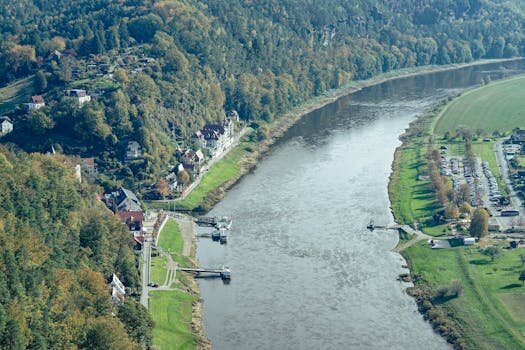
Sachsen is Germany’s easternmost wine region, stretching roughly 55 kilometers along the Elbe River between Pirna and Diesbar-Seußlitz. It lies in the German federal state of Saxony, far from the country’s larger wine regions along the Rhine and Mosel, close enough to the Czech Republic that its vineyards mark one edge of German viticulture.
The region covers approximately 500 hectares of vines, making it one of the smallest of Germany’s 13 official wine regions. Steep, terraced slopes along the Elbe Valley hold most of the vineyards, with a handful being replanted near Pillnitz and Pirna after decades of neglect.
The Elbe River Corridor From Pirna to Diesbar-Seußlitz
The Saxon Wine Route follows the Elbe for almost 60 kilometers, linking Pirna in the south to Diesbar-Seußlitz in the north. Vineyards along this stretch sit on steep, often terraced slopes above the river, where south-facing exposure helps grapes ripen despite the region’s northern latitude.
This corridor also passes through Zadel and Elstertal, smaller vineyard areas that add to Sachsen’s patchwork of sites. Cyclists and hikers share the route with vineyard workers, since the Elbe Cycle Route runs alongside the wine trail.
Dresden, Radebeul, Meißen, and Zadel
Three cities anchor the Sachsen wine region: Dresden, Radebeul, and Meißen. Vineyards sit within view of Baroque palaces and church spires, giving the region a cultural backdrop unlike anywhere else in German wine.
Dresden marks the southern hub of the region, with Radebeul and Meißen just to the northwest along the river. Pillnitz, home to a royal palace and terraced vineyards, sits close to Dresden’s city limits.
How Sachsen Compares With Germany’s Other Wine Regions
Sachsen stands apart from Germany’s larger wine regions in scale and style. Mosel’s slate slopes, Rheingau’s south-facing Rhine terraces, Pfalz’s warm sandstone sites, Baden’s varied terroir, and Franken‘s mineral-driven wines all produce far greater volumes than Sachsen, which remains a specialty region built on small-batch production and steep, hand-worked vineyards.
How Climate and Terroir Shape Sachsen Wines
Sachsen’s cool continental climate and granite-based soils produce white wines with high acidity and a lean, mineral edge. Sitting near the 51st parallel, the region ranks among the world’s northernmost wine-growing areas, alongside parts of England.
Why a Cool Continental Climate Preserves Acidity
Cold winters and warm, dry summers define Sachsen’s growing season. January temperatures average around -0.5°C, while July highs reach about 18°C, a swing that keeps grapes cool through most of the growing cycle.
This climate slows sugar buildup in the grapes while preserving natural acidity. The result is wine with brightness and tension, a hallmark of Sachsen Riesling and its Pinot family whites.
Granite, Gneiss, Loess, and Other Elbe Valley Soils
Granite and gneiss form the bedrock of much of the Sachsen wine region, tied to the ancient Meißner Pluton that surfaced during the Lower Carboniferous period. These crystalline soils drain quickly and reflect heat back onto the vines, aiding ripening in a cool climate.
Loess deposits from the last ice age overlie parts of the older granite and gneiss bedrock, adding water-retention capacity in drier spots. Sandy soils appear near some sites along the Elbe, while limestone and sandstone layers show up in isolated pockets.
Terraces, River Influence, and the Challenge of Ripening Grapes
Steep terraces along the Elbe Valley are labor-intensive to farm but essential to ripening grapes at this latitude. The river itself moderates temperature swings, reflecting sunlight onto the vines and softening frost risk in spring and fall.
Even with these advantages, Sachsen growers work against a shorter growing season than most of Germany’s wine regions. Grapes here often reach full ripeness later than in the Pfalz or Rheinhessen, which shapes the region’s lean, high-acid style.
Which Grapes and Wine Styles Should You Try?
Riesling leads Sachsen’s vineyards, followed by Weißburgunder, Grauburgunder, and Müller-Thurgau, with smaller plantings of rare varieties like Goldriesling. Nearly all of Sachsen’s wine is vinified Trocken, giving the region a distinct identity within Germany’s broader Riesling landscape.
Riesling: Dry, Tense, and Mineral-Driven
Riesling from Sachsen tends toward dry, high-acid wines with a mineral edge drawn from granite and gneiss soils. Compared to Mosel Riesling grown on Devonian slate, Sachsen versions show less ripe fruit and more citrus and stone character, a direct result of the region’s cooler climate and shorter ripening window.
Weißburgunder, Grauburgunder, Müller-Thurgau, and Goldriesling
Weißburgunder (Pinot Blanc) and Grauburgunder (Pinot Gris) round out Sachsen’s core white wine styles, often showing more weight and less acidity than the region’s Riesling. Müller-Thurgau remains one of the most widely planted grapes in Sachsen, valued for reliable ripening in a marginal climate.
Goldriesling, a Sachsen specialty rarely found elsewhere in Germany, produces aromatic, floral wines in small quantities. Kerner, Scheurebe, and Traminer (including Gewürztraminer) appear in smaller plantings across the region.
Spätburgunder, Traminer, and Sachsen Sekt
Spätburgunder (Pinot Noir), Dornfelder, and Portugieser account for Sachsen’s limited red wine production, though white grapes dominate the region by a wide margin. Sachsen Sekt, made using traditional sparkling wine methods, has grown in reputation, with several producers focused specifically on this style.
How to Read Sachsen Wine Labels and Choose a Bottle
German wine labels use regulated terms that describe sweetness, ripeness, and quality tier, and Sachsen bottles follow the same national system used across German wine regions. Learning a few key terms makes it easier to predict what’s inside the bottle.
What Trocken, Qualitätswein, and Prädikatswein Mean
Trocken means dry, and it describes most Sachsen wine, since the region’s growers favor this style. Qualitätswein is Germany’s standard quality tier, while Prädikatswein sits above it, requiring stricter rules on grape ripeness — measured in Oechsle — at harvest.
Readers new to these terms can find a full breakdown in this guide on how to read German wine labels.
Kabinett and Auslese Are Not Fixed Sweetness Levels
Kabinett and Auslese describe how ripe the grapes were at harvest, not how sweet the finished wine tastes. A Sachsen Kabinett can be fermented fully Trocken, while an Auslese from the same estate might be off-dry or sweet, depending on the winemaker’s choice.
This distinction matters more in Sachsen than in some regions, since most local producers ferment their Prädikat wines dry rather than leaving residual sugar.
A Practical Buying Path From Estate Wines to Site Selections
Starting with an estate-level bottling from a known Sachsen producer is a practical first step before moving to single-vineyard selections. This approach keeps the producer consistent while narrowing in on a specific Einzellage, making it easier to taste how terroir changes the wine.
| Label Term | What It Tells the Buyer |
|---|---|
| Trocken | Wine is dry, with minimal residual sugar |
| Qualitätswein | Standard quality tier, grapes meet baseline ripeness |
| Prädikatswein | Higher ripeness tier, based on harvest Oechsle levels |
| Kabinett | Lightest Prädikat ripeness level, often dry in Sachsen |
| Auslese | Higher ripeness level, style varies by producer |
Notable Producers and the Region’s Revival
Sachsen’s wine industry nearly disappeared during the German Democratic Republic era and has rebuilt itself since German reunification in 1990. A small group of producers now anchors the region’s reputation for quality.
Schloss Proschwitz and Sachsen’s VDP Presence
Schloss Proschwitz is Sachsen’s largest private winery and its main VDP member, farming roughly 71 hectares near Meißen. As the region’s benchmark VDP estate, it offers a useful reference point for readers comparing Sachsen’s Grosses Gewächs and Prädikat wines against other German regions where VDP membership is more common.
Schloss Wackerbarth and the State Wine Estate
Sächsisches Staatsweingut Schloss Wackerbarth operates as Sachsen’s state-owned wine estate, combining winemaking with tourism near Radebeul. It produces a wide range of styles, including Sachsen Sekt, and serves as one of the region’s most visited wineries.
Klaus Zimmerling, Martin Schwarz, and Independent Estates
Weingut Klaus Zimmerling farms small parcels on steep terraces near Pillnitz, producing wines in tiny quantities with a focus on precision. Weingut Martin Schwarz has built a reputation for careful, small-scale winemaking as well.
Vincenz Richter, one of the region’s older producers, adds further depth to Sachsen’s growing list of quality-focused estates. Together, these producers represent the modern revival of a winemaking tradition that dates back over 850 years.
Frequently Asked Questions
Where is the Sachsen wine region in Germany?
What does Sachsen Riesling taste like?
Which grape varieties are most important in Sachsen?
Is Sachsen the smallest German wine region?
Which Sachsen wineries are worth visiting?
What food pairs well with Sachsen wine?
Viticultural Heritage & Terroir
Premier Wineries in Sachsen
All Wineries →
Schloss Proschwitz
Schloss Proschwitz is a roughly 71-hectare VDP estate near Meißen and the largest private winery…
Benchmark Wines from Sachsen
All Wines →Explore our wine catalog for bottles from this region.