German Riesling Winemaking Guide: Viticulture, Fermentation & Cellar Choices
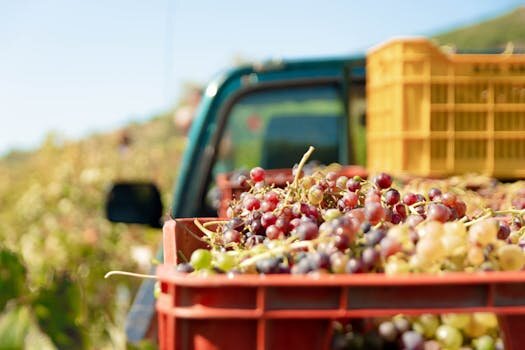
German Riesling takes shape through a sequence of vineyard and cellar decisions, not a single correct recipe. Growers manage canopy, crop level, grape health and harvest timing; cellar teams then choose pressing, juice clarification, yeast, fermentation vessel, temperature, sweetness, lees contact, oxygen protection and bottling. Each choice shifts risk and style, but none guarantees quality on its own.
This guide focuses on what those decisions can plausibly change in the finished wine. For the chronological harvest-to-bottle sequence, use How German Riesling Is Made. For label categories and minimum must weights, use the German wine-classification guide.
German Riesling winemaking decisions at a glance
| Decision | What it can influence | What not to assume |
|---|---|---|
| Canopy and crop management | Sun exposure, airflow, disease pressure, yield and ripening. | Lower yield or more leaf removal always means better wine. |
| Harvest timing and selection | Acidity, sugar, grape health, botrytis and potential style. | Later harvest automatically means sweeter finished wine. |
| Pressing and skin contact | Juice yield, phenolics, aroma precursors and texture. | Whole-bunch pressing is always gentler or superior. |
| Yeast and fermentation control | Fermentation reliability, aroma development, residual sugar and risk. | Spontaneous fermentation guarantees complexity. |
| Steel, old cask or newer wood | Temperature control, oxygen exposure, texture and possible oak flavor. | Stainless steel tastes “mineral” or old cask tastes oaky. |
| Lees and maturation | Texture, integration, reduction and release timing. | Longer lees aging is always better. |
| Stabilization and bottling | Microbial stability, oxygen exposure and shelf life. | Unfiltered or low-sulfur wine is inherently higher quality. |
Vineyard decisions determine the raw material
Riesling retains acidity well and ripens late, which gives growers flexibility but also exposes grapes to autumn weather. The same vineyard can yield fruit for sparkling base wine, dry wine, Kabinett, Spätlese or noble-sweet selections — depending entirely on ripeness, grape condition and harvest decisions.
Training, canopy and airflow
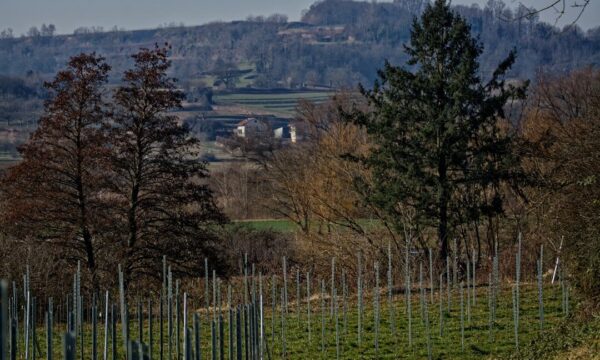
Steep Mosel parcels often rely on individual stakes, since tractors and conventional wire systems struggle on such gradients. Gentler sites can use modern trellising instead. The relevant outcome isn’t tradition versus technology — it’s whether the canopy captures light, shields grapes from excessive sun, allows airflow and supports safe, timely work.
Leaf removal can improve exposure and drying around clusters, but aggressive removal in hot conditions risks sunburn. Cover crops reduce erosion and improve soil structure, yet compete for water during dry spells. Good viticulture adapts to site and season rather than following a fixed formula.
Crop load and selection
Reducing crop load can help an overburdened vine ripen its fruit, but low yield alone is not a quality certificate. Frost, drought, hail or poor flowering can just as easily reduce yield without improving the grapes. Selective harvest earns its value when crews separate healthy fruit, botrytized berries or differing ripeness levels for distinct wines.
Harvest ripeness is not final sweetness
The German Wine Institute confirms that Prädikat categories — Kabinett, Spätlese, Auslese — rest on minimum must-weight requirements that vary by region and grape. These categories describe the grapes at harvest. They do not dictate one finished residual-sugar level. See the DWI Prädikat guide.
A producer can ferment ripe grapes fully dry or retain sugar, subject to applicable rules and the wine’s intended category. Chaptalization is prohibited for Prädikatswein, while enrichment rules differ elsewhere. Avoid applying one Oechsle range across all regions: legal minimums vary by origin and grape variety, and can shift with regulation.
Pressing and juice preparation
White-wine grapes are generally pressed soon after harvest. Producers may press whole bunches, destem first, allow brief skin contact, or combine approaches. Grape condition dictates handling: clean, intact fruit tolerates different treatment than botrytized or damaged grapes.
| Choice | Potential benefit | Potential risk or tradeoff |
|---|---|---|
| Whole-bunch pressing | Can create drainage channels and reduce mechanical handling before pressing. | Stems and compact press loads can affect extraction; the method is not automatically gentler. |
| Destemming | Allows closer control of berries and skin contact. | Adds processing and may increase oxygen exposure. |
| Short skin contact | Can increase aroma precursors and texture. | May also raise phenolics, bitterness or microbial risk. |
| Gentle press fractions | Lets the winery separate juice by pressure and quality. | Lower yield and more logistical complexity. |
| Must clarification | Can improve fermentation control by removing some solids. | Over-clarified juice may ferment differently and lose texture; ideal turbidity is wine-specific. |
The practical question is how the producer matched pressing and clarification to fruit condition and intended style — not whether one fashionable method appears on the technical sheet.
Spontaneous vs cultured yeast
DWI notes that fermentation may begin with yeasts already present on grapes and in the cellar, while producers can also use selected cultures developed specifically for winemaking. See Winemaking in the Cellar.
Spontaneous fermentation draws on the microbial population present in the must and winery. It can proceed slowly, involve multiple yeast species and create distinctive fermentation dynamics — but it also carries the risk of sluggish or stuck fermentation and unwanted microbial activity. Inoculated fermentation offers greater predictability, but doesn’t make a wine generic by definition.
| Approach | Why a producer may choose it | What it does not prove |
|---|---|---|
| Spontaneous fermentation | House tradition, site-specific cellar ecology, desired fermentation pace or flavor development. | Naturalness, complexity or superior terroir expression. |
| Selected cultured yeast | Reliability, temperature tolerance, restart capability or a consistent fermentation profile. | Industrial quality or lack of character. |
| Pied de cuve / starter culture | Starts fermentation with an active estate-prepared culture. | That every fermentation is microbiologically identical. |
| Combination or rescue inoculation | Manages a slow or risky fermentation. | That the original wine plan failed in a quality sense. |
Stainless steel, Fuder, Stückfass and other vessels
Stainless steel is inert, easy to clean and well suited to precise temperature control. Large seasoned wooden casks allow gradual oxygen exchange and may shape texture without obvious new-oak aroma. Smaller or newer barrels carry a higher wood-to-wine ratio and can contribute more flavor and tannin.
Traditional vessel names describe capacity and regional use, but cellar inventories vary. A Mosel Fuder commonly holds around 1,000 liters; a Stückfass around 1,200 liters; a half-piece barrel around 600 liters. Verify the producer’s actual vessel rather than assuming every regional term is used identically.
| Vessel | Common technical advantage | Possible tradeoff |
|---|---|---|
| Stainless steel | Temperature control, hygiene and no wood flavor. | Less oxygen exchange; reduction management may require attention. |
| Large old cask | Gentle oxygen exchange and textural development with limited overt oak. | More variable vessel history and harder temperature control. |
| Smaller neutral barrel | More surface-area contact and flexible lot management. | Greater oxygen exposure and maintenance demands. |
| Newer oak | Can add spice, toast, tannin and structure when intentionally used. | May obscure delicate fruit or dominate a light wine. |
| Concrete or other inert vessel | Thermal stability and different oxygen behavior depending on lining. | Less common; effects depend on construction and cellar practice. |
No vessel “locks in” slate. Steel, wood and concrete act on fermentation, oxygen and texture — they do not extract vineyard geology, whether Devonian slate, Buntsandstein or Muschelkalk, directly into the wine.
How producers create dry, off-dry and sweet styles
Yeast converts grape sugar into alcohol and carbon dioxide. A wine can ferment until little fermentable sugar remains, or the producer can retain more sugar through cooling, racking, filtration and other controls. DWI describes temperature management as a tool for governing fermentation and residual sweetness. The legal dry rule is explained in the DWI sweetness guide.
Residual sugar should always be read alongside acidity, alcohol and serving temperature. Two wines carrying identical sugar levels can taste entirely different once acidity and other structural components diverge. Feinherb remains useful stylistic shorthand, but it is not a legally fixed residual-sugar category.
Why fermentation may stop without a planned Gärstopp
Not every sweet Riesling results from a neat, scheduled cold stop. Fermentation can slow or halt because of temperature, nutrient availability, alcohol level, yeast population or other cellar conditions. Producers then stabilize the wine to prevent renewed fermentation in bottle.
Malolactic fermentation in Riesling
Malolactic fermentation converts sharper malic acid into softer lactic acid. Many classic Riesling producers avoid or limit it to preserve acidity and fruit definition, but the choice isn’t universal. pH, temperature, sulfur management, microbial population and intended style all play a role.
A producer may block malolactic conversion entirely, allow it in a particular lot, or see partial conversion occur unbidden. Its presence or absence is a technical choice, not a standalone quality score.
Lees contact, racking and maturation
After fermentation, yeast and other fine particles settle. Wine can be racked relatively early or left on fine lees. Lees contact affects texture, aroma integration, reduction and oxygen protection. Stirring the lees increases contact but isn’t standard — or desirable — for every Riesling.
| Lees decision | Possible outcome | Risk to manage |
|---|---|---|
| Early racking | Cleaner separation and easier stabilization. | Less time for textural integration. |
| Extended fine-lees contact | More texture and gradual integration in some wines. | Reduction, microbial instability or delayed release if poorly managed. |
| Lees stirring | Greater suspension of lees and possible palate weight. | Excess oxygen or heaviness; not universally used. |
| Long cask maturation | Integration and slow development before bottling. | Evaporation, oxygen management and cellar cost. |
Duration should be reported as a producer choice, not treated as an automatic hierarchy. Four months is not inherently inferior to twelve, and twenty-four months is not inherently better.
Sulfur, filtration and bottling stability
Sulfur dioxide is commonly used to limit oxidation and microbial spoilage. Timing and dosage vary with pH, residual sugar, oxygen exposure and producer philosophy. Low total sulfur does not prove quality, and “no added sulfur” doesn’t mean the wine contains none naturally.
Residual-sugar wines demand especially careful microbial stability. Filtration can remove yeast and bacteria before bottling; skipping it may preserve some texture but raises the need for other controls. Closure choice — cork, screw cap, glass or another system — also affects oxygen transmission and bottle-to-bottle variation.
How to read a Riesling technical sheet
- Harvest: date, hand or machine picking, selection and grape condition.
- Must: ripeness, pH or acidity when supplied; avoid comparing Oechsle without regional context.
- Fermentation: spontaneous or inoculated, vessel and temperature approach.
- Finished wine: alcohol, residual sugar, total acidity and sometimes pH.
- Maturation: steel or cask, lees duration, filtration and release date.
- Origin and category: region, village, Einzellage, Prädikat, VDP level and taste term.
Technical numbers describe the bottle more precisely than promotional language — but they still don’t replace tasting.
Common German Riesling winemaking myths
| Myth | More accurate explanation |
|---|---|
| “Spontaneous fermentation is always more complex.” | It changes microbial and fermentation dynamics but does not guarantee quality or complexity. |
| “Stainless steel preserves minerality.” | Steel provides an inert, controllable vessel; minerality is a sensory term, not a substance steel preserves. |
| “All Mosel Riesling is made in Fuder.” | Producers use steel, old cask, smaller barrels and combinations of all three. |
| “Kabinett is made sweet.” | Kabinett describes harvest ripeness; final sweetness depends on fermentation and labeling. |
| “Lees aging makes Riesling creamy.” | It can alter texture, but duration, stirring, vessel and wine composition determine the actual result. |
| “Unfiltered means more authentic.” | Filtration is a stability tool. The appropriate choice depends on the wine, especially residual sugar and microbial risk. |
Primary sources
- German Wine Institute: Winemaking in the Cellar
- German Wine Institute: Prädikat categories
- German Wine Institute: legal sweetness levels
- German Wine Institute: viticulture and winemaking hub
Frequently asked questions
What is spontaneous fermentation in German Riesling?
It uses yeasts present in the must and cellar rather than relying solely on an added selected culture. It can create distinctive fermentation dynamics but does not guarantee complexity.
Is German Riesling fermented in stainless steel or oak?
Both are common, often in combination. Stainless steel offers hygiene and temperature control; old large casks can add gentle oxygen exchange and texture without strong new-oak flavor.
How do winemakers stop Riesling fermentation?
They can use cooling, racking, filtration and other controls to retain residual sugar. Fermentation can also slow for biological or chemical reasons, so not every sweet wine follows one identical stop method.
Does German Riesling undergo malolactic fermentation?
Many producers limit or block it to preserve acidity, but the choice is not universal. pH, temperature, sulfur and intended style determine whether it occurs.
Is Prädikatswein allowed to be chaptalized?
No. Enrichment by adding sugar to raise alcohol is prohibited for Prädikatswein. Rules differ for other categories, and legal minimum must weights vary by region and grape.
Related technical guides
Germany Rieslings Editorial Team
German Wine Editorial ReferenceResearched, structured, and fact-checked against official Deutsches Weininstitut (DWI) documentation, German Federal Wine Law (Weingesetz), and VDP.Die Prädikatsweingüter standards.