Baden Wine Region
About Baden
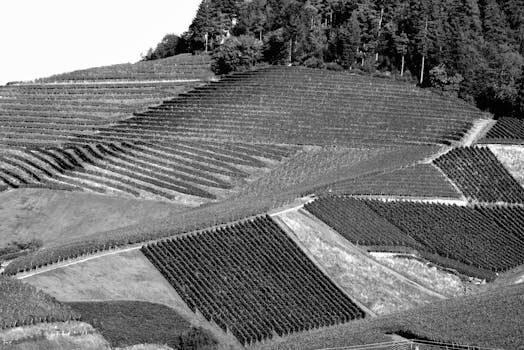
Baden is Germany’s third-largest wine-growing region, with 15,142 hectares under vine in 2025 and a north-to-south span of more than 400 kilometers. It is primarily Pinot country: the Pinot family accounts for 61% of the region’s vineyards. Riesling matters most in the Ortenau, where it is traditionally called Klingelberger and grows on steep Black Forest foothills shaped by granite, gneiss and sandstone.
The useful way to understand Baden is not as one uniform wine region, but as nine distinct districts running from the Tauber Valley and Heidelberg to the Swiss border and Lake Constance. Climate, elevation and soil shift sharply along that route. The best Baden bottle — or wine trip — depends entirely on which district you choose.
Why Baden is different from other German wine regions
Baden’s scale explains much of its diversity. The official regional overview divides it into nine wine districts. The north includes Tauberfranken, the Badische Bergstraße and Kraichgau; central Baden includes Ortenau and Breisgau; the warmer southern districts include Kaiserstuhl, Tuniberg and Markgräflerland, followed by the Bodensee vineyards around Lake Constance.
Baden is also Germany’s only wine-growing region in European Union Wine Zone B. That classification reflects generally warmer growing conditions, but a single regional average is misleading. Kaiserstuhl runs warm and comparatively dry, while higher sites along the western Black Forest see far more rain and hold a cooler edge.
This is why broad claims like “Baden Riesling is full-bodied” need qualification. A Riesling from a high Ortenau slope has little in common with one grown on loess-rich Kraichgau soil or volcanic Kaiserstuhl.
Where Riesling fits in Baden
Riesling is a minority grape across Baden as a whole, but it carries a clear regional identity. In the north, it stands alongside Rivaner and other white varieties. In central Baden, especially Ortenau, Riesling and Pinot Noir form the defining pair. Farther south, Pinot Noir, Pinot Gris and Pinot Blanc take over.
Klingelberger is Riesling, not a separate grape
Klingelberger is the traditional Ortenau name for Riesling. The name traces to the Klingelberg vineyard below Schloss Staufenberg in Durbach, where the Margrave of Baden planted Riesling vines roughly 250 years ago. Today the term signals Ortenau’s local Riesling tradition rather than a distinct variety.
The Badischer Weinbauverband’s Ortenau profile describes a 60-kilometer district with about 2,700 hectares under vine, roughly 60% of it on steep slopes. Granite, gneiss, red sandstone and weathered granite dominate the best Einzellagen. That combination of elevation, exposure and rocky soil gives Ortenau Riesling a far more specific identity than the phrase “warm-climate Riesling” suggests.
What to expect in the glass
Most Baden Riesling you’ll encounter is dry. Ortenau examples typically pair ripe citrus or stone fruit with firm acidity and a stony, sometimes lightly herbal finish. Warmer, lower sites produce broader textures; higher, more exposed vineyards preserve greater tension.
Treat these as expectations, not formulas. Producer choices, yield, harvest date, vintage and residual sugar can matter as much as the district name. Look for the producer, village or vineyard, and the word trocken when you want a clearly dry style.
Baden’s nine wine districts at a glance
The nine districts are official parts of the Baden wine-growing region, but they are not interchangeable. This table highlights the distinction that matters most to a wine buyer or traveler.
| Wine district | What distinguishes it | Best reason to focus here |
|---|---|---|
| Tauberfranken | Northern, inland vineyards on Muschelkalk and red sandstone; Müller-Thurgau, Schwarzriesling and regional red varieties matter more than Riesling here. | Bocksbeutel culture and a transition zone between Baden, Württemberg and Franken. |
| Badische Bergstraße | Baden’s smallest district, with loess, porphyry, granite, gneiss and sandstone near Heidelberg. | Slender Riesling and Pinot styles in a compact northern area. |
| Kraichgau | Rolling hills with Muschelkalk, Keuper, red sandstone and loess; Riesling and Pinot varieties both matter. | A less-touristed northern Riesling district with varied soils. |
| Ortenau | Steep Black Forest foothills with granite, gneiss and sandstone; Riesling is known locally as Klingelberger. | Baden’s clearest Riesling destination. |
| Breisgau | Black Forest valley mouths and foothills, with strong Pinot plantings and pockets of steep Riesling terrain. | Pinot-led wines with dramatic slopes and easy access from Freiburg. |
| Kaiserstuhl | An extinct volcanic massif with heat-retaining volcanic rock and deep loess terraces. | Baden’s best-known warm-climate Pinot landscape. |
| Tuniberg | A limestone ridge covered by loess west of Freiburg; unlike neighboring Kaiserstuhl, its bedrock is not volcanic. | Accessible Pinot country close to Freiburg. |
| Markgräflerland | Southern Baden between Freiburg, Alsace and Switzerland, with loess, marl and clay-loam soils. | Gutedel, relaxed village wine culture and a distinctly southern identity. |
| Bodensee | High vineyards moderated by Lake Constance, with glacial moraine near the shore. | Lake scenery, Pinot and Müller-Thurgau, with some Riesling in a cooler setting. |
Soils and climate: why one regional average is not enough
Baden contains volcanic rock, loess, limestone, clay, marl, granite, gneiss, sandstone and glacial deposits. None of these materials create flavor on their own, but they govern drainage, water storage, heat retention and how a vineyard responds to a dry or wet season.
- Ortenau: Granite, gneiss and sandstone on steep slopes are the central reference points for Klingelberger Riesling.
- Kaiserstuhl: Volcanic rock and thick loess layers store heat and favor the Pinot family.
- Tuniberg: Limestone under loess separates it geologically from the volcanic Kaiserstuhl.
- Northern Baden: Muschelkalk, Keuper, sandstone and loess create a broader mix of Riesling, Pinot and regional varieties.
- Lake Constance: Glacial moraine and the lake’s moderating effect support vineyards at higher elevations.
For a broader explanation of how geology, aspect and microclimate interact, see the Badischer Weinbauverband’s Baden terroir overview, with benchmark producers like Weingut Bercher in the volcanic Kaiserstuhl and Fritz Waßmer in the Breisgau showing the region’s top dry potential. Use soil as context, not as a promise that every wine will taste “mineral” or “volcanic.”
How to choose a Baden bottle
- Start with the district. For Riesling, Ortenau is the clearest first choice. Kraichgau and the Badische Bergstraße are useful alternatives.
- Check the grape name. Klingelberger means Riesling in the Ortenau context; elsewhere, the label will usually say Riesling outright.
- Look for a dryness cue. Trocken means dry. A Prädikat term such as Kabinett or Spätlese describes grape ripeness at harvest and does not, by itself, guarantee the finished sweetness level.
- Weigh producer and site above generic regional style. Baden is too diverse for one flavor profile to cover every district.
- Choose Pinot when the trip or meal points south. Kaiserstuhl, Tuniberg and much of Breisgau suit Pinot Noir, Pinot Gris and Pinot Blanc better than a Riesling-focused tasting.
Readers comparing several regions can use the site’s German wine regions hub. Baden offers a useful contrast: it shows how Riesling behaves inside a region whose identity was never built around the grape.
Planning a Baden wine trip
The Baden Wine Route runs almost 500 kilometers, so it is not a single-weekend itinerary. Choose one or two neighboring districts and build the trip around them. The German National Tourist Board’s Baden Wine Route overview is useful for understanding the route’s scale, though its vineyard-area figure predates the current 2025 statistic.
For a Riesling-first trip
Base the trip in or near Durbach, Oberkirch or Offenburg and concentrate on Ortenau. This keeps Klingelberger, steep vineyard landscapes and Black Forest access within one compact area. Confirm tasting availability directly with each estate or cooperative; opening times and appointment policies change.
For a broader Baden wine trip
Use Freiburg as the base for Kaiserstuhl, Tuniberg, Breisgau and the northern edge of Markgräflerland. This route is better suited to comparing Pinot-led districts, volcanic versus limestone landscapes, and different village wine cultures than to pursuing Riesling alone.
A practical two- or four-day outline
- Two days: Spend one day around Durbach and Oberkirch, then use the second for another Ortenau village, a vineyard walk or Baden-Baden.
- Four days: Start with two days in Ortenau, then move south to Freiburg for Kaiserstuhl and Tuniberg.
- Without a car: Choose a rail-connected base and arrange local transport before tastings. Do not assume every winery is reachable conveniently by public transport.
A wine hike in Freiburg
We may earn a commission if you book through links on this page.
Freiburg wine hike and tasting
Walk the Schlossberg with wine stops. Tour language: German. This activity is in Freiburg, not Baden-Baden; check walking requirements.
Departure: Freiburg
Listed duration: 2.5 hours
Listed language: German
Food pairings for Baden Riesling
Dry Ortenau Riesling shines where acidity and texture both matter. Good starting points include river fish, roast poultry, pork, onion tart, creamy vegetable dishes and mildly spiced food. A slightly off-dry bottle handles more heat or a touch of sweetness in the dish.
Keep the pairing proportional to the wine. A leaner, high-slope Klingelberger suits delicate fish and light sauces; a broader dry Riesling supports richer poultry, pork or cream-based dishes.
How Baden compares with Pfalz
If the goal is a wide range of dry Riesling from a region where the grape holds a stronger overall identity, Pfalz is the more direct starting point. Baden offers a different lesson: Pinot dominates regionally, but Riesling becomes locally decisive in Ortenau and parts of the north.
That distinction is precisely what makes Baden worth exploring. It is not a lesser Riesling region — it is a region where Riesling must be sought in the right places. Start with Ortenau, learn what Klingelberger means, and treat the rest of Baden as a series of separate wine landscapes rather than one broad style.
Viticultural Heritage & Terroir
Premier Wineries in Baden
All Wineries →
Bercher
Bercher farms the Kaiserstuhl around Burkheim, with Pinot Noir, Pinot Gris and Pinot Blanc at…
Fritz Waßmer
Fritz Waßmer is a Baden estate centered on Pinot Noir and Burgundy varieties. Its vineyards…
Benchmark Wines from Baden
All Wines →Explore our wine catalog for bottles from this region.