Saale-Unstrut Wine Region
About Saale-Unstrut
Saale-Unstrut sits farther north than any other wine region in Germany, and that single fact shapes everything grown there. Vineyards climb the slopes above the Saale and Unstrut rivers in Saxony-Anhalt and Thuringia, where monks planted the first vines over a thousand years ago. Cool nights, shell limestone soils, and low yields combine to produce crisp, dry white wines with a distinct mineral edge.
This Saale-Unstrut wine guide explains where the region sits, what grapes grow there, and how to plan a visit to its river valleys and historic towns. Readers looking for a quieter alternative to Germany’s famous Riesling regions will find a smaller, terraced landscape built around Müller-Thurgau, Riesling, Silvaner, and the Pinot family, anchored by vineyard towns like Freyburg and Naumburg.
Key Takeaways
- Saale-Unstrut is Germany’s northernmost wine region, built on shell limestone soils along two river valleys.
- Dry white wines dominate, led by Müller-Thurgau, Riesling, Silvaner, and Pinot Blanc.
- Freyburg and Naumburg make practical bases for tasting, with wineries, cooperatives, and historic sites within a short drive.
Where Is Saale-Unstrut and What Defines It?
Saale-Unstrut is Germany’s northernmost official wine region, spread across the valleys of the Saale and Unstrut rivers in Saxony-Anhalt, with smaller pockets reaching into Thuringia. Terraced vineyards climb the slopes above these rivers, a layout shaped by centuries of hand labor and monastic farming.
The region sits close to Halle and Leipzig, within a few hours of Berlin, making it accessible for a day trip or weekend visit from eastern Germany.
A Map of the Saale and Unstrut River Valleys
The vineyards of Saale-Unstrut follow the bends of two rivers rather than one continuous slope. Vines grow on narrow, terraced hillsides above the Saale and Unstrut, oriented to catch every hour of sun this northern latitude allows.
This river-valley layout concentrates viticulture into pockets of favorable exposure rather than a single stretch of open countryside.
From Freyburg to Naumburg and Bad Kösen
Freyburg serves as the unofficial capital of the region, sitting where the Unstrut meets a cluster of vineyard slopes and wine cellars. Naumburg lies a short distance downstream, known for its cathedral and its proximity to vineyard sites. Bad Kösen rounds out the core wine route, giving visitors a compact triangle of towns to explore between tastings.
A Thousand Years of Winegrowing History
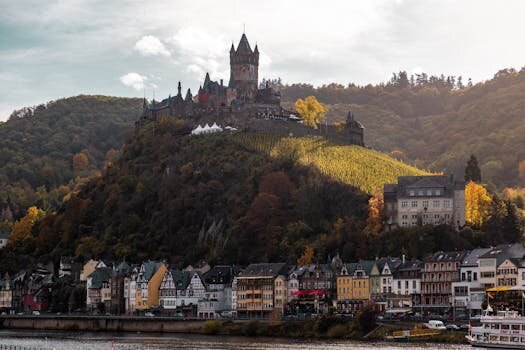
Cistercian monks helped establish viticulture in the region, and written records tied to Memleben Abbey mention wine from the area as early as 998 AD. Kloster Pforta became a center of vineyard management during the medieval period, and Neuenburg Castle still overlooks the valley near Freyburg as a reminder of that era.
This long history left behind the region’s terraced hillsides, many of which still require manual work with rope hoists and hand tools.
Climate, Soils, and Vineyard Sites
Saale-Unstrut’s cool climate and limestone-rich soils give its wines a tight, mineral structure that sets them apart from warmer German regions. Sheltered river valleys and south-facing slopes help vines ripen despite the region’s northern position, while shell limestone and sandstone shape the texture and backbone of the finished wine.
How a Cool Continental Climate Shapes the Growing Season
A cool continental climate defines the growing season in Saale-Unstrut, with cold winters, warm summer days, and a shorter ripening window than most German wine regions. The Harz Mountains to the west offer some shelter from harsher weather systems.
Grapes here retain higher natural acidity than in warmer regions, a trait that carries directly through into the finished wine.
Muschelkalk and Limestone-Rich Soils
Weathered shell limestone, known in German as Muschelkalk, forms the backbone of many Saale-Unstrut vineyards. This limestone base drains well and reflects heat back onto the vines, helping compensate for the region’s short growing season. Sites like Schweigenberg and Blütengrund draw on this limestone character to produce wines with a firm, chalky texture.
Sandstone Terraces, Slope Exposure, and Drainage
Colored sandstone, or Buntsandstein, appears alongside limestone in parts of the region, particularly around terraced sites such as Saalhäuser. These sandstone terraces drain quickly and hold daytime heat, offsetting cool overnight temperatures.
Slope exposure matters as much as soil type here, since south-facing terraces capture more of the limited sunshine hours available at this latitude.
Rainfall, Frost Risk, and Climate Change
Low rainfall is one of the region’s defining traits, with dry conditions that reduce disease pressure but raise the stakes around water availability during dry vintages. Spring frost remains the biggest annual risk, since the region’s northern position leaves vines more exposed to late cold spells than sites farther south.
Climate change has extended the growing season somewhat in recent years, giving winemakers slightly more consistent ripening than in past decades.
Which Grapes Matter Most?
White grapes dominate Saale-Unstrut, led by Müller-Thurgau and Pinot Blanc, with Riesling and Silvaner in supporting roles. Red varieties and sparkling wine make up a smaller but growing share of production.
Around three-quarters of the region’s vineyard area is planted to white grapes, a ratio that reflects the cool climate’s suitability for lighter, high-acid wines.
Müller-Thurgau and the Region’s Approachable Whites
Müller-Thurgau is the region’s most widely planted grape, prized for ripening reliably even in cooler vintages. It produces light, fruity, easy-drinking wines suited to the region’s short growing season. Alongside it, Pinot Blanc (Weißburgunder) has become one of the two flagship varieties, valued for its balance of ripeness and acidity.
Riesling, Silvaner, and the Pinot Varieties
Riesling grows in smaller quantities than in Germany’s larger regions, but it performs well on the region’s limestone slopes, producing lean, mineral-driven wines. Silvaner adds a softer, earthier counterpart.
Grauburgunder (Pinot Gris) and Traminer, including Gewürztraminer, round out the region’s Pinot-family plantings, each bringing more aromatic weight than Müller-Thurgau or Riesling. Readers comparing regional Riesling styles across Germany will notice Saale-Unstrut’s version leans lighter and higher in acidity than examples from warmer regions.
Red Grapes and Sparkling-Wine Potential
Red varieties occupy a smaller share of the vineyard area, led by Dornfelder, Blauer Portugieser, Spätburgunder (Pinot Noir), and small plantings of Blauer Zweigelt and Bacchus. These reds tend toward lighter bodies, a natural result of the cool climate.
Sekt, Germany’s term for sparkling wine, has also gained traction in the region, drawing on the same high acidity that defines the still white wines.
What Do Saale-Unstrut Wines Taste Like?
Saale-Unstrut wines are defined by dry, crisp whites with pronounced acidity and a mineral edge from the region’s limestone soils. Nearly all production is vinified Trocken, and sweeter styles appear only in exceptional vintages. This sets the region apart from the sweetness range found in Mosel, Rheingau, and other German wine regions.
The Hallmarks of Dry, Fresh White Wines
Racy acidity and a chalky, mineral backbone define most Saale-Unstrut wines. Yields stay low across the region, a result of the terraced, labor-intensive vineyards, and that concentration shows up in the finished wine’s texture.
Compared to riper styles from Baden or Pfalz, Saale-Unstrut whites feel leaner and more taut.
How to Read Trocken, Halbtrocken, and Prädikat Terms
Trocken means dry, and it describes the overwhelming majority of Saale-Unstrut wine. Halbtrocken, or off-dry, appears occasionally but far less often than in warmer German wine regions such as Franken or Pfalz.
Prädikat terms on a label indicate how ripe the grapes were at harvest — measured in Oechsle — not how sweet the finished wine tastes.
When Kabinett, Spätlese, and Auslese Appear
Spätlese and Auslese show up only in exceptionally warm vintages in Saale-Unstrut, since the region’s cool climate rarely delivers the ripeness these higher Prädikat levels require. Kabinett is more common, reflecting the lighter ripeness typical of the growing season.
When these terms do appear, they signal riper grapes at harvest, not necessarily a sweeter finished wine, since most Saale-Unstrut Prädikat wines are still fermented dry.
Producers, Cellars, and Planning a Tasting Visit
Weingut Pawis, Weingut Klaus Böhme, Gussek, and Landesweingut Kloster Pforta rank among the region’s most recognized producers, alongside the large Winzervereinigung Freyburg-Unstrut cooperative. Freyburg and Naumburg give visitors a compact base for combining wine tastings with historic sites, including a UNESCO World Heritage cathedral.
Estates and Cooperatives to Know
Weingut Pawis has built a reputation for precise, limestone-driven whites, while Weingut Klaus Böhme focuses on small-batch Pinot and Riesling bottlings. Hey and Gussek both produce a broad range of dry whites and reds from vineyards near Naumburg.
Winzervereinigung Freyburg-Unstrut, the region’s dominant cooperative, and Rotkäppchen, known nationally for sparkling wine, give visitors an easy entry point into regional styles. Landesweingut Kloster Pforta operates on grounds tied to the region’s monastic wine history and remains one of the most historically significant estates to visit.
The region’s wineries reflect a mix of small family operations and larger cooperative producers, a structure common across Germany’s smaller wine regions.
Historic Sites and Wine Experiences Around Freyburg
Neuenburg Castle overlooks Freyburg’s vineyards and offers a direct link to the region’s medieval wine history. Naumburg Cathedral, a UNESCO World Heritage Site, sits a short drive away and pairs naturally with a day of tastings. Memleben Abbey, tied to the region’s earliest documented wine records from 998 AD, adds another historical stop for visitors following the wine route.
How to Buy and Taste the Region’s Wines
Most Saale-Unstrut estates welcome visitors for tastings, and the region’s compact geography makes it possible to visit several producers in a single day. Bottles are less widely exported than those from Mosel or Rheingau, so buying directly from the winery or cooperative remains the most reliable option.
Readers building out a broader collection can compare regional terroir profiles across Germany to see how Saale-Unstrut’s limestone-driven style fits alongside other regions.
Frequently Asked Questions
Where is the Saale-Unstrut wine region in Germany?
Saale-Unstrut lies in Saxony-Anhalt, with smaller sections reaching into Thuringia, along the valleys of the Saale and Unstrut rivers. It sits west of Halle and within a few hours’ drive of Leipzig and Berlin. The region holds the distinction of being Germany’s northernmost official wine-growing area.
What wines is Saale-Unstrut known for?
Saale-Unstrut is known for dry, crisp white wines made mostly from Müller-Thurgau, Pinot Blanc, Riesling, and Silvaner. Nearly all production is vinified Trocken, giving the wines a lean, high-acid character. Small amounts of red wine and sparkling Sekt round out the region’s output.
Is Riesling the main grape in Saale-Unstrut?
Riesling is not the main grape in Saale-Unstrut. Müller-Thurgau and Pinot Blanc hold larger vineyard shares, though Riesling still performs well on the region’s limestone slopes and produces some of its most mineral-driven wines.
What does Saale-Unstrut terroir contribute to its wines?
The region’s shell limestone (Muschelkalk) soils give the wines a chalky, mineral backbone, while sandstone terraces add heat retention and drainage. Cool continental temperatures preserve high natural acidity in the grapes. Together, these factors produce wines with tension and a distinct mineral edge.
Which towns should I use as a base for a Saale-Unstrut wine trip?
Freyburg makes the strongest base, sitting at the center of the region’s vineyards and wine cellars. Naumburg and Bad Kösen sit close by and add historic sites, including Naumburg Cathedral, to round out a visit.
How does Saale-Unstrut compare with Mosel Riesling?
Saale-Unstrut Riesling tends toward a leaner, higher-acid style shaped by a shorter growing season, while Mosel Riesling grown on Devonian slate often shows more ripeness and aromatic depth. Mosel also produces a far wider range of sweetness levels, from dry Kabinett to noble-sweet Auslese, while Saale-Unstrut wines stay overwhelmingly dry. Readers can compare regional style differences in more depth on a dedicated wine map covering Germany’s official growing regions.
Viticultural Heritage & Terroir
Premier Wineries in Saale-Unstrut
All Wineries →Explore our winery directory for estates in this region.
Benchmark Wines from Saale-Unstrut
All Wines →Explore our wine catalog for bottles from this region.