2021 Weingut Lorenz & Söhne Tatort Johannisberg Riesling
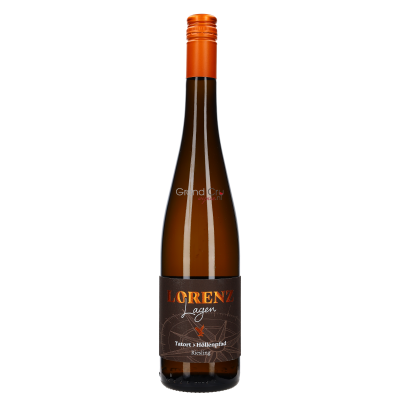
Wine Profile & Character
The Johannisberg vineyard occupies one of those quietly distinguished slopes that rewards patience rather than showmanship. Here, on weathered slate interlaced with veins of quartzite and pockets of loess-loam, the vines dig deep for what little moisture the porous ground retains, drawing up a minerality that later announces itself unmistakably in the glass. The site’s exposure captures long afternoon sun while river-moderated air keeps nights cool, preserving the acid backbone that defines serious Nahe Riesling. The estate’s approach favors low intervention: hand-harvesting at careful selection, spontaneous fermentation tendencies, and an insistence on letting the vineyard’s voice carry rather than masking it with cellar artifice.
In the glass, the wine opens with a taut, almost chalky nose before yielding orchard fruit — white peach, unripe apple — layered over crushed stone and a faint whiff of citrus pith. The palate arrives lean and precise, acidity cutting cleanly through a core of ripe pear and lime zest, while a saline, wet-slate minerality lingers beneath. There’s a textural tension here: the fruit is generous without being sweet, held taut by nervy acid and a fine phenolic grip that keeps the mid-palate honest. As the wine breathes, secondary notes of white flowers and a subtle smoky flint emerge, adding dimension without disrupting the wine’s essentially linear, mineral-driven character.
2021 was a cooler, later-ripening vintage in the Nahe, and this Johannisberg bottling reflects that: firmer acids, moderate ripeness, and an overall sense of restraint that favors ageability over immediate opulence. Over the next several years, expect the citrus and orchard fruit to deepen toward baked apple and beeswax, while the mineral spine softens into something rounder and more textural. This is a wine built for the cellar as much as the table — one that rewards those willing to wait for its fuller expression.
Sourced Profile
Compiled from producer and published descriptions, not a firsthand tasting by our team.
Appearance: Pale straw-gold with a greenish glint at the rim and brilliant, flawless clarity.
Aromas & Bouquet: Crushed stone and citrus pith lead, followed by white peach, green apple, and a delicate floral lift of jasmine. A faint smoky, flinty undertone signals the slate-driven terroir beneath the fruit.
Palate & Structure: Taut and linear, with bright lime-inflected acidity cutting through ripe pear and white peach flavors. A saline, mineral thread runs through the mid-palate, framed by subtle phenolic grip that lends structure without bitterness.
Finish & Longevity: Long, dry, and mineral-tinged, with lingering citrus zest and a faint salinity that persists well after the last sip.
Food Pairings
Pair with pan-seared trout or scallops, whose delicate sweetness mirrors the wine's fruit while its acidity cuts through richness. Try alongside spätzle with brown butter and sage, where the wine's minerality complements the nutty, savory notes. Asian-inflected dishes — particularly Thai green curry or Vietnamese pho — find a natural foil in the wine's acid structure and citrus brightness. For a classic regional pairing, serve with Rheinland-style Sauerbraten, whose tangy sauce echoes the wine's own vibrant acidity.
Cellaring & Ageability
Drink 2026–2038, allowing the wine's firm 2021 acidity to soften into a more textural, honeyed complexity. Early bottles will show precise, mineral-driven fruit, while mid-term development should reveal deeper notes of beeswax, baked apple, and toasted almond.