2021 Weingut Lorenz & Söhne Tatort Narrenkappe Riesling Kabinett
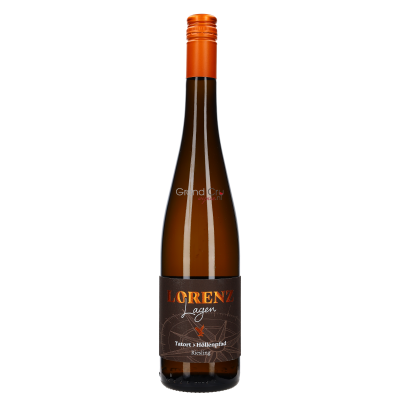
Wine Profile & Character
The Nahe remains Germany’s great cartographer’s puzzle, a region where soil types shift within meters and no single geology dominates the narrative. The Narrenkappe site, whose name translates loosely as “fool’s cap,” suggests a parcel with an idiosyncratic character of its own, likely planted on the weathered slate and volcanic porphyry that thread through the middle Nahe’s steeper exposures. These fractured, mineral-rich soils drain quickly yet retain enough moisture to sustain vines through dry summers, while the diurnal temperature swings common to the region’s river-carved valleys preserve the acid backbone essential to Kabinett-level Riesling. Estate-grown and bottled, this wine reflects a hands-off philosophy that trusts site expression over cellar intervention, allowing the vineyard’s inherent tension between ripeness and restraint to guide the final composition.
On the nose, expect a layered introduction of green apple skin, quince, and white peach, followed by streaks of wet stone and a faint floral lift reminiscent of elderflower. The palate arrives with immediate clarity: a residual sugar of 25 g/L is held firmly in check by 9 g/L of total acidity, creating that signature Kabinett interplay where sweetness reads more as texture and roundness than overt fruitiness. Citrus pith, unripe nectarine, and a chalky, saline minerality build through the mid-palate, while the acid structure keeps everything taut rather than lush, threading each flavor layer with precision rather than weight.
This is a wine built for the long game, though it offers genuine pleasure in youth. Over the next several years, the primary fruit will recede gradually, giving way to petrol-tinged complexity, dried herbs, and a deepening mineral core typical of well-structured Nahe Kabinetts. The 2021 vintage, marked by a cooler, more classically structured growing season, favors wines with exactly this kind of acid-driven longevity, rewarding patience with a slow unfurling of secondary character rather than early opulence.
Sourced Profile
Compiled from producer and published descriptions, not a firsthand tasting by our team.
Appearance: Pale straw-yellow with a faint green tinge at the rim, brilliantly clear with fine, persistent clarity throughout the glass.
Aromas & Bouquet: An aromatic interplay of green apple, quince, and white peach opens the bouquet, layered with wet slate and a subtle floral note of elderflower. With aeration, a delicate herbal undertone emerges, hinting at the wine's cooler-climate origins.
Palate & Structure: The entry is lithe and precise, with citrus pith and unripe nectarine framed by a chalky, saline minerality. Residual sugar reads as textural roundness rather than overt sweetness, held in exacting balance by bright, piercing acidity. Flavors evolve mid-palate toward baked apple and a faint honeyed nuance, without ever tipping into heaviness.
Finish & Longevity: The finish is long and mineral-driven, with a lingering salinity and a light phenolic grip that keeps the wine feeling structured rather than sweet. Acidity trails through the aftertaste, leaving the palate refreshed and wanting another sip.
Food Pairings
This Kabinett pairs beautifully with Thai green curry, where its acidity and touch of sweetness balance chili heat and coconut richness. It also complements pan-seared trout with brown butter, echoing the wine's mineral undertones, and works well with a classic Alsatian tarte flambée. For dessert-adjacent pairings, try it alongside a mild triple-cream cheese, where its acid cuts through richness elegantly.
Cellaring & Ageability
Drink now through 2038, with the wine likely entering a particularly compelling secondary phase between 2028 and 2034. Expect the fruit to soften into honeyed, petrol-laced complexity while the mineral spine remains a constant throughout its evolution.