Mosel Kabinett vs Dry Riesling: Styles, Vineyards & Views
Mosel Kabinett and dry Riesling answer two different questions. Kabinett is a Prädikat tied to grape ripeness at harvest. Trocken describes the finished wine’s legal sweetness category. A Kabinett can be bone dry, though many classic Mosel Kabinetts carry noticeable residual sugar alongside low alcohol and taut acidity.
Dry Mosel Riesling spans a wide range — from straightforward estate wine to VDP.Grosses Gewächs (GG), the VDP designation for a dry wine grown on a classified VDP.Grosse Lage vineyard.
The reliable path is to read the full label: producer, village or vineyard, vintage, Prädikat, taste term, alcohol. Never assume every Kabinett shares one sugar level, every dry wine lands at the same alcohol, or a named slate type guarantees a particular fruit character.
Mosel Kabinett vs dry Riesling at a glance
| Question | Mosel Kabinett | Dry Mosel Riesling |
|---|---|---|
| What the term tells you | Kabinett is a Prädikat based on minimum must weight and grape condition. It does not by itself fix final sweetness. | Trocken is a finished-wine sweetness term. VDP.Grosses Gewächs is a dry VDP wine from a VDP.Grosse Lage site. |
| What to verify on the label | Look for trocken, feinherb, or the absence of any taste term, then check producer notes. | Look for trocken. A GG bottle also carries the VDP.GG grape emblem or equivalent marking. |
| Typical drinking impression | Often light in alcohol, fruit sweetness balanced by acidity — though examples vary widely. | Usually less sweet on the palate, with body and alcohol shaped by ripeness, site, and producer. |
| Best comparison | Taste Kabinett and dry Riesling from the same producer and vintage. | Compare estate, village, and single-vineyard dry wines within one producer’s range. |
| Main buying risk | Assuming Kabinett always means sweet, or always means 7–8% ABV. | Assuming dry means austere and high-acid, or automatically superior quality. |
What does Kabinett mean?
The German Wine Institute defines Kabinett as the first Prädikat rung: fine, light wine from ripe grapes, generally at modest alcohol. Each Prädikat carries a minimum must-weight requirement (measured in Oechsle) that varies by grape variety and region.
The category describes the grapes at harvest — not one mandatory residual-sugar figure in the finished bottle. See the DWI Prädikat overview.
That distinction matters in the Mosel. A producer may bottle a fruit-sweet Kabinett with no dry taste term, a Kabinett trocken, or an informally labeled feinherb wine. The exact style hinges on fermentation, residual sugar, acidity, alcohol, and the producer’s own labeling choices.
Is Mosel Kabinett always sweet?
No. Many classic Mosel Kabinetts carry enough residual sugar to taste off-dry or sweet, but Kabinett itself is not a legal sweetness category.
When sweetness is the deciding factor, look for trocken, request the technical sheet, or compare stated residual sugar against acidity. Feinherb is common on labels but is not a legally fixed sweetness band.
What does trocken mean on a Mosel label?
By DWI rule, a still wine can be labeled trocken at up to 4 grams of residual sugar per liter, or up to 9 g/L when total acidity satisfies the legal formula: acidity plus 2, capped at 9 g/L. “Dry,” then, is not one identical sugar number across every bottle. See the DWI sweetness guide.
Perceived dryness isn’t sugar alone, either. Acidity, alcohol, serving temperature, dissolved CO₂, phenolic texture, and aroma can make two legally dry Rieslings feel entirely different in the glass.
A dry Mosel wine may read as lean and citrus-driven, or broader and more textural, depending on site, vintage, and cellar decisions.
Where does Grosses Gewächs fit?
VDP.Grosse Lage is the VDP’s highest vineyard classification. A dry wine from one of those sites is called VDP.Grosses Gewächs (GG). The VDP mandates selective hand harvest, caps yield, and subjects the wine to additional tasting review.
Fruit-sweet wines from the same classified sites use traditional Prädikat terms — Kabinett, Spätlese, Auslese. See the official VDP classification.
GG is not simply the dry rung of a Kabinett ladder. One term marks a dry top-site wine within the VDP system; the other is a German Prädikat entirely. Non-VDP estates can and do make excellent dry single-vineyard Riesling without ever using GG.
How the styles usually differ in the glass
| Attribute | Fruit-sweet Kabinett: common pattern | Dry Riesling or GG: common pattern |
|---|---|---|
| Balance | Residual sugar and acidity share the structural load; alcohol often stays modest. | Lower residual sugar shifts focus toward acidity, alcohol, extract, and texture. |
| Aromas | Citrus, apple, peach, blossom, and herb notes are common. | The same Riesling aroma family appears; dry wines may lean savory, herbal, or phenolic. |
| Body | Often light and mobile on the palate, though concentrated examples exist. | Ranges from light estate wine to substantial, cellar-worthy GG. |
| Serving | Usually 8–10°C; avoid serving so cold that aroma disappears. | About 9–12°C depending on weight and bottle age. |
| Food | Pairs well with chili heat, salty dishes, pork, smoked fish, aromatic cuisines. | Suits seafood, poultry, pork, mushrooms, asparagus, and less-sweet sauces. |
These are buying patterns, not chemical specifications. Producer style and vintage can outweigh the category itself. A 2021 Kabinett and one from a warm year may differ substantially — as can a light Mosel trocken and a concentrated GG.
Five Middle Mosel vineyards worth comparing
Famous vineyard names identify origin — they should never be converted into fixed flavor recipes. Soil, slope, and aspect shape growing conditions, but farming, yield, harvest date, fermentation, and residual sugar still drive the wine in the glass.
| Vineyard | Village context | Useful comparison |
|---|---|---|
| Wehlener Sonnenuhr | A steep, south- to southwest-facing site above Wehlen, closely associated with Riesling grown on weathered Devonian slate. | Compare Kabinett and Spätlese from one producer, then set the same vintage against nearby Graacher sites. |
| Bernkasteler Doctor | A small, historically prominent site immediately above Bernkastel. | Compare producer interpretations and bottle age rather than expecting one universal “Doctor” profile. |
| Ürziger Würzgarten | A visually distinctive site around Ürzig, its red-hued volcanic and sedimentary formations giving it its name. | Taste blind before reading soil descriptions; note structure and aroma as separate impressions. |
| Graacher Himmelreich | A large classified site near Graach spanning multiple parcels and producers. | Compare it against Graacher Domprobst from the same estate when available. |
| Brauneberger Juffer-Sonnenuhr | A steep, sun-exposed sector within the Brauneberg vineyards. | Compare Kabinett with dry or fuller Prädikat wines from the same producer and vintage. |
For a focused two-site comparison, see Wehlener Sonnenuhr vs Bernkasteler Doctor. For the science and limits of soil-based claims, use our Mosel terroir guide.
A practical bottle-selection workflow
- Choose the sweetness target first. Decide whether you want legally dry, gently off-dry, or clearly fruit-sweet wine.
- Read the alcohol level. It isn’t a sweetness measurement, but lower alcohol offers a useful clue when comparing otherwise similar bottles.
- Identify the producer and origin. Estate style and vineyard often reveal more than a broad regional reputation.
- Check the vintage. Cool, warm, wet, and dry seasons all shift ripeness, acidity, yield, and harvest timing.
- Use a technical sheet when precision matters. Residual sugar, acidity, and alcohol together explain far more than any single number.
- Buy two related bottles. A same-producer Kabinett and dry Riesling teach more than two unrelated prestige labels.
How to taste Kabinett and dry Riesling side by side
Serve both in identical glassware, starting around 9°C. Taste the dry wine first, then the Kabinett, and return to both as they warm.
Record sweetness, acidity, alcohol warmth, body, phenolic grip, and finish separately for each wine. Only after those notes are down should you factor in vineyard geology or producer commentary.
The strongest comparison uses the same producer and vintage — this holds winemaking philosophy and growing season roughly constant, sharpening the style contrast. It’s stronger still when both wines come from the same village or vineyard.
Scenic vineyard viewpoints, briefly
- Bernkastel and Burg Landshut: elevated views over Bernkastel-Kues and the surrounding slopes. Check current access and opening conditions locally.
- Wehlen riverfront and bridge area: a clear sightline to the Wehlener Sonnenuhr slope and its historic sundial.
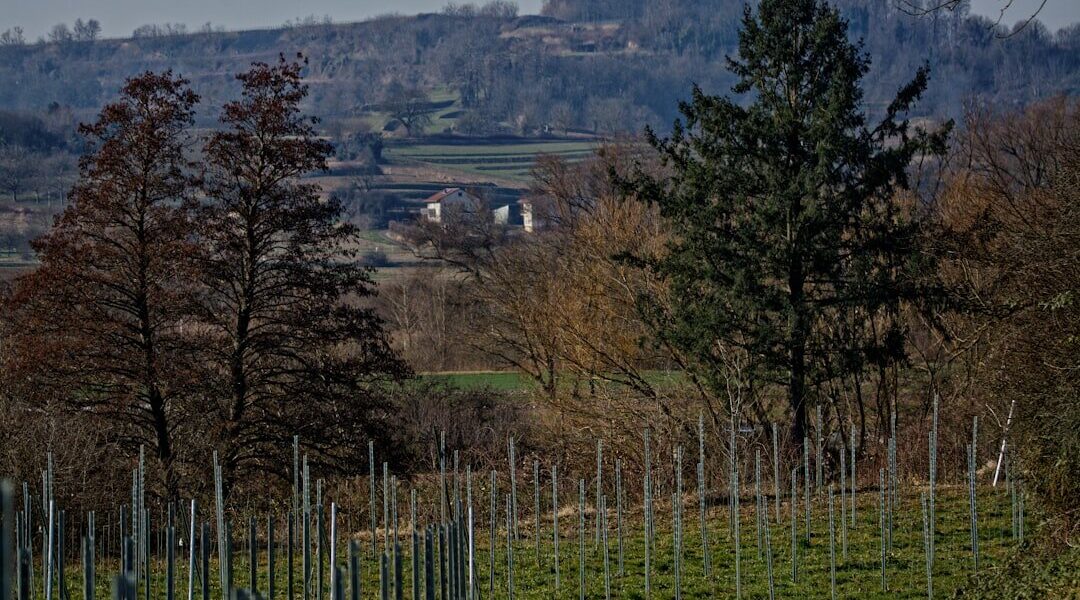
- Ürzig and the Moselsteig: viewpoints around the village reveal the curvature and color variation of the vineyard hillside.
- Bremmer Calmont: the Lower Mosel landmark reaches exceptionally steep gradients. The Calmont Klettersteig is a demanding route, not a casual winery stroll — check current trail guidance, wear proper footwear, and pick suitable weather.
Do not enter vineyard rows without permission. These are working agricultural sites, and steep parcels can turn dangerous during wet weather, spraying, harvest, or routine maintenance.
Primary sources
- German Wine Institute: Prädikat categories
- German Wine Institute: legal sweetness terms
- German Wine Institute: Mosel region profile
- VDP: classification and Grosses Gewächs rules
- OENO One: soil-type cues and German Riesling sensory perception
Frequently asked questions
Is Mosel Kabinett sweet or dry?
It can be either. Kabinett is a Prädikat based on grape ripeness at harvest, not a fixed finished-wine sweetness level. Look for trocken, feinherb or producer technical data.
What is the difference between Kabinett and Grosses Gewächs?
Kabinett is a German Prädikat. VDP.Grosses Gewächs is a dry wine from a VDP.Grosse Lage vineyard under VDP rules. They are not opposite rungs of one classification.
How much residual sugar can trocken Riesling contain?
German still wine can be labeled trocken at up to 4 g/L residual sugar, or up to 9 g/L when the wine’s total acidity meets the legal acidity-plus-2 formula.
Does blue slate taste different from red slate in Riesling?
Soil and geology can affect water, heat and rooting conditions, but no deterministic blue-slate or red-slate flavor formula has been established. Taste blind before reading the soil description.
Which style is better with spicy food?
A Kabinett with residual sugar often handles chili heat well, but a balanced dry Riesling can work with aromatic, less-sweet dishes. Match the actual sugar, acidity and sauce rather than the category alone.
Related Mosel guides
Germany Rieslings Editorial Team
German Wine Editorial ReferenceResearched, structured, and fact-checked against official Deutsches Weininstitut (DWI) documentation, German Federal Wine Law (Weingesetz), and VDP.Die Prädikatsweingüter standards.