Ungeheuer
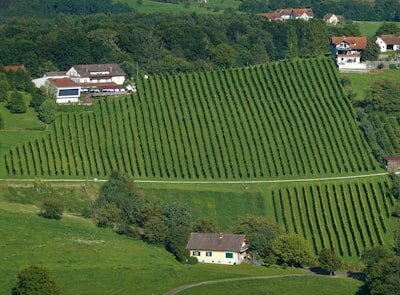
Vineyard Terroir & Geology
Ungeheuer is the vineyard name paired with the village Forst to form Forster Ungeheuer, a VDP.GROSSE LAGE Riesling site in the Pfalz.
This page focuses on the name and how it appears on the label. For the full picture — soil, producers, and buying guidance — see Forster Ungeheuer. The two pages serve distinct purposes.
Ungeheuer at a glance
| Full label form | Forster Ungeheuer |
|---|---|
| Region | Pfalz |
| Village | Forst an der Weinstraße |
| VDP status | VDP.GROSSE LAGE |
| Classified grape | Riesling |
| Name origin | Johann Adam Ungeheuer, recorded in 1699 |
| Soil summary | Sandstone, clay, loam and limestone rubble with local basalt |
A surname before it was a monster
The modern German word “Ungeheuer” suggests a monster, or something vast beyond measure. It’s a name that sticks in the mind.
The VDP traces the site instead to a person: Johann Adam Ungeheuer, an official recorded in Deidesheim in 1699. The vineyard carries his surname, not a description of scale.
Bismarck’s famous quip — that the wine tasted “ungeheuer” good — leans on this double meaning. The line helped popularize the site, but it did not name it.
How the name appears on labels
German convention pairs the adjectival village name with the vineyard: Forster Ungeheuer. VDP presentations may instead read “Ungeheuer, Forst.” Both point to the same origin.
Neither form tells the whole story. Check the producer, vintage, Trocken or GG designation, alcohol level, and any technical notes before you buy.
Classification and geology in brief
Ungeheuer holds VDP.GROSSE LAGE status for Riesling. A qualifying dry wine from the site may carry the Grosses Gewächs designation.
This classification belongs to the VDP’s private hierarchy of vineyard quality. It should not be confused with the Prädikat ripeness terms — Kabinett, Spätlese, Auslese — which measure Oechsle at harvest, not site quality.
The soil runs richer and more varied than older accounts suggest. Basalt appears locally, but weathered Bunter sandstone, sandy clay, loam, and limestone rubble form the bulk of the terroir.
How to use this page
Turn to this page when decoding a label or tracing the vineyard’s name. For elevation, slope, producers, wine style, food pairing, and comparison sites, consult the main Forster Ungeheuer guide.
Primary source
Frequently asked questions
Are Ungeheuer and Forster Ungeheuer the same vineyard?
Yes. Forster is the adjectival form of the village name, and Ungeheuer is the vineyard itself.
Does Ungeheuer mean monster?
The word can mean monster, but the vineyard’s name traces to Johann Adam Ungeheuer, an official recorded in 1699.
Is Ungeheuer all basalt soil?
No. Basalt occurs only locally; sandstone, clay, loam, and limestone rubble make up the major soil components.