Rheingau Wine Region
About Rheingau
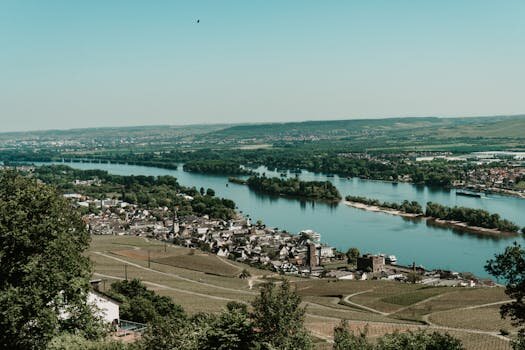
The Rheingau is a compact German wine region on the north bank of the Rhine, west of Wiesbaden. Its defining feature is the Rheinknie, or Rhine knee: the river bends west for roughly 30 kilometers, turning many vineyards into sun-facing slopes beneath the Taunus hills. The German Wine Institute reports 3,117 hectares under vine in 2025, including 2,355 hectares of Riesling—about 76% of the region—and roughly 390 hectares of Spätburgunder (Pinot Noir).
For wine drinkers, the Rheingau means structured dry Riesling, historic late-harvest wines and age-worthy bottles from sharply defined vineyard sites. For travelers, it is unusually manageable: Eltville, Kiedrich, Geisenheim, Johannisberg, Hattenheim and Rüdesheim sit close enough for a focused one- or two-day trip.
Plan on two winery visits per day. Book important tastings in advance, and leave time for a monastery, vineyard walk or riverside meal.
Rheingau at a glance
| Detail | What to know |
|---|---|
| Location | Hesse (Hessen), along the right bank of the Rhine from the Wiesbaden area west toward Rüdesheim and Lorch |
| Vineyard area | 3,117 hectares in 2025 |
| Leading grape | Riesling: 2,355 hectares, or about 76% of the region |
| Important red grape | Spätburgunder, especially around Assmannshausen |
| Typical strengths | Dry, structured Riesling; site-specific wines; Spätlese and other sweet styles; historic estates |
| Useful bases | Eltville for the eastern and central Rheingau, Geisenheim for a wine-focused stay, or Rüdesheim for visitor infrastructure and western vineyards |
| Comfortable tasting pace | Two estates per day, or three only with short transfers and confirmed appointments |
Why the Rheingau works so well for Riesling
The region’s geography is easy to sketch but more varied than the usual “one south-facing slope” description suggests. The Taunus hills shelter many sites from cold northerly weather. The broad Rhine stores and reflects heat, and a long ripening season lets Riesling build flavor while holding onto acidity. Exposure, elevation, wind and soil then create real differences from village to village.
Central Rheingau vineyards around Eltville, Hattenheim, Oestrich-Winkel and Geisenheim often sit on loess, loam, clay, marl, gravel and quartzite-derived material. These soils tend to support wines with ripe fruit, breadth and firm structure. In Kiedrich, steeper sheltered sites combine phyllite with loess-loam deposits; the Kiedrich Gräfenberg vineyard guide unpacks one of the region’s most closely watched Einzellagen.
Farther west, the landscape tightens near Rüdesheim, Assmannshausen and Lorch. Slopes steepen, and slate, quartzite and phyllite take on a larger role. Wines from these sites can feel more tensile and stony, though producer choices and vintage conditions matter just as much as any broad soil label. The Rüdesheimer Berg Schlossberg profile is a good starting point for the terraced western vineyards.
Terroir language is context, not a flavor guarantee. Two neighboring estates may harvest at different Oechsle levels, ferment in stainless steel or Stückfass, hold a wine on its lees for different lengths of time, or release it at different stages of maturity. Read the geology, then judge producer, vineyard, vintage and style together.
What Rheingau Riesling tastes like
Dry Rheingau Riesling reads as structured rather than delicate. Common reference points include lemon, grapefruit, apple, white peach and apricot, carried by pronounced acidity and a savory, stony finish. Warmer sites and riper vintages bring broader texture and deeper stone-fruit flavor; cooler or higher sites feel leaner and more herbal.
The region also holds a deep tradition of wines with residual sweetness. A good Spätlese or Auslese does not succeed on sugar alone—acidity keeps it proportionate, while bottle age brings notes of dried citrus, honey, spice, wax and herbs. Sweetness levels vary widely, so the Prädikat term alone won’t tell you how a bottle will actually taste.
Riesling is not automatically sweet
Look for an explicit sweetness term. Trocken means dry under German wine law. Feinherb is a permitted but legally undefined term, usually applied to a dryish or off-dry style. Kabinett, Spätlese and Auslese are Prädikat categories tied to grape ripeness and production requirements—they do not, on their own, establish final sweetness.
The German Wine Institute’s sweetness guide and Prädikat overview lay out the legal framework. For a site-level walkthrough, use the German Riesling sweetness guide and the step-by-step label guide.
| Label term | Practical meaning | What to check |
|---|---|---|
| Trocken | Legally dry still wine | Body, alcohol and acidity can still make one dry wine feel broader or sharper than another |
| Feinherb | Usually dryish to off-dry; not legally defined by a fixed residual-sugar range | Ask the estate how sweet the specific bottling tastes |
| Kabinett | A Prädikat category commonly associated with lighter, finely balanced wine | Check whether it is trocken, off-dry or fruit-sweet |
| Spätlese | Wine from riper, later-harvested grapes; more intensity, not necessarily sweetness | Look for a sweetness term and the alcohol level |
| Auslese | Selected ripe bunches, commonly made in a sweet style | Confirm style; producer practice varies |
| GG or Grosses Gewächs | A dry wine from a VDP.GROSSE LAGE vineyard under the private VDP classification | Producer, vineyard and vintage remain decisive |
If Kabinett and Spätlese still feel confusing, compare them directly in the Kabinett vs Spätlese explainer, which separates harvest-ripeness categories from final sweetness.
Do not overlook Rheingau Spätburgunder
Riesling dominates the region, but Spätburgunder provides a useful counterpoint. Assmannshausen is its best-known center, and the western Rheingau’s steep, warm sites can produce fragrant, savory Pinot Noir with red-fruit character and fine tannins. A mixed tasting of dry Riesling and Spätburgunder often reveals more about the region than a long flight of similar whites.
The history behind the region’s reputation
Monasteries, noble estates, merchants and research institutions all shaped the Rheingau. Kloster Eberbach became a major center of Cistercian wine culture, while estates such as Schloss Johannisberg and Schloss Vollrads linked vineyard ownership with long-term record keeping, cellar practice and international trade.
Schloss Johannisberg’s documented history records vineyards at the site in 817, exclusive Riesling cultivation across the domain from 1720, and the delayed 1775 harvest associated with the creation of Spätlese. The familiar story matters because it marks a shift in thinking: grapes affected by extended ripening were not necessarily ruined. Under the right conditions, they could produce concentrated, balanced wine.
By the 19th century, top Rheingau Rieslings ranked among Europe’s most prestigious wines. Rather than repeating the blanket claim that every leading bottle outpriced Bordeaux First Growths, it is more accurate to say that documented auction and trade history shows exceptional international status for the best estates and vintages. Prices varied by producer, year, market and bottle format.
Scientific influence became another part of the region’s identity. The institution now known as Hochschule Geisenheim University traces its roots to a viticulture and pomology school founded in 1872. Its work in viticulture, oenology, grape breeding, climate adaptation and beverage technology gives Geisenheim a role that extends far beyond tourism.
Where to go in the Rheingau
Eltville, Erbach and Hattenheim
Eltville is a practical eastern base with rail access under normal operating conditions, restaurants and a riverside setting. Erbach and Hattenheim place visitors close to important vineyards and estates without Rüdesheim’s heavier crowds. This area suits a first day built around one historic property, one smaller producer and a relaxed lunch.
Kiedrich, Oestrich-Winkel and Geisenheim
Kiedrich is closely associated with Robert Weil and the Gräfenberg. Oestrich-Winkel brings together Schloss Vollrads, Peter Jakob Kühn and numerous family estates. Geisenheim adds the university, local producers and easy access to Johannisberg. Together, these towns offer the clearest introduction to the central Rheingau’s mix of wine history, research and working vineyard culture.
Rüdesheim, Assmannshausen and Lorch
Rüdesheim is the region’s busiest visitor center, with boat connections, a cable car, restaurants and direct access to the steep Rüdesheimer Berg vineyards. Assmannshausen shifts the focus toward Spätburgunder. Lorch feels quieter and more dramatic underfoot, a strong choice for travelers who care more about vineyards and walking than nightlife or dense sightseeing.
These western places also connect naturally with the Upper Middle Rhine Valley. Keep the regional boundary clear when planning: Lorch remains in the Rheingau, while the wine region changes to the Mittelrhein farther north.
Six Rheingau estates that explain the region
No short list can represent every worthwhile producer. The estates below are useful because, together, they show different facets of the Rheingau: historic institutions, dry-wine specialists, biodynamic farming, village identity and vineyard hierarchy. Confirm current tasting policies directly before traveling.
- Schloss Johannisberg: the region’s most legible historical narrative, an all-Riesling estate and the 1775 Spätlese story.
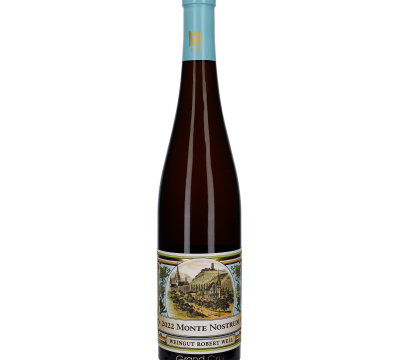
- Robert Weil: essential for understanding Kiedrich, the Gräfenberg and the relationship between dry site wines and Prädikat bottlings.
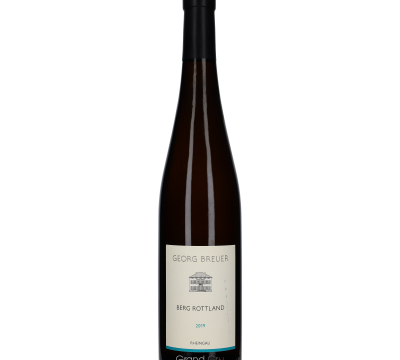
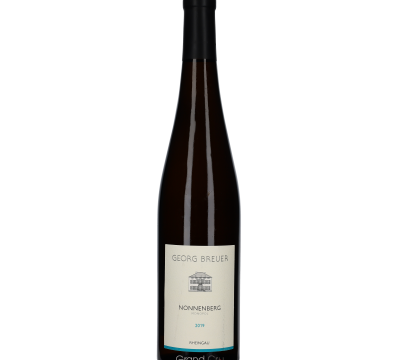
- Georg Breuer: dry Riesling from Rüdesheim, Rauenthal and Lorch, including wines shaped by steeper western sites.
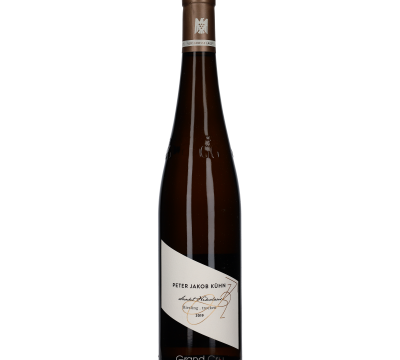
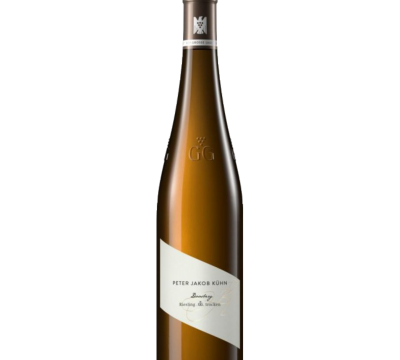
- Peter Jakob Kühn: this Oestrich estate offers a lens onto biodynamic farming and a producer-specific reading of central Rheingau soils.
- Schloss Vollrads: combines an old Riesling estate, historic architecture and a visitor-friendly setting above Oestrich-Winkel.
- Schloss Reinhartshausen: an Eltville-Erbach perspective that fits neatly into an eastern Rheingau day without excessive transfers.
For cultural context, add Kloster Eberbach. The former Cistercian abbey is not a substitute for a focused producer tasting, but its architecture, cellars and wine history explain why monasteries mattered to land management and viticulture in the region.
How to plan a useful tasting
A winery visit teaches more when the flight has a purpose. Ask the estate to compare an entry-level wine, a village wine and one or two site-specific bottlings. Then add a contrasting style—a fruit-sweet Spätlese or a Spätburgunder—instead of tasting six dry Rieslings at the same level.
- Book ahead: appointments, group policies, cellar access and opening days vary. Harvest season and weekends fill first.
- State your interests: tell the winery whether you want dry wines, sweeter Prädikat styles, mature bottles, Pinot Noir or vineyard comparisons.
- Ask about origin: note the village and vineyard, not only the grape and sweetness level.
- Use the spittoon: it is normal tasting-room practice and makes a second appointment safer and more useful.
- Check purchase logistics: ask about shipping rules, tax, luggage limits and warm-weather storage before buying several bottles.
- Do not schedule by volume: two thoughtful tastings usually teach more than four rushed stops.
Useful questions to ask: Which vineyards are in this flight? What changed between the estate, village and single-vineyard wines? Is the wine fully dry, or does it retain noticeable sweetness? How did the vintage affect acidity and harvest timing? Which bottle is meant for early drinking, and which needs time?
A one-day Rheingau wine itinerary
A successful day creates contrast without forcing long transfers. Choose one of the following geographic combinations rather than trying to cover the entire region.
Option 1: Kiedrich, Hattenheim and Eltville
- Begin with a morning appointment in Kiedrich, ideally with a flight that compares village and Gräfenberg wines.
- Have lunch in Hattenheim or at a confirmed estate tavern nearby.
- Choose one afternoon estate in Erbach, Hattenheim or Oestrich-Winkel.
- Finish with a walk along the Rhine in Eltville rather than adding a third formal tasting.
Option 2: Johannisberg, Geisenheim and Rüdesheim
- Start at Schloss Johannisberg or another confirmed Geisenheim-area estate.
- Pause in Geisenheim for lunch and, if relevant to your interests, a look at the university town.
- Continue to Rüdesheim for a dry-wine tasting focused on the Rüdesheimer Berg.
- End with the cable car, a vineyard walk or a riverside stop, depending on weather and operating hours.
A two-day itinerary for deeper comparison
Use the first day for the central or eastern Rheingau and the second for the steeper west. This produces a clearer comparison of soils, exposures and producer styles.
- Day one: base yourself in Eltville, Kiedrich, Hattenheim, Oestrich-Winkel or Geisenheim. Visit one historic estate and one producer chosen for a different farming or winemaking approach. Add Kloster Eberbach only if you have enough time to experience it without shortening both tastings.
- Day two: focus on Rüdesheim, Assmannshausen and, if transport permits, Lorch. Compare dry Riesling from steep western vineyards with Spätburgunder, then take a short walk where the vineyard topography is visible.
Travelers who prefer wine over sightseeing can swap the major attractions for a third producer across two days. Those new to German labels will usually gain more from keeping Kloster Eberbach or Schloss Johannisberg in the plan, since the historical context makes later tastings easier to understand.
When to visit
Spring brings fresh vineyard growth, moderate temperatures and a less compressed schedule than harvest. Good for walking, and for visitors who want more conversation in tasting rooms.
Summer offers long days, outdoor food and wine events, river activity and busy weekends. Reserve accommodation and tastings earlier, especially when a major festival or concert is scheduled.
September and October are visually rewarding but operationally complex. Harvest work takes priority, some producers limit visits, roads can be busier and last-minute appointments are less realistic. Do not assume that harvest season guarantees access to the cellar or vineyard team.
Late autumn and winter suit quiet tastings, food-focused weekends and buyers interested in cellar conversation, but daylight is shorter and some seasonal taverns, attractions or visitor programs close. Confirm every stop.
Getting to and around the Rheingau
Under normal operations, the right-bank Rhine railway connects Wiesbaden with Eltville, Hattenheim, Geisenheim, Rüdesheim, Assmannshausen and Lorch. Frankfurt is the main long-distance gateway, usually reached via Wiesbaden or Mainz. Local buses, ferries, taxis, cycling routes and walking paths fill the gaps, but estate locations above the river are not always close to a station.
Temporary transport alert, verified 18 August 2026: the right-bank rail line between Troisdorf and Wiesbaden is fully closed from 10 July to 12 December 2026 for modernization. Replacement buses serve Rheingau towns, but bicycles are not accepted on those buses. Official Rheingau guidance also suggests traveling on the left bank to Bingen or Niederheimbach and crossing by ferry to Rüdesheim or Lorch. Check the current closure and replacement-transport information and DB Navigator immediately before departure. This paragraph should be reviewed or removed after 12 December 2026.
Car, driver, bicycle or public transport?
- Public transport: workable for towns and central tasting rooms, but build extra transfer time into the 2026 closure period.
- Car: convenient for hilltop estates and Kloster Eberbach, but only with a non-drinking driver.
- Taxi or hired driver: the simplest option for two or three scheduled tastings across different villages.
- Bicycle: attractive along the river and signed routes, but weigh elevation, weather, bottle transport and the 2026 ban on bicycles in replacement buses.
- Walking: best reserved for a selected vineyard section rather than as the only transport between distant appointments.
Food pairings that suit Rheingau wines
Dry Riesling’s acidity and citrus profile work well with trout, shellfish, roast pork, schnitzel, asparagus and fresh or lightly aged cheeses. More concentrated dry wines can handle richer sauces, smoked fish and poultry. The pairing succeeds when the dish has enough weight for the wine but does not bury its acidity.
Off-dry Riesling suits chili heat, aromatic Asian dishes, salty foods and blue cheese, since modest sweetness can soften spice and salt. Auslese and other sweet wines are often more convincing with fruit desserts, pâté or cheese than with a dessert sweeter than the wine itself.
Rheingau Spätburgunder can pair with duck, mushrooms, veal, sausages and earthy vegetable dishes. In a restaurant, ask about the wine’s body and oak profile before choosing the richest plate; Pinot Noir styles here range from light and fragrant to concentrated and firmly structured.
How the Rheingau compares with other Riesling regions
The Rheingau is often contrasted with the Mosel. As a broad guide, Rheingau dry Rieslings tend to feel more structured and full, while many Mosel wines emphasize lower alcohol, Devonian slate-driven tension and a stronger tradition of delicate fruit-sweet styles. There are many exceptions, so use the comparison to choose a tasting direction rather than to predict every bottle.
The Nahe offers greater geological variety in a similarly manageable area. Drinkers who value pronounced site differences may enjoy comparing Nahe and Rheingau wines from the same vintage. The Pfalz is generally larger and warmer, with a broad food and wine culture and many powerful dry Rieslings. The Rheingau’s advantage is concentration: its history, major estates, research center and key vineyard towns sit within a short corridor.
Frequently asked questions
Is Rheingau Riesling dry or sweet?
It can be either. The Rheingau produces dry, off-dry and sweet Riesling. Look for trocken for a legally dry wine, while feinherb usually indicates a dryish or off-dry style. Kabinett, Spätlese and Auslese do not determine sweetness by themselves.
How is Rheingau Riesling different from Mosel Riesling?
As a broad pattern, Rheingau Riesling often has more body and structure, while many Mosel wines are lighter, lower in alcohol and strongly associated with slate-grown, fruit-sweet styles. Producer, vineyard, vintage and winemaking can create major exceptions.
What is the best town to stay in for Rheingau wine tasting?
Eltville is practical for the eastern and central Rheingau, Geisenheim suits a quieter wine-focused stay, and Rüdesheim offers the most visitor infrastructure for the western vineyards. Choose the base closest to your confirmed winery appointments.
How many Rheingau wineries can you visit in one day?
Two wineries is a comfortable pace for most visitors. Three can work with short transfers, a driver and confirmed appointments, but it leaves less time for lunch, vineyard walks and meaningful tasting-room conversation.
Do you need a car in the Rheingau?
No, not for every itinerary. Towns along the Rhine can normally be linked by rail, bus, ferry and taxi, although hilltop estates are easier by car or driver. During the rail closure through 12 December 2026, allow extra time for replacement transport.
What is the best time to visit the Rheingau?
Spring through early autumn offers the widest choice of vineyard walks, tastings and outdoor activity. Harvest in September and October is atmospheric but busy, while winter is quieter and requires more careful checks for seasonal closures.
Plan the trip around contrast, not quantity
The Rheingau rewards a narrow plan. Choose a base, reserve two estates with different approaches, compare at least one village wine with a single-vineyard bottling and add either a sweet Riesling or Spätburgunder. One cultural stop and one visible stretch of vineyard will give the wines more context than another hurried tasting.
Before departure, confirm tasting appointments, opening hours and transport. The region is compact, but the best visit still depends on realistic transfers and enough attention to understand what changes from one glass to the next.
Viticultural Heritage & Terroir
Premier Wineries in Rheingau
All Wineries →
Peter Jakob Kühn
Peter Jakob Kühn is a 22.9-hectare VDP family estate in Oestrich, led by Peter Bernhard…
Robert Weil
Robert Weil is a 78.3-hectare, Riesling-only VDP estate in Kiedrich, centered on the Gräfenberg Grosse…
Schloss Reinhartshausen
Schloss Reinhartshausen is a historic, organically certified Rheingau family estate in Eltville-Erbach with 15 vineyard…
Schloss Vollrads
Schloss Vollrads is a roughly 70-hectare, Riesling-only Rheingau estate in Oestrich-Winkel with a documented wine…
Schloss Johannisberg
Schloss Johannisberg is a 50-hectare Rheingau monopole planted entirely to Riesling, with documented vineyards from…
Georg Breuer
Georg Breuer is a 38-hectare Rheingau estate in Rüdesheim, led by Theresa Breuer and focused…