Grosse Lage vs Grosses Gewächs (GG): The Difference

VDP.GROSSE LAGE® names a top classified vineyard site; VDP.GROSSES GEWÄCHS® names the dry wine made from that site under VDP rules. Put simply: Lage is the place, Gewächs is the wine. “GG” is the familiar shorthand for the dry bottling.
The distinction matters because one Grosse Lage can yield several styles of wine. A VDP estate may bottle a dry GG from a site, then turn around and make a fruit-sweet Kabinett, Spätlese, or Auslese from the very same vines. Only the qualifying dry wine earns the name Grosses Gewächs.
Grosse Lage vs Grosses Gewächs at a glance
| Term | What it identifies | What it tells the buyer |
|---|---|---|
| VDP.GROSSE LAGE® | A vineyard or precisely delimited site | The VDP’s highest site tier |
| VDP.GROSSES GEWÄCHS® | A finished dry wine | Dry wine from a VDP.GROSSE LAGE, made by a VDP member under association rules |
| GG | Common abbreviation | Usually points to Grosses Gewächs; verify the full designation and producer |
| Prädikat on a Grosse Lage wine | Kabinett, Spätlese, Auslese | May signal a fruit-sweet or noble-sweet wine from the site, not a GG |
Where the terms fit in the VDP pyramid

The Verband Deutscher Prädikatsweingüter (VDP) is a private association of German wine estates. Its origin-focused classification runs in four tiers:
- VDP.GUTSWEIN®: regional estate wine.
- VDP.ORTSWEIN®: village wine from distinctive local vineyards.
- VDP.ERSTE LAGE®: a first-class vineyard site.
- VDP.GROSSE LAGE®: the highest site tier.
A dry wine from a VDP.GROSSE LAGE is VDP.GROSSES GEWÄCHS. A dry wine from a VDP.ERSTE LAGE may be called VDP.ERSTES GEWÄCHS. The pyramid narrows provenance as it climbs—it does not guarantee that every upper-tier wine suits every palate better than the one below it.
What VDP rules require for a Grosse Lage and GG
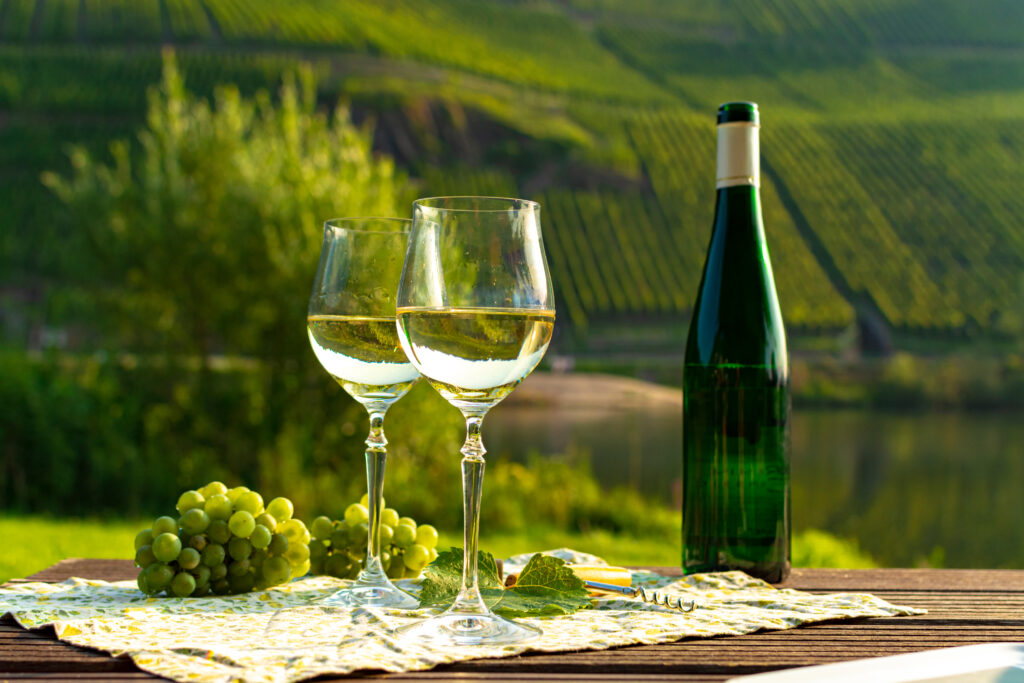
The VDP defines eligible grape varieties region by region, so GG does not automatically mean Riesling. Riesling dominates in the Mosel, Rheingau, and Nahe, while other regions permit Spätburgunder, Weissburgunder, or Silvaner for particular sites.
For VDP.GROSSE LAGE wines, the association caps yields at 50 hectolitres per hectare, requires selective hand harvest, demands physiologically ripe grapes, insists on traditional production methods, and certifies wines before and after bottling. Regional rules can tighten these further, and the producer must hold VDP membership. These are association standards, not a promise that every GG tastes alike.
On a dry GG label, the vineyard name takes center stage while the village name disappears under the VDP presentation system. The bottle typically carries the GG marking and the VDP eagle or capsule. Always read the producer name too: site classification cannot erase differences in farming, picking decisions, fermentation, élevage, or vintage.
Release dates: why GG often arrives later

VDP white Grosses Gewächs releases from 1 September in the year after harvest, following roughly a year of maturation. Red GG releases from 1 September in the second year after harvest and must spend at least 12 months in oak—often a Stückfass. Fruit-sweet and noble-sweet wines from Grosse Lage sites may release as early as 1 May following harvest.
A release date is not a universal drinking window. Some GG drinks beautifully young; other bottlings reward cellar time. Producer guidance, vintage conditions, and storage history tell you more than any fixed “drink for 20 years” rule. See the German Riesling aging guide for a practical framework.
The important 2026 German wine-law distinction

For years, Grosse Lage and Grosses Gewächs were known chiefly as VDP classifications and protected association marks. Germany’s statutory origin pyramid now introduces regulated Erstes Gewächs and Großes Gewächs categories of its own, binding from the 2026 vintage.
The two systems overlap in their emphasis on origin, but they are not identical. VDP.GROSSES GEWÄCHS® remains the VDP designation, governed by its own membership and classification rules. When buying a 2026-or-later wine, check whether the label specifically states VDP, carries the VDP eagle, and identifies a member estate. The phrase “Grosses Gewächs” alone now needs more context than it once did.
How to read a GG bottle in five steps
- Confirm the system. Look for the full VDP wording, the eagle or capsule, and a VDP member producer.
- Read the site. The named vineyard is the key to origin; consult our German vineyard directory to research it.
- Confirm the grape. GG can come from different regionally approved varieties, not only Riesling.
- Separate dry from sweet. VDP.GROSSES GEWÄCHS is dry. A Prädikat wine from the same Grosse Lage follows a different label path entirely.
- Check producer and vintage. These matter more than generic price bands, scores, or investment claims.
Famous Grosse Lage examples

Sites classified as VDP.GROSSE LAGE include Wehlener Sonnenuhr in the Mosel, its Devonian slate driving racy minerality; Scharzhofberg in the Saar; Ürziger Würzgarten, planted on volcanic-flecked soil in the Mosel; and Forster Ungeheuer in the Pfalz, rooted in weathered Buntsandstein and basalt. None of these sites shares one flavor formula—grape, geology, exposition, producer choices, and vintage all shape the glass.
Don’t assume every wine from a famous vineyard is GG. A non-VDP estate may own vines in the same named site, and a VDP member may bottle several styles from it. The label itself is the only reliable evidence.
Frequently asked questions

Is Grosse Lage a vineyard or a wine?
In the VDP system, VDP.GROSSE LAGE is the classification of a top vineyard or precisely delimited site. The dry wine made there under VDP rules is called VDP.GROSSES GEWÄCHS, usually abbreviated GG.
Is every wine from a VDP Grosse Lage a Grosses Gewächs?
No. GG is reserved for a dry VDP wine that satisfies the association’s rules. The same classified site can also produce fruit-sweet or noble-sweet Prädikat wines such as Kabinett, Spätlese or Auslese; those wines are not GG.
Is Grosses Gewächs always dry?
Yes when the bottle is a VDP.GROSSES GEWÄCHS. GG is the VDP name for the dry wine from a VDP.GROSSE LAGE site. Do not use GG as a synonym for every prestigious German wine or every wine from the site.
Does every Grosses Gewächs bottle come from a VDP member?
A bottle using the complete trademarked VDP.GROSSES GEWÄCHS designation comes from a VDP member. Germany’s statutory origin system also introduces Großes Gewächs terminology from the 2026 vintage, so shoppers should check the exact wording, producer and VDP eagle rather than relying on the letters GG alone.
What is the difference between VDP Erste Lage and Grosse Lage?
VDP.ERSTE LAGE identifies a first-class site, while VDP.GROSSE LAGE is the association’s highest vineyard tier. A dry wine from an Erste Lage may be called VDP.ERSTES GEWÄCHS; the corresponding dry wine from a Grosse Lage is VDP.GROSSES GEWÄCHS.
Related guides
- Trocken vs Halbtrocken
- Kabinett vs Spätlese
- German Riesling sweetness guide
- German Riesling vintage chart
Sources
Germany Rieslings Editorial Team
German Wine Editorial ReferenceResearched, structured, and fact-checked against official Deutsches Weininstitut (DWI) documentation, German Federal Wine Law (Weingesetz), and VDP.Die Prädikatsweingüter standards.