How to Host a Riesling & Cheese Tasting: Party Plan, Flights & Portions

A good Riesling and cheese tasting does not need five elaborate courses or rare bottles. For most groups, three or four Rieslings and four or five cheeses are enough to show meaningful contrasts without exhausting the palate.
The easiest structure moves from sparkling or dry wines toward sweeter styles, while cheeses progress from fresh and mild toward aged, washed-rind and blue. Keep pours small, provide water and bread, and treat alcohol-free drinks as part of the table rather than an afterthought.
Riesling and cheese tasting plan at a glance

| Element | Practical starting point |
|---|---|
| Rieslings | 3–4 contrasting bottles |
| Cheeses | 4–5 styles |
| Tasting pour | About 60–75 mL / 2–2.5 oz per wine |
| Cheese as appetizer | About 60–100 g / 2–3.5 oz total per guest |
| Cheese as main food | About 120–150 g / 4–5 oz total per guest |
| Order | Dry/light to richer/sweeter |
| Still Riesling temperature | Usually around 9–11°C / 48–52°F as a starting point |
| White Riesling Sekt | About 6–8°C / 43–46°F |
These portions are planning estimates, not fixed rules. Adjust for the rest of the meal, guest preferences, and how many other foods share the table.
Step 1: choose three or four Rieslings that actually contrast

A tasting earns its keep when each bottle teaches something different. Avoid pouring four similar dry estate Rieslings simply because the labels look prestigious.
- Flight A: Sparkling → dry → off-dry → sweet. The clearest introduction to Riesling’s stylistic range.
- Flight B: Mosel → Nahe → Rheingau → Pfalz. Keep sweetness reasonably similar and compare region and body.
- Flight C: One producer, several origin levels. Compare estate, village, and Einzellage bottlings to focus on origin rather than brand.
- Flight D: Trocken vs fruity Kabinett. Useful for teaching why Prädikat and final sweetness are not the same thing.
If you are unsure what a label is telling you, consult the German Riesling sweetness guide and label-reading guide before choosing bottles.
Step 2: build a cheese board with different textures

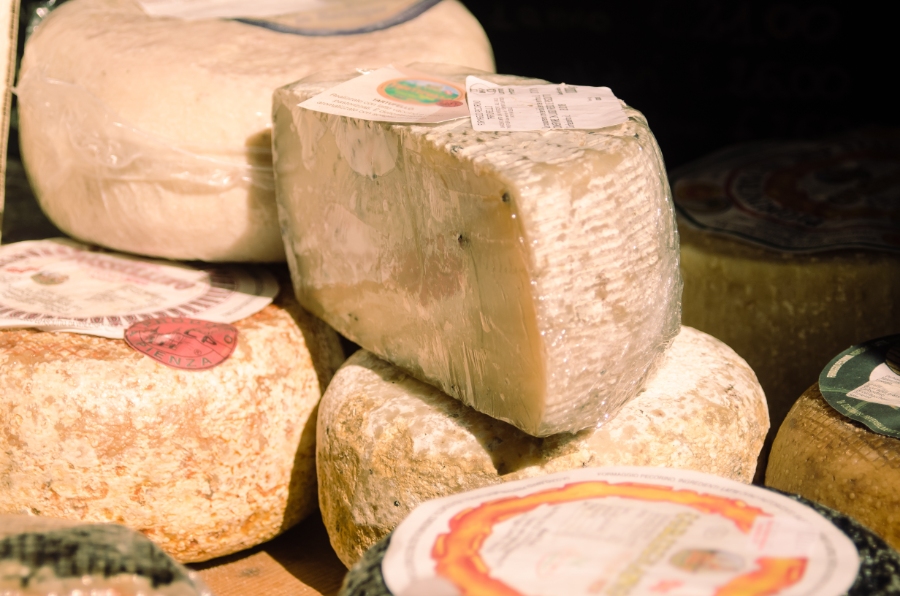
You don’t need one cheese per wine. A board of four or five contrasting cheeses lets guests test several combinations and find what actually works for their own palate.
| Cheese style | Examples | Riesling direction to try |
|---|---|---|
| Fresh / tangy | Goat cheese, chèvre, fresh cow’s-milk cheese | Sekt or dry Riesling |
| Bloomy / creamy | Brie, Camembert-style, triple cream | Dry to gently off-dry Riesling |
| Aged / nutty | Comté, Gruyère, aged Gouda | Trocken, Kabinett or off-dry, depending on salt and intensity |
| Washed rind | Munster, Taleggio, Limburger | Off-dry or fruity Riesling |
| Blue | Roquefort, Stilton, Gorgonzola | Spätlese, Auslese or another clearly sweet Riesling |
For more specific combinations, see the dedicated Riesling and cheese pairing guide. This page focuses on hosting logistics rather than duplicating its 15 cheese matches.
Step 3: use smaller tasting pours
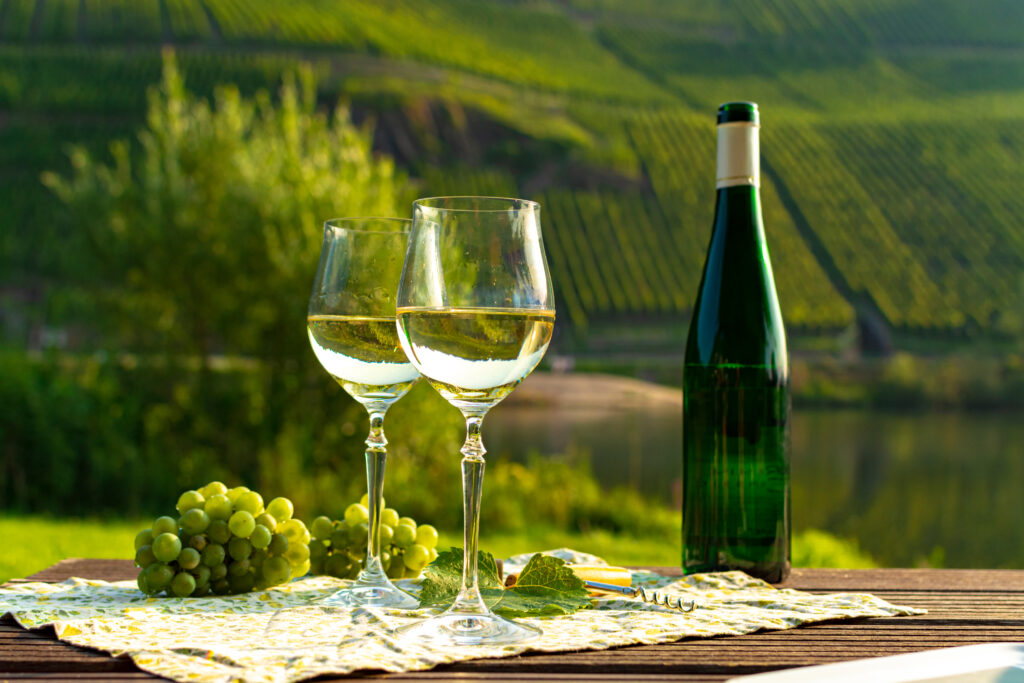
A 60–75 mL pour is enough to smell, taste, and revisit a wine during a structured tasting. Across four wines, that totals roughly 240–300 mL per guest if every glass is finished — well below what half a bottle per person would suggest.
There’s no need to press guests to finish every glass. Offer dump or spit cups for anyone who wants them, water at every place setting, and visible alcohol-free alternatives.
Step 4: serve the wines in a sensible order
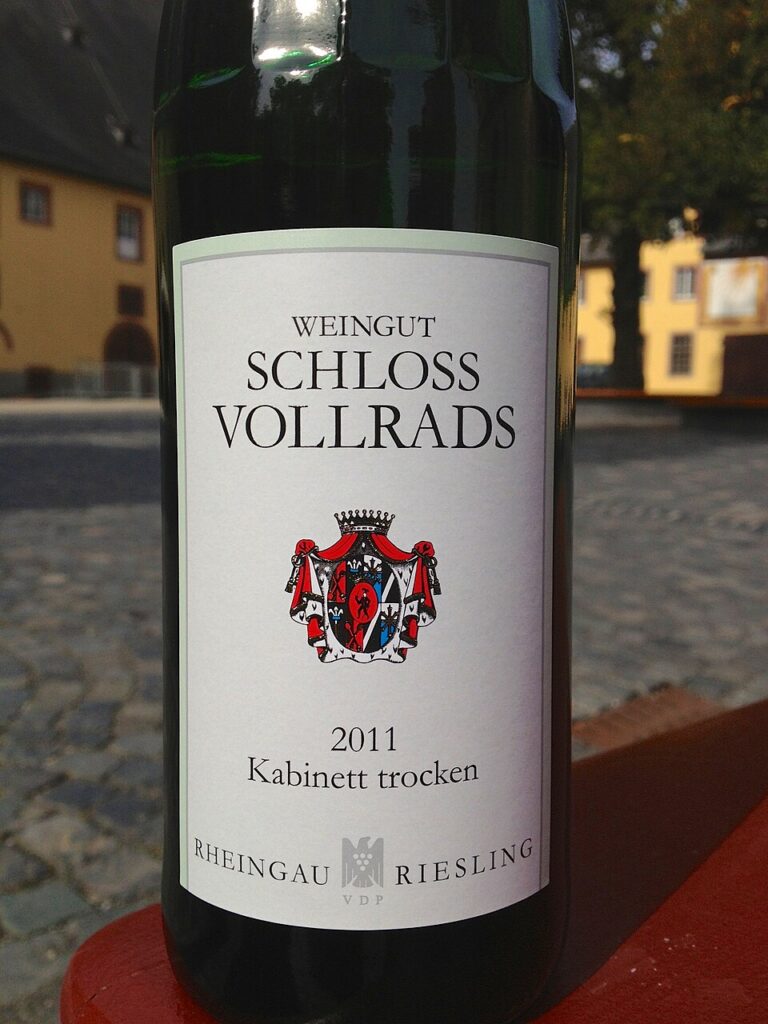
A reliable default: sparkling first, then dry still wines, then off-dry or fruity styles, and the sweetest wine last. Within a single sweetness level, lighter wines generally precede fuller or more mature bottles.
The order exists to stop a powerful or sweet wine from flattening the next glass — it’s not a rigid rule. If your tasting question is “dry versus sweet,” place two contrasting wines side by side on purpose.
Step 5: get serving temperatures close enough

DWI recommends around 9–11°C for a young, light Riesling such as Kabinett. Fuller or more mature whites often show better slightly warmer. White and rosé Sekt are served colder, around 6–8°C in DWI’s German guidance.
Don’t chase one-degree precision. Pour the wines cool and let them warm naturally in the glass. Our Riesling serving-temperature guide covers this in more detail.
Step 6: add neutral palate resets
- Plain bread or unsalted crackers
- Still or sparkling water
- Apple or pear slices if you want fruit
- A small amount of nuts if allergies are clearly managed
- Pickles or chutney as optional accents, not default palate cleansers
Keep strongly flavored condiments to the side. Honey, jam, mustard, and pickles can be useful with cheese, but they also obscure what the wine itself is actually doing.
Step 7: make a simple tasting card

Guests don’t need a 100-point scoring sheet. Four prompts suffice: sweetness, acidity, body, and favorite cheese match. Add one free-text line for aroma or a stray observation.
| Wine | Sweetness | Acidity | Body | Best cheese match |
|---|---|---|---|---|
| Wine 1 | ||||
| Wine 2 | ||||
| Wine 3 | ||||
| Wine 4 |
This keeps the tasting focused on observable differences instead of forcing guests to identify soil types or vineyards blind.
Food safety matters more than “room-temperature cheese” rules
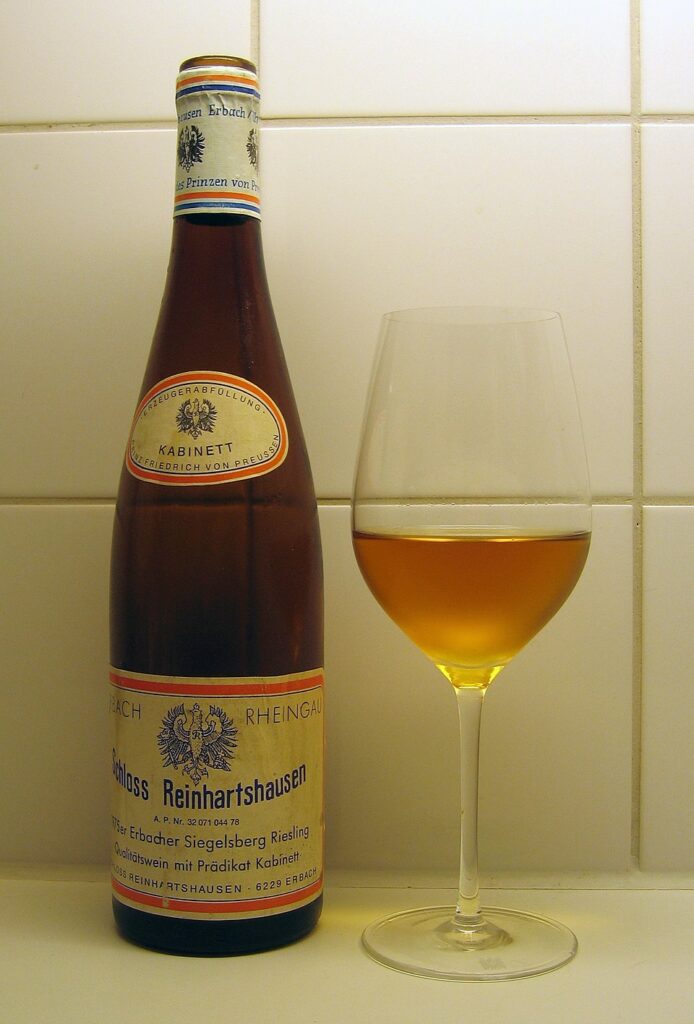
Cheese often tastes more expressive once some chill has come off, but perishable food shouldn’t sit out indefinitely. U.S. federal food-safety guidance applies a two-hour rule for perishables at room temperature, or one hour above 90°F / 32°C.
For a longer party, put out smaller amounts and replenish the board from the refrigerator rather than leaving the full supply out all evening.
Include alcohol-free and dietary alternatives
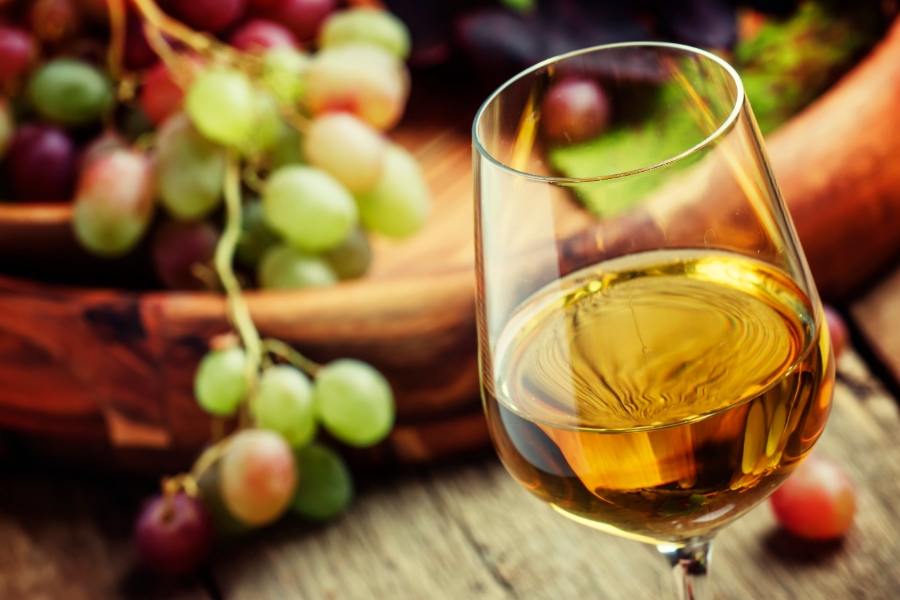
A welcoming tasting gives guests easy ways to participate without alcohol. Sparkling water, alcohol-free wine, and 0.0% Riesling-style products can all sit in the same glassware and follow the same tasting sequence.
For dairy-free guests, choose plant-based alternatives based on texture and salt rather than pretending they replicate the dairy cheese they imitate. Label nuts and other allergens clearly.
For a wine-format 0.0% option, our Kolonne Null Riesling guide explains the current product and ingredients.
A ready-to-use four-wine tasting format
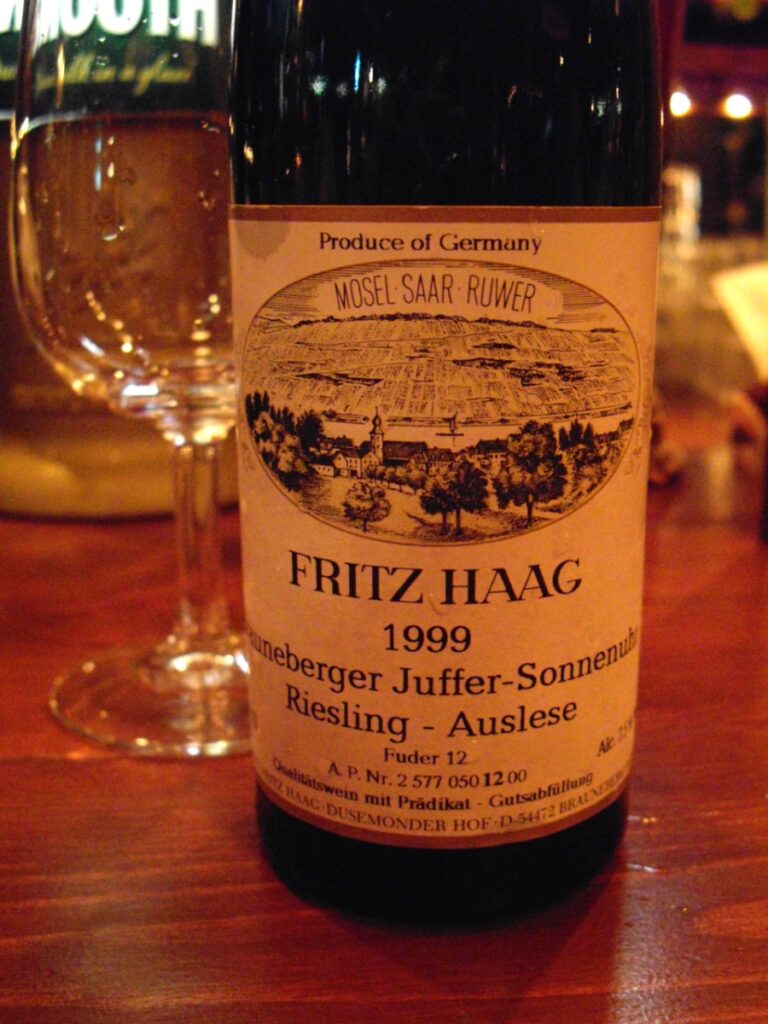
| Round | Wine style | Cheese styles to test | Question to ask |
|---|---|---|---|
| 1 | Riesling Sekt Brut or Extra Brut | Fresh goat cheese, bloomy rind | What do bubbles and acidity do to creamy texture? |
| 2 | Trocken Riesling | Bloomy rind, aged Alpine cheese | Does the cheese make the wine taste fruitier or more austere? |
| 3 | Off-dry / fruity Kabinett | Aged Gouda, washed rind | How does residual sugar change the effect of salt and pungency? |
| 4 | Clearly sweet Riesling | Blue cheese | Does sweetness balance the cheese or get overwhelmed by it? |
Common hosting mistakes
- Too many wines. Six or eight bottles turn a tasting into work.
- Four wines that are nearly identical. Choose contrasts with a purpose.
- Calling Kabinett “light-sweet.” Kabinett is a Prädikat level, not a guarantee of final sweetness.
- Assigning Feinherb a fixed sugar number. Feinherb has no fixed legal residual-sugar definition.
- Assuming ABV tells you sweetness exactly. It’s a clue, not a legal test.
- Leaving the full cheese board out for hours. Replenish perishables in smaller batches.
- No water or nonalcoholic choice. Build both into the setup from the start.
Frequently asked questions

How many Rieslings should I serve at a cheese tasting?
Three or four is enough for most groups. Choose wines that differ in sweetness, region, producer tier or production method so each bottle earns its place.
How much cheese should I buy per person?
As a planning estimate, around 60–100 g per guest works when cheese is one appetizer among several. If cheese is the central food, roughly 120–150 g per person gives more room. Adjust for the rest of the menu and expected appetite.
Should cheese be at room temperature?
Many cheeses are more aromatic when they’re not refrigerator-cold, but food safety comes first. Put out manageable portions and refrigerate perishables within the two-hour window rather than leaving everything out for the whole party.
What is the best Riesling with blue cheese?
A clearly sweet Riesling is the natural starting point, since sweetness counters salt and intensity. Auslese is a classic direction, but check the actual bottle’s sweetness rather than assuming from Prädikat alone.
Related guides
- Riesling and Cheese Pairing Guide: 15 Matches
- German Riesling Food Pairing Guide
- German Riesling Sweetness Guide
- Riesling Serving Temperature Guide
- German Riesling Sekt Guide
Sources
Germany Rieslings Editorial Team
German Wine Editorial ReferenceResearched, structured, and fact-checked against official Deutsches Weininstitut (DWI) documentation, German Federal Wine Law (Weingesetz), and VDP.Die Prädikatsweingüter standards.