2023 Villa Wolf Riesling Dry
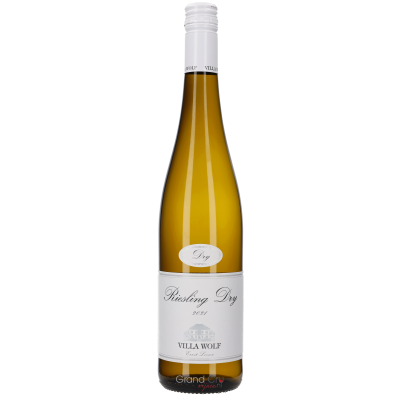
Wine Profile & Character
Villa Wolf’s Riesling Dry draws on parcels scattered across the Mosel‘s steep river-facing slopes, where blue and grey Devonian slate dominates the subsoil and reflects heat back into the low canopy, ripening fruit slowly through the long autumn afternoons. The estate farms these sites with a light hand, prioritizing old vine material and hand-harvesting to preserve the delicate skins that Riesling depends on for aromatic precision. The Mosel’s cool river microclimate, tempered by fog in the mornings and full sun exposure by midday, allows for the extended hang time that builds flavor without sacrificing the acid backbone this region is famous for. Dr. Bürklin-Wolf‘s guiding philosophy here favors restraint in the cellar — spontaneous fermentation in neutral vessels, minimal intervention, and a commitment to transparency of site over stylistic manipulation.
In the glass, the wine opens with a bright, layered nose of green apple, white peach, and quince, framed by the wet-stone minerality that slate terroirs impart so distinctly. Secondary notes of lime zest, honeysuckle, and a faint herbal lift — think crushed chamomile — emerge with aeration. On the palate, the entry is taut and precise, with racy acidity cutting through a core of orchard fruit and stone fruit that never tips into sweetness. Texturally, the wine carries a fine, almost chalky grip mid-palate, a product of both the slate soils and the estate’s judicious approach to lees contact, before resolving into a long, saline-tinged finish that echoes the mineral backbone established on the nose.
2023 was a vintage marked by a cool, even growing season in the Mosel, yielding wines of freshness and clarity rather than opulence — a hallmark that suits this bottling’s dry, food-driven style. While approachable now, the wine possesses the structural acidity to reward two to three years of bottle age, during which the citrus and orchard fruit will deepen into something more honeyed and textural, without losing the slate-driven tension that defines its character. This is a Riesling built for those who prize precision and terroir transparency over immediate fruit-forward appeal.
Sourced Profile
Compiled from producer and published descriptions, not a firsthand tasting by our team.
Appearance: Pale lemon-gold with a faint green tint at the rim, brilliant and clear with a fine, steady bead of clarity throughout.
Aromas & Bouquet: Green apple, white peach, and quince lead, layered with wet slate and lime zest. Aeration reveals honeysuckle and a whisper of chamomile, giving the aromatic profile both freshness and subtle complexity.
Palate & Structure: Racy, linear acidity drives the palate from entry to mid-palate, carrying orchard and stone fruit flavors alongside a distinct chalky, mineral grip. The texture is taut yet not austere, with a slight phenolic bite that adds structure without weight, allowing the fruit and mineral elements to remain in fine balance.
Finish & Longevity: Long and saline, with lingering citrus pith and wet-stone minerality that persists well after the last sip. A subtle phenolic grip lends textural interest to the close.
Food Pairings
Pair with pan-seared trout or arctic char, whose delicate flesh mirrors the wine's mineral precision. Spicy Thai green curry or Vietnamese banh mi benefit from the wine's acid-driven cut through richness and heat. Fresh chèvre or a young Alpine cheese highlights the wine's chalky texture, while a simple schnitzel with lemon underscores its classic Central European pairing roots.
Cellaring & Ageability
Drink 2024–2029, with the wine likely reaching a textural peak around 2026–2027 as the fruit deepens into honeyed complexity. The 2023 vintage's structural acidity ensures graceful evolution without loss of the defining slate-driven tension.