2023 Schloss Johannisberg Gelblack Riesling Trocken
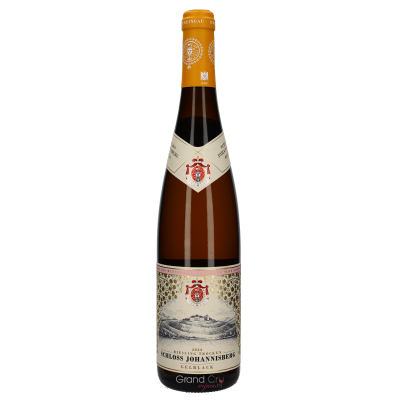
Wine Profile & Character
Schloss Johannisberg occupies one of the most storied hillsides in the Rheingau, its south-facing amphitheater of vines rising above the Rhine on a foundation of Devonian slate interlaced with loess and loam. This particular exposure, first planted by Benedictine monks over a millennium ago, benefits from the river’s reflective warmth and the moderating breezes that sweep the plateau, extending the growing season and allowing phenolic ripeness to arrive without sacrificing acidity. The estate’s viticultural philosophy leans on restraint: low yields, hand harvesting, and a refusal to chase overripeness, all in service of a wine that speaks plainly of place rather than winemaking artifice. The Gelblack, or Yellow Seal, has long denoted the estate’s benchmark dry bottling, a wine meant to capture Rheingau typicity in its most transparent form.
On the nose, the 2023 unfurls in stages—first a citrus-driven top note of lime zest and white grapefruit, then orchard fruit (quince, white peach) and a faint suggestion of wet stone that anchors the aromatics to its slate origins. The palate arrives lean and taut, acid-forged, with a chalky, saline mineral spine running beneath layers of green apple and lemon pith. There is a textural firmness here, a linear quality rather than roundness, and the fruit never strays into opulence; instead it remains coiled, precise, and articulate through the mid-palate before resolving into a dry, almost austere close.
2023 was a vintage of patience in the Rheingau—cooler nights preserved acidity while warm, dry stretches in early autumn allowed slow, even ripening. This tension between freshness and ripeness gives the Gelblack real cellaring potential: expect the citrus notes to deepen into candied peel and the mineral core to gain a smoky, flinty dimension with five to ten years in bottle. Patience will reward those who wait.
Sourced Profile
Compiled from producer and published descriptions, not a firsthand tasting by our team.
Appearance: Pale straw with a faint greenish tinge at the rim, brilliantly clear with a fine, almost polished clarity.
Aromas & Bouquet: Lime zest, white grapefruit, and green apple lead, followed by white peach and quince as the glass opens. Beneath the fruit lies a distinct wet-slate minerality, with a whisper of white flowers and crushed stone rounding out the bouquet.
Palate & Structure: Bracing and linear, with a chalky, saline mineral thread running through the core. Flavors of lemon pith, green apple, and unripe pear are framed by taut, well-integrated acidity, while the mid-palate carries a subtle textural grip rather than roundness. The finish stays dry and precise, never veering into richness.
Finish & Longevity: Long and mineral-driven, with lingering salinity and a fine phenolic grip that lends structure without bitterness. The citrus and stone notes echo well after the last sip.
Food Pairings
Pair with pan-seared trout or scallops, where the wine's acidity and salinity mirror the delicacy of the fish. Its lean, mineral profile also suits raw oysters or a citrus-dressed crudo. For heartier fare, a Rheingau classic pairing of Handkäse mit Musik or roast chicken with lemon and thyme allows the wine's acid backbone to cut through richness.
Cellaring & Ageability
Drink 2026–2038, with the wine entering a more expressive, textured phase after 2028 as primary citrus notes evolve toward honeyed, flinty complexity. The 2023's structural acidity ensures a long, graceful arc of development.