Bernkasteler Badstube Riesling Spätlese 2021
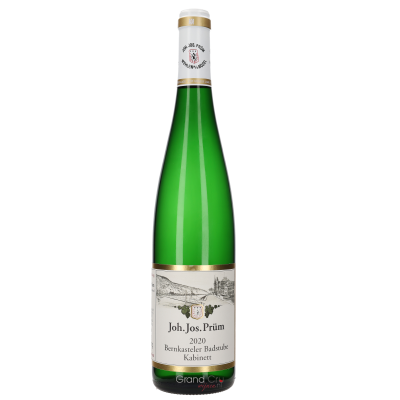
Wine Profile & Character
The Badstube is among the Mosel‘s most historically referenced vineyard names, a south-facing amphitheater of weathered Devonian blue slate rising steeply above Bernkastel proper. This particular parcel, cooler than its neighboring Doctor and Graben sites due to a slightly higher elevation and more sheltered exposure, has long been prized for wines of tension rather than opulence. The slate here is thin-soiled and mineral-poor in nutrients but exceptional at storing daytime heat, releasing it slowly through cool Mosel nights and allowing for the kind of extended, unhurried ripening that Spätlese demands. Joh. Jos. Prüm‘s approach honors this terroir with deliberate restraint: low-intervention farming, hand-harvesting in successive tries, indigenous yeast fermentations, and long, slow fermentations in centuries-old 1000-liter Fuder casks. The estate’s signature reductive style — minimal racking, extended lees contact, and a refusal to rush the wine to bottle — produces Rieslings that are notoriously slow to reveal themselves, rewarding patience over immediate gratification.
On opening, this 2021 shows the tightly coiled, almost shy character typical of young Prüm — aromas of white peach, quince, and crushed slate emerge gradually, joined by hints of chamomile, lime blossom, and a faint spritz of wet stone. The palate is where the wine’s architecture becomes clear: a broad, honeyed mid-palate of 42 g/L residual sugar is held in check by a searing 8.2 g/L of natural acidity, the two locked in the kind of dynamic equilibrium that defines great Spätlese. Flavors of ripe apricot and candied ginger unfold in layers, interspersed with saline, flinty minerality that lingers beneath the fruit rather than sitting atop it. The low 7.5% alcohol allows every nuance to remain audible, nothing masked by warmth or weight.
2021 was a cool, late vintage in the Mosel, producing wines of higher acidity and lower alcohol than recent warm years — conditions that suit Prüm’s traditionalist style perfectly and augur exceptionally long aging potential. In its youth this wine will taste almost austere, its sweetness cloaked by racy acid structure; over the next decade it will slowly unwind, developing notes of petrol, dried honey, and toasted nuts while the fruit deepens from stone fruit to dried apricot and marmalade. This is a wine built for the cellar, not the table, in its first years of life.
Sourced Profile
Compiled from producer and published descriptions, not a firsthand tasting by our team.
Appearance: Pale straw-green with a faint silvery rim, brilliant clarity with a fine, almost imperceptible spritz.
Aromas & Bouquet: Reticent and mineral-driven in youth, opening to white peach, quince, and lime blossom over a core of crushed wet slate. Subtle notes of chamomile and green apple skin add lift, while a faint smoky flintiness signals the site's slate pedigree.
Palate & Structure: Off-dry to medium-sweet on entry, with a silky, almost weightless texture that belies its sugar. Ripe apricot, candied ginger, and lime pith flow across the palate, cut cleanly by searing, chalky acidity that keeps the wine buoyant and precise. A saline, stony undertow anchors the fruit through the mid-palate.
Finish & Longevity: Long, mineral, and cooling, with lingering notes of citrus pith and wet stone. A faint phenolic grip on the finish lends structure without bitterness, echoing the vineyard's slate origins.
Food Pairings
Pair with Alsatian-style choucroute or roast pork belly, where the wine's acidity cuts through richness and fat. Spicy Thai green curry or Szechuan dishes find a natural foil in the residual sweetness balancing chili heat. Equally compelling alongside pan-seared foie gras or a wedge of aged Roquefort, where sweetness and salinity mirror the wine's own tension.
Cellaring & Ageability
Drinking window: 2026–2045. Expect the wine to remain tightly wound through its first five years before slowly unfurling into a more expansive, honeyed, petrol-inflected maturity, with the vintage's high acidity ensuring vitality well into its third and fourth decade.