2021 Weingut Lorenz & Söhne Tatort Höllenpfad Riesling
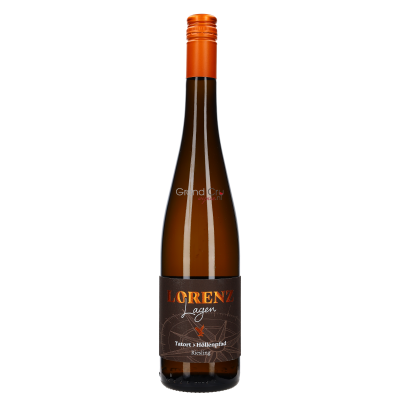
Wine Profile & Character
The Höllenpfad vineyard occupies a lesser-known but increasingly respected corner of the Nahe, where red sandstone and weathered loam give way to pockets of gravel that force the Riesling roots deep in search of moisture and mineral reserve. This is not the porphyry or blue slate of Norheim or Niederhausen, but a warmer, more earthbound geology that lends the wine a broader, more textured spine than the racier sites further along the river. The estate farms this parcel with a restrained hand, favoring low intervention in the cellar and spontaneous fermentation where possible, allowing the site’s natural expression to dictate the wine’s final form rather than imposing a house style upon it. The southern exposure and proximity to the valley’s moderating air currents extend the growing season, permitting a slow, even ripening that the 2021 vintage — cool, late, and demanding patience in the vineyard — rewarded handsomely.
In the glass, the wine opens with a nose that moves from white peach and quince toward something more savory: crushed stone, wet chalk, and a faint whisper of chamomile that lifts with aeration. The palate confirms this duality, entering with a saline, almost briny minerality before ripe orchard fruit — pear, yellow apple — asserts itself mid-palate. Acidity here is firm but not aggressive, more a structural undercurrent than a sharp edge, allowing the wine to feel dense and layered rather than merely lean. As it moves across the tongue, secondary notes of ginger and wet limestone emerge, giving way to a long, mouth-coating finish that never surrenders its sense of place.
2021’s naturally high acidity and moderate ripeness levels suggest this wine is built for the medium term, and it will likely reward those who allow it three to five years to fully integrate its more angular elements. Over time, expect the primary fruit to recede in favor of tertiary honeyed and mineral tones, with the sandstone character becoming more pronounced and textural. This is a wine of patience — both in the vineyard and in the cellar — and it will continue to reveal new dimensions well into the next decade.
Sourced Profile
Compiled from producer and published descriptions, not a firsthand tasting by our team.
Appearance: Pale straw-gold with a faint green tinge at the rim, brilliantly clear with a fine, steady bead of clarity throughout.
Aromas & Bouquet: An initial burst of white peach, quince, and lime zest gives way to deeper notes of wet stone and crushed chalk. A subtle floral lift — chamomile, honeysuckle — threads through the background, while a faint smoky, saline undertone hints at the sandstone origin of the fruit.
Palate & Structure: The entry is saline and mineral-driven, quickly joined by ripe pear and yellow apple flavors that expand across the mid-palate. Acidity is firm and structural rather than piercing, lending the wine a dense, almost chewy texture uncommon in lighter Nahe styles. Ginger spice and wet limestone notes emerge on the back half, adding complexity without disrupting the wine's overall harmony.
Finish & Longevity: Long and saline, with a lingering mineral grip that recalls the vineyard's sandstone soils. A faint phenolic bitterness on the very end adds structure and signals further ageing potential.
Food Pairings
This wine pairs beautifully with pan-seared trout in brown butter, where its saline minerality echoes the dish's earthy richness. Try it also with roasted pork belly and apple compote, where the wine's acid structure cuts through the fat while its fruit notes harmonize with the sauce. A soft, washed-rind cheese like Taleggio offers a compelling contrast to the wine's mineral backbone, and spicy Thai green curry showcases the wine's ability to balance heat with fruit-driven sweetness.
Cellaring & Ageability
Best enjoyed 2026–2038, with peak complexity likely arriving around 2029–2034 as the fruit integrates with tertiary honeyed and mineral characteristics. Early drinking will emphasize freshness and precision, while extended cellaring will reveal a richer, more textural expression of the site.